From Smart Mobility to Outdoor Adventures: Vehicle Accessory Trends at the 140th Canton Fair
In this article
140TH CANTON FAIR · MARKET INSIGHTS 03
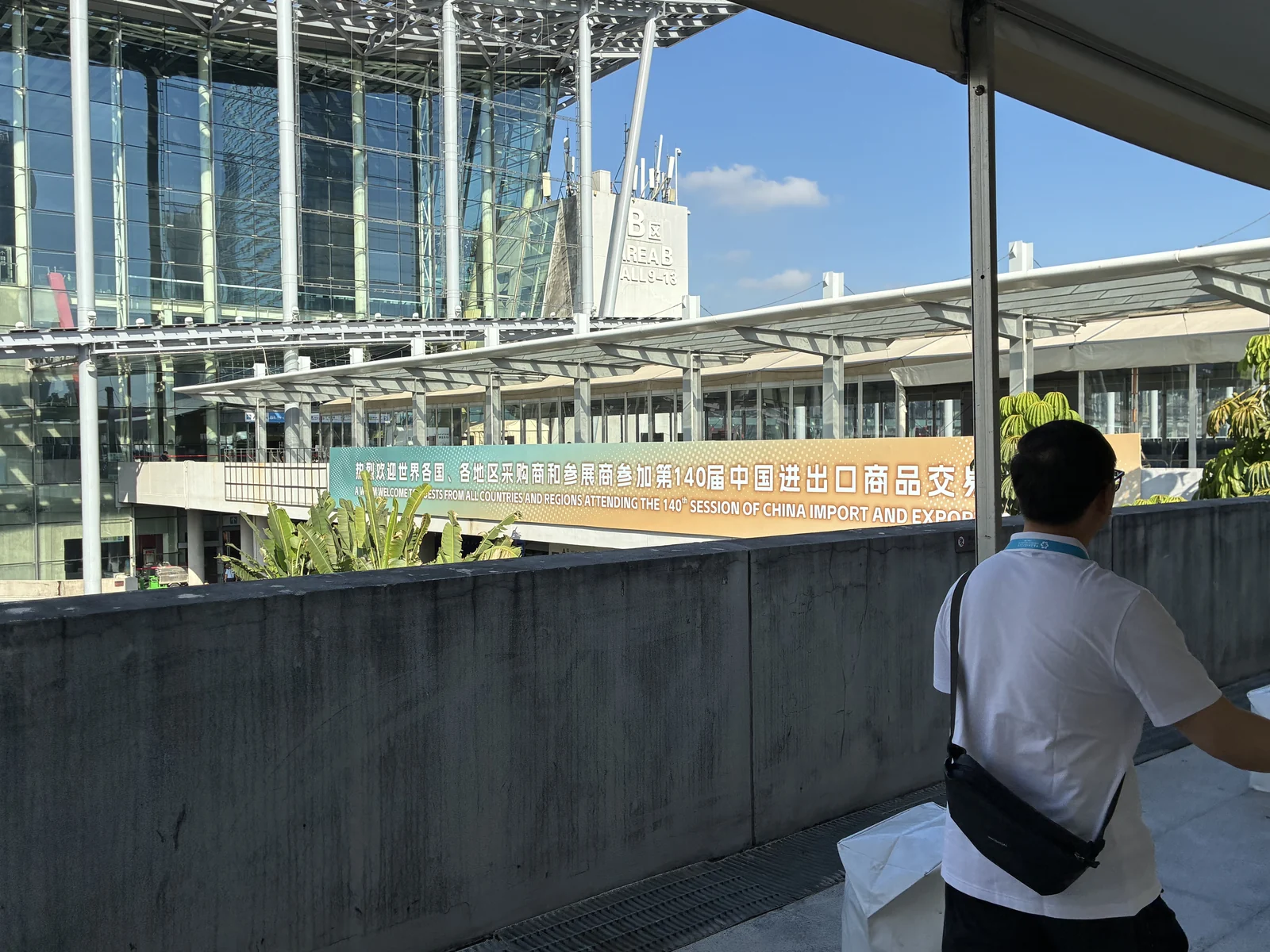
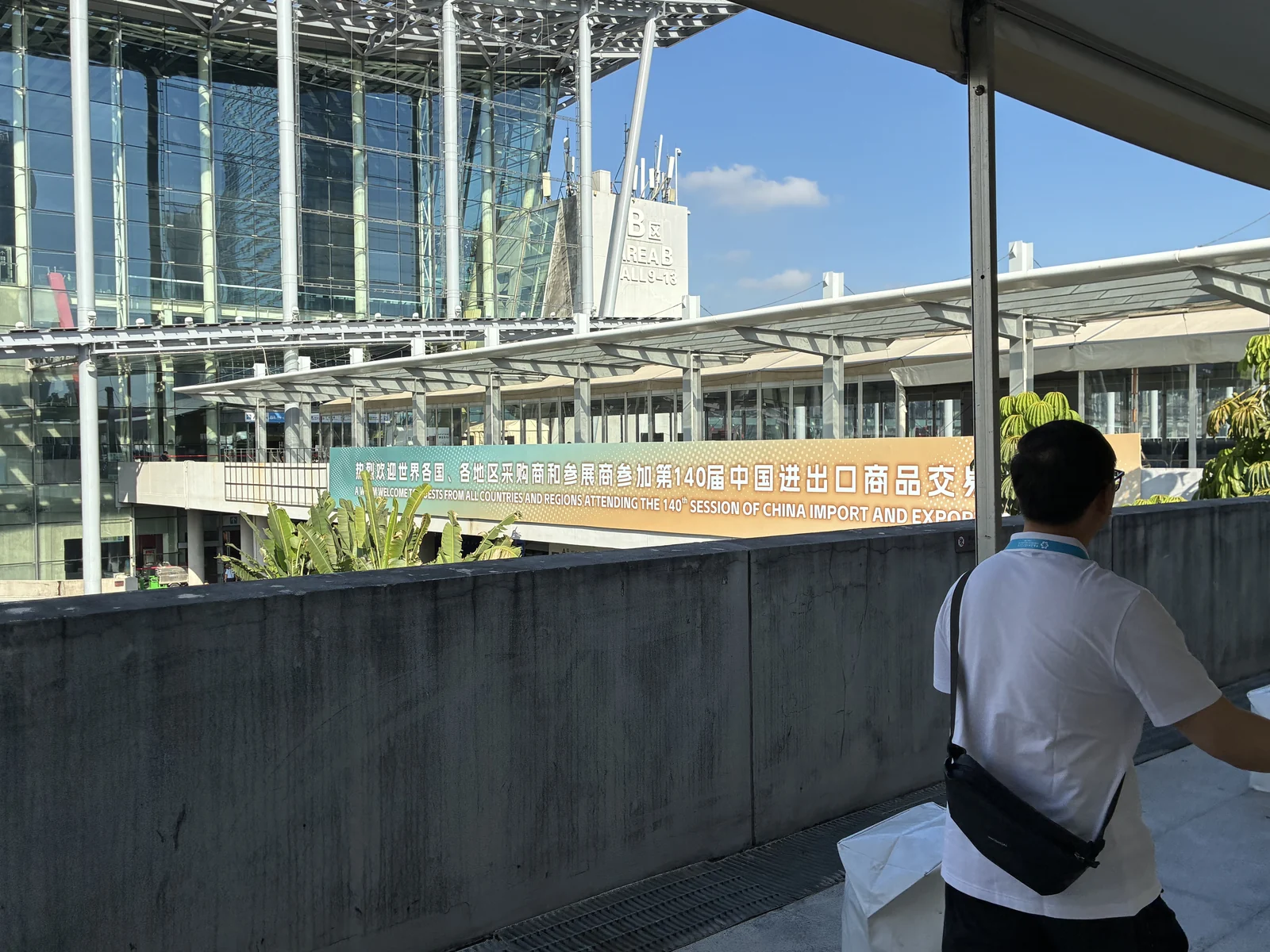
Electric vehicles, intelligent mobility systems and automotive components were among the featured product categories at the first phase of the 140th China Import and Export Fair (Canton Fair), held in Guangzhou from October 15 to 19. [1]
The exhibition highlighted developments in vehicle technology, manufacturing and transportation equipment. Yet beyond electric powertrains and connected-vehicle features, another aspect of mobility deserves attention: how vehicles are equipped for the activities their owners want to pursue.
Pickup camping, recreational trailers, boating trips and outdoor equipment transport all create practical requirements for vehicle accessories.
A camping setup may look impressive in a social media video, but buyers still need to determine whether the vehicle can carry the equipment, whether the accessories fit correctly and whether the complete system will perform under real operating conditions.
For manufacturers and international distributors, these considerations connect the wider mobility conversation at the Canton Fair with established mechanical equipment such as trailer jacks, jockey wheels and manual winches.
The key purchasing question is increasingly specific: How well does each accessory match the vehicle, its actual load and the environment in which it will operate?
Mobility innovation and component sourcing
According to the Canton Fair's official exhibition schedule, Phase 1 covered New Energy Vehicles and Smart Mobility, Vehicles, Vehicle Spare Parts, Motorcycles and Bicycles, alongside mechanical equipment, industrial manufacturing and hardware. [1] [2]
The Ministry of Commerce identified advanced manufacturing as the main theme of the first phase, with new-energy vehicles, intelligent manufacturing and other emerging technologies among the featured industries.
The scale of the exhibition created an environment in which international buyers could evaluate both complete vehicle technologies and the components supporting different transportation applications.
For automotive and trailer equipment buyers, these categories are related but not identical.
An electric vehicle manufacturer may focus on battery performance, electronic systems and vehicle integration. An aftermarket distributor may be more interested in mechanical accessories, mounting compatibility and replacement parts.
A trailer manufacturer, meanwhile, must consider how towing equipment, coupling systems, supporting components and loading mechanisms work together.
These different purchasing priorities are part of the broader mobility supply chain.
Although smart mobility attracts attention through advanced technology, the practical usability of vehicles still depends on suitable mechanical systems.
The fair's third phase, scheduled for October 31 to November 4, will also include sports, travel and recreation products. Together, the exhibition categories provide a wider context for outdoor mobility and leisure equipment sourcing, while serving different product markets. [1]
Outdoor applications: interest versus market evidence
Outside the exhibition halls, pickup camping and overlanding equipment continue to attract attention in specialist outdoor publications and owner communities. This article does not rely on unverified Instagram comments or engagement figures. [3] [4] [7] [8]
Vehicle owners share setups incorporating rooftop tents, modular camper units, storage drawers, awnings, recovery equipment and portable power systems.
The visual appeal is easy to understand. A pickup can serve as a daily vehicle during the week and be configured for outdoor travel when needed.
But these accessories create practical compromises.
In October 2026, Overland Expo reported on Wild Land's PickupMate range, a modular camping concept intended to preserve much of a pickup's everyday utility while adding expandable accommodation.
One configuration, the Wingman X, has a reported weight of approximately 615 lb. Wild Land lists 279 kg (615.1 lb) as a reference weight and excludes the base, so buyers must confirm the complete installed configuration rather than treat that figure as an all-in installation weight. Payload remains an important part of evaluating the installation. [3] [16]
Passengers, camping equipment, water, tools and additional modifications can consume the vehicle's remaining payload allowance.
A separate March 2026 feature published by Outside examined a pickup camping setup incorporating a bed rack, storage system and rooftop tent. The article emphasized convenient installation and everyday usability alongside the cost and space occupied by the accessories. [4]
These examples help explain why the appearance of a camping setup is only one part of its purchasing value.
Owners and equipment suppliers also need to consider:
- The combined weight of installed equipment and cargo
- Compatibility with the particular vehicle body and mounting points
- Access to the cargo bed and other vehicle functions
- Installation and removal requirements
- Weather exposure and long-term durability
- The total cost of the completed setup
These concerns extend beyond premium pickup campers.
A small camping trailer, boat trailer or utility trailer also depends on properly selected support and handling equipment.
For B2B buyers, this creates a useful distinction between selling an attractive accessory and supplying a component that integrates correctly with the intended vehicle application.
Outdoor Mobility Interest Does Not Automatically Mean Every Market Is Growing
The visibility of camping modifications on social platforms provides useful information about product ideas and user concerns.
However, online engagement should not be confused with a complete market forecast.
The RV Industry Association reported that U.S. recreational vehicle wholesale shipments were down 14.2% through August 2026 compared with the same period in 2025. [5]
Within that broader decline, individual vehicle categories showed different results.
For example, truck camper shipments increased over the comparable period, illustrating how the performance of one product category may differ from the recreational vehicle market as a whole. [5]
These figures measure manufacturer wholesale shipments in the United States. They do not directly measure global camping participation, aftermarket accessory sales or social media purchasing interest.
The distinction matters for businesses evaluating new product opportunities.
A frequently shared truck camping setup may reveal particular customer concerns about weight, installation or cost without establishing that demand for every related product is rising.
For suppliers, the more useful approach is to identify which practical problems customers are trying to solve and whether existing products can address those needs. The two linked Reddit threads illustrate payload and total-build-cost concerns raised by the same poster, not independent market samples or evidence of category growth. [7] [8]
Four load ratings, four different questions
One of the most important considerations in outdoor vehicle equipment is load capacity.
However, the meaning of a capacity rating depends on the component.
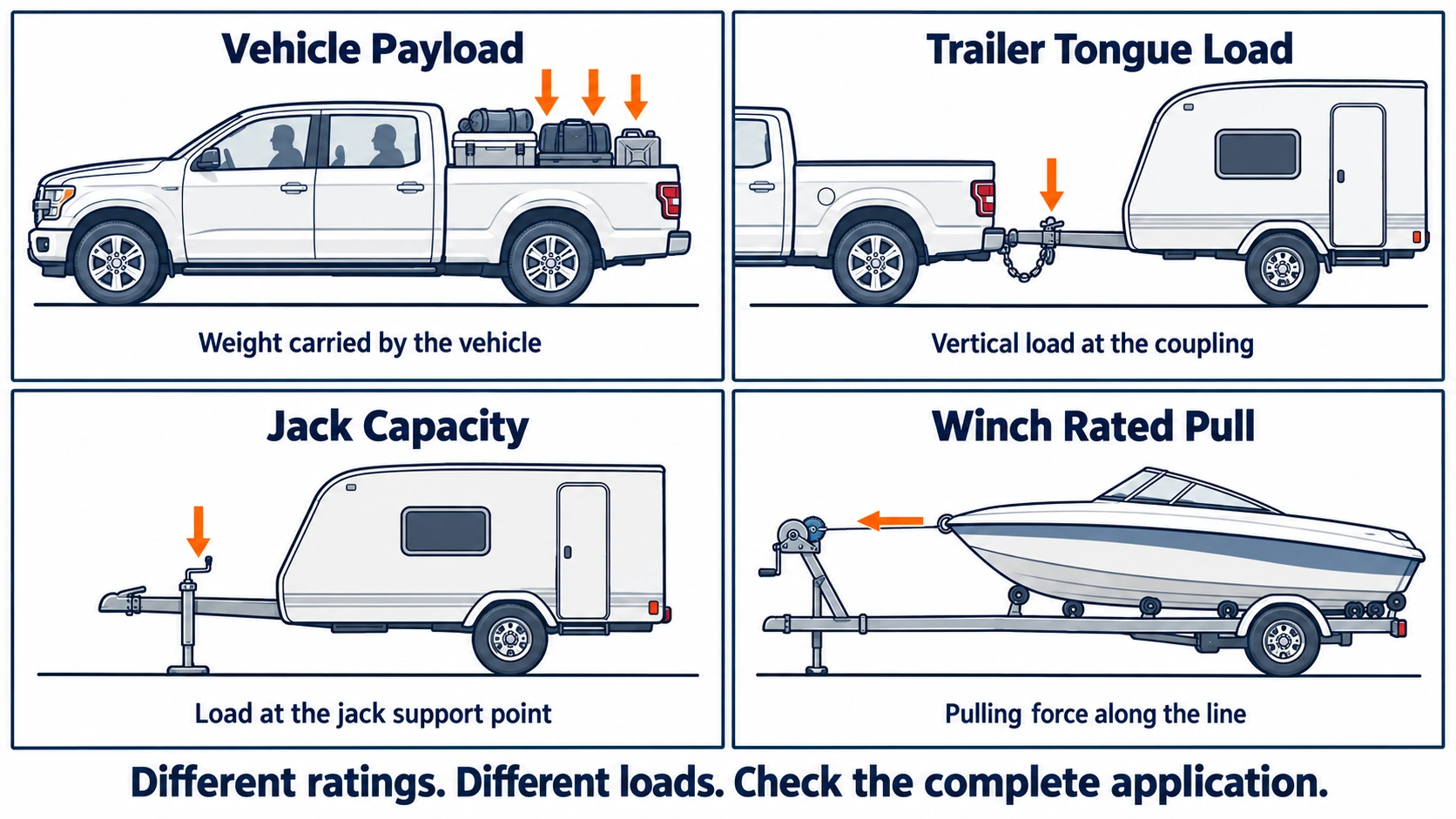
Vehicle payload, trailer gross weight, tongue weight, roof-rack load capacity and winch pulling capacity describe different operating limits.
They should not be used interchangeably.
Pickup Payload Is Not Trailer Towing Capacity
A pickup's towing rating describes how much trailer weight it may be permitted to pull under specified conditions.
Payload concerns the weight carried by the vehicle itself, including occupants, cargo and installed equipment, with trailer tongue weight also contributing to relevant vehicle loading limits. [12]
A pickup may have substantial towing capability while offering less remaining payload than expected after accessories and passengers are included.
Installing additional suspension components does not, by itself, increase the vehicle manufacturer's weight ratings. The vehicle's own label and manual remain the controlling references. [12]
For camping equipment mounted directly to a truck, the final installed weight should be evaluated against the vehicle's applicable payload, axle and tire limits.
Trailer Tongue Load Is Not Total Trailer Weight
A trailer jack supports load at a specific position on the trailer.
Its required capacity must be evaluated against the actual vertical load at that position, not simply the trailer's gross weight.
The load also depends on the trailer's support arrangement and operating condition.
A jockey wheel rated for a particular capacity is not automatically suitable for every trailer with a gross weight below or above that number.
The mounting structure, working height and operating procedure remain essential parts of the application.
Roof-Rack Ratings Are Different from Trailer Jack Ratings
Rooftop camping equipment introduces another distinction.
Some racks have separate static-load ratings for parked conditions and dynamic-load ratings for use while driving.
Those ratings must be matched to the vehicle roof, rack structure and mounting arrangement. [13]
They do not describe the same function as a trailer jack supporting a disconnected trailer at its drawbar.
Winch Capacity Describes Pulling, Not General Vehicle Weight
Manual winches are also frequently misunderstood.
A winch's rated pulling capacity describes an approved pulling capability under defined conditions.
It is not automatically equivalent to the total weight of a boat or other item being retrieved.
The actual required line pull depends on the loading geometry, friction, slope and winch configuration.
Buyers should also distinguish between trailer-loading winches and specialized vehicle-recovery equipment.
A conventional manual trailer winch should not be assumed suitable for off-road recovery or suspended lifting without the appropriate product-specific approval. Check the individual winch manual: pulling winches and lifting-rated brake winches are not interchangeable categories. [14]
The important question is not which accessory advertises the largest number, but whether its rating applies to the actual load and operation.
Mounting compatibility in the complete assembly
Outdoor vehicle modifications rarely involve a single independent component.
A pickup may carry a bed rack, rooftop tent, toolbox and additional storage. A recreational trailer may require a jockey wheel, coupling hardware, protective accessories and an equipment-loading winch.
Each component occupies space and transfers force through a particular mounting structure.
Mounting Dimensions Must Match the Vehicle
For trailer support equipment, compatibility may depend on the drawbar or frame dimensions, bracket type, mounting-hole pattern and available installation space.
Two trailer jacks with similar capacities may use different mounting arrangements.
Selecting a higher-capacity replacement does not guarantee that it will fit the original bracket.
Operating Clearance Matters After Installation
A topwind jockey wheel requires sufficient clearance above the jack body for the crank.
A sidewind trailer jack needs space beside the mounting location.
A swivel-mounted jack may also require clearance for the body and wheel during movement between its approved operating and storage positions.
Nearby toolboxes, trailer bodywork and coupling components can interfere with these functions.
The product must therefore be evaluated in the completed trailer assembly rather than only as an individual catalog item.
Trailer Geometry Changes Loading Performance
Manual winches provide another example.
An unsuitable pulling angle can create side loading, uneven cable or strap winding, and interference with surrounding hardware.
A correctly rated winch may still operate poorly if the mounting position does not suit the trailer's loading geometry.
These are relevant procurement considerations for distributors supplying replacement components and manufacturers developing new trailer configurations.
They also explain why reliable dimensional information can be as valuable as an attractive unit price.
Outdoor durability and corrosion exposure
Outdoor equipment is exposed to changing conditions.
A trailer used for occasional camping on paved roads does not necessarily face the same environment as a boat trailer repeatedly exposed to saltwater.
Likewise, a component installed beneath a vehicle may receive more road spray and debris than an accessory mounted in a relatively protected location.
Zinc-Plated and Coated Components
Zinc plating and protective coatings are commonly used on steel trailer components.
Their effectiveness depends on the coating system, thickness, exposure conditions and maintenance. Manufacturer guidance also discusses different use environments for zinc-plated and powder-coated components. [14]
A zinc-plated surface should not automatically be interpreted as unlimited corrosion protection.
Marine Exposure
Boat trailer components may encounter saltwater, wet sediment and repeated wet-dry cycles.
Corrosion can affect not only exposed surfaces but also mechanical connections, moving components and damaged coating areas.
Buyers serving marine applications should evaluate the required finish and component design against the intended exposure.
Road Vibration and Contamination
Corrosion is not the only outdoor durability concern.
Road vibration, dust, gravel and repeated operation can affect mounting hardware, pivots, gears and moving assemblies.
A jockey wheel that performs satisfactorily in a clean workshop may experience very different conditions when used on an uneven gravel surface.
For international distributors, product durability should therefore be assessed in terms of the actual environment rather than a general claim that the accessory is suitable for outdoor use.
The cost of the complete setup
Cost is another recurring consideration in pickup camping and outdoor vehicle equipment discussions.
A buyer comparing a rooftop tent with a slide-in camper may initially focus on the purchase price.
But the final cost can also include compatible racks, mounting hardware, installation, additional storage and changes required to accommodate the equipment.
For trailer accessories, the same principle applies on a smaller scale.
An inexpensive jockey wheel that requires a new bracket may not be the lowest-cost replacement.
A winch with an attractive unit price may be unsuitable if its mounting geometry or pulling-medium configuration requires modification.
Likewise, a component that needs frequent replacement because it does not match the service environment may create higher long-term costs.
Three Purchasing Questions Beyond Unit Price
Will the accessory fit the existing equipment?
If the dimensions or mounting method differ, installation costs and replacement compatibility become important.
Is the specification appropriate for the load and environment?
A product that is unsuitable for the intended application may require replacement even if its purchase price was competitive.
Can the configuration be supplied consistently?
Distributors need reliable model identification, compatible replacement parts and clear product specifications to support repeat orders.
The total purchasing value therefore depends on the complete configuration, not only the initial quotation.
Buying priorities for trailer support and loading
For importers, equipment manufacturers and aftermarket distributors, the relationship between mobility innovation and trailer accessories creates several practical purchasing priorities.
Trailer Jacks: Capacity, Height and Installation Fit
A trailer jack should be selected according to the actual support load, mounting structure and required working height.
Crank orientation, wheel configuration and storage clearance also affect usability.
A compact trailer used for outdoor equipment transport may require a different arrangement from a larger boat trailer or commercial utility trailer.
Jockey Wheels: Load Support and Ground Conditions
Jockey wheels combine vertical support with limited maneuvering capability in suitable conditions.
Wheel diameter, construction, bracket design and surface conditions influence their usefulness.
A larger wheel may help in certain operating conditions, but size alone does not establish suitability for soft ground or heavy manual repositioning.
The intended load and approved operating conditions remain essential.
Manual Winches: Pulling Duty and Line Configuration
Manual winches serve loading and positioning applications where the required pulling force and operating arrangement are compatible with the equipment.
Buyers need to consider rated capacity, gear ratio, drum capacity, cable or strap configuration and the mounting geometry.
Correct ratchet operation, secure line attachment and reliable locking behavior must also be part of the overall evaluation.
These considerations are important regardless of whether the trailer is used for recreational boating, equipment transport or other approved loading applications.
GOODIN: match the full model specification
GOODIN participated in the first phase of the 140th Canton Fair, presenting trailer components and marine safety equipment to international buyers. [15]
The company's trailer equipment range includes different jack, jockey-wheel and manual-winch configurations that can support relevant trailer applications.
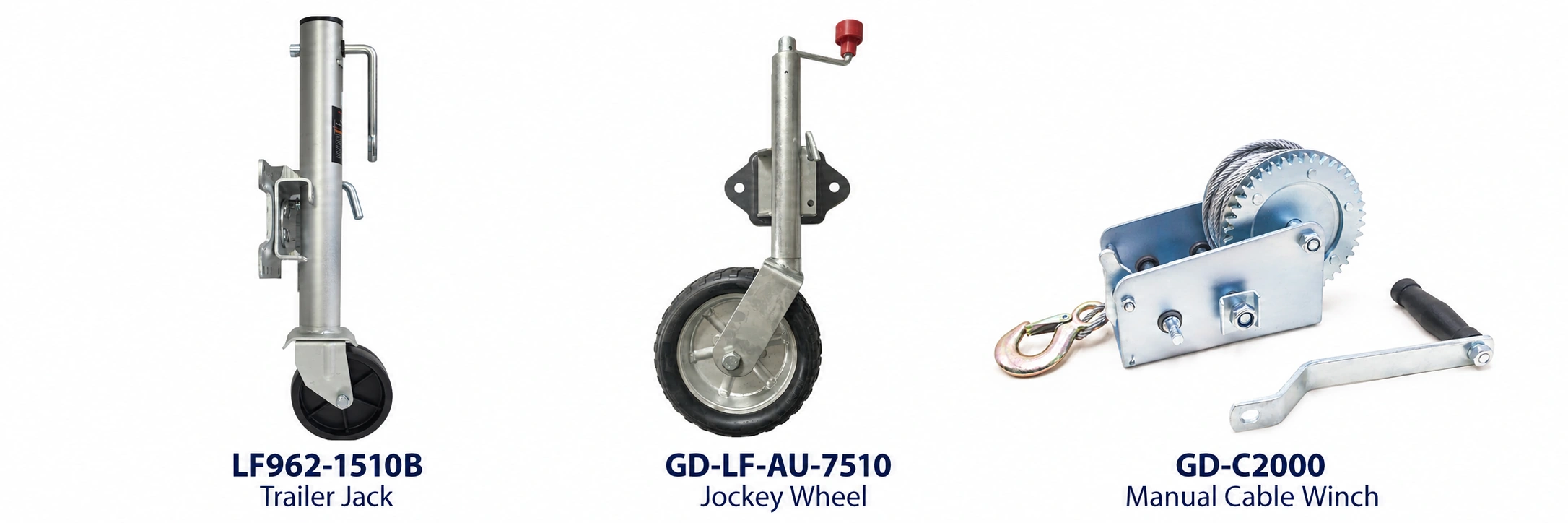
Several existing GOODIN models illustrate why product selection should be based on the full specification.
LF962-1510B — 1,500 lb Sidewind Trailer Jack
The LF962-1510B has a published 1,500 lb capacity, sidewind operation, a 6-inch wheel and 10 inches of adjustment travel. [9]
Its specified geometry also includes a 12.4-inch bracket-height reference and a 22.4-inch extended-height reference. These are published fields; confirm their measurement datums on the current model drawing. [9]
For a trailer manufacturer, these figures should be considered together with the current mounting drawing, actual support load and available crank clearance.
GD-LF-AU-7510 — 750 kg Heavy-Duty Jockey Wheel
The GD-LF-AU-7510 features a published 750 kg capacity, topwind operation, 10 inches of travel and a 10-inch rubber wheel.
Its construction includes a zinc-plated outer tube and a clear-zinc inner tube. [10]
For outdoor trailer applications, the important selection factors include the drawbar attachment, operating height, wheel-surface conditions and required storage clearance.
GD-C2000 — 2,000 lb Two-Speed Manual Winch
The GD-C2000 is a fixed-frame manual cable winch with a rated capacity of 2,000 lb, 4:1 and 8:1 gear ratios, and a 4.8 mm × 10 m cable. [11]
Its two-speed configuration provides different mechanical advantages for compatible pulling applications.
The buyer must still verify the expected line pull, winch-stand strength, cable arrangement and working clearance.
These three products serve different functions.
A trailer jack supports the trailer at its intended location. A jockey wheel adds a wheel-equipped support arrangement for compatible operations. A manual winch provides controlled pulling for an approved loading task.
Their ratings cannot be combined or substituted for one another.
What International Buyers Should Confirm
For OEM and distribution projects, GOODIN recommends identifying the intended application before comparing specific product models.
The most useful initial information includes:
- Trailer type and intended operating environment
- Actual load at the relevant support or pulling point
- Mounting structure and dimensional requirements
- Required working height and operating clearance
- Wheel, cable or strap configuration
- Finish and corrosion-exposure requirements
- Order quantity, destination market and applicable documentation needs
With these details established, buyers can compare suitable configurations more accurately and avoid relying on nominal capacity alone.
Application-focused sourcing: the next opportunity
The 140th Canton Fair reflects the diversity of the transportation equipment industry, from intelligent vehicles to established mechanical components.
At the same time, recent pickup camping and outdoor mobility discussions show how the intended use of a vehicle can create specific accessory requirements.
The commercial opportunity is not limited to the latest vehicle technology.
There is also continuing value in components that make trailers easier to couple, support, load and maintain within their approved operating conditions.
For manufacturers and distributors, the most useful product developments are those that address clearly defined compatibility, durability and application needs.
That may mean offering multiple mounting configurations, improving technical documentation, or specifying different materials and finishes for different operating environments.
These priorities are relevant whether the end customer operates a small recreational trailer, a boat trailer or a commercial utility trailer.
Conclusion: Outdoor Mobility Depends on More Than the Vehicle
The first phase of the 140th Canton Fair highlighted innovation across new-energy vehicles, smart mobility and automotive components.
Beyond the fair, outdoor vehicle equipment continues to generate practical discussions about payload, installation compatibility, durability and total cost.
These concerns connect modern mobility applications with the mechanical components that support everyday trailer operation.
A trailer jack must match the real support load and mounting geometry. A jockey wheel must suit its operating surface and installed configuration. A winch must meet the required pulling duty and loading arrangement.
As vehicles become more versatile, successful accessory sourcing depends less on choosing the most impressive specification and more on matching the right equipment to the complete application.
GOODIN supports international trailer equipment buyers with product configurations for different trailer-support and loading requirements.
Explore the GOODIN Trailer Jack Range, Manual Winches and Trailer Accessories to compare available models and discuss your sourcing requirements.
Sources & Further Reading
Exhibition categories are not evidence that all outdoor markets are growing. RVIA figures concern U.S. manufacturer wholesale shipments. The two Reddit threads are individual discussions by the same poster. Technical limits must follow the specific vehicle, rack and component documentation.
- MOFCOM · Mandalay consular economic office — Introduction of the 140th Canton Fair
- Canton Fair — Official exhibition dates
- Overland Expo — Wild Land’s PickupMate adds camp space without permanently converting your truck
- Outside — How to turn your pickup truck into a camping rig
- RV Industry Association — August RV shipment report
- GearJunkie — Rooftop tent comparison and buying considerations
- Reddit · r/overlanding — Pickup camper payload discussion
- Reddit · r/overlanding — Truck camper build cost discussion
- GOODIN — LF962-1510B sidewind trailer jack
- GOODIN — GD-LF-AU-7510 heavy-duty jockey wheel
- GOODIN — GD-C2000 two-speed manual cable winch
- Ford — Owner’s manual: load carrying and load limits
- Thule — Rooftop tent guidelines: vehicle and rack compatibility
- Dutton-Lainson — Winch and jack frequently asked questions
- GOODIN — GOODIN at the 140th Canton Fair
- Wild Land — PickupMate Wingman X: specifications and installation weight
Beyond Humanoid Robots: What the 140th Canton Fair Reveals About the Future of Chinese Manufacturing
Beyond Canton Fair Prices: Why Global Buyers Are Paying More Attention to Supplier Verification
Related Article