Beyond Canton Fair Prices: Why Global Buyers Are Paying More Attention to Supplier Verification
In this article
140th Canton Fair · Market Insights 02
A competitive quotation can start a conversation at the Canton Fair. But for international buyers, it is rarely enough to establish a reliable purchasing relationship.
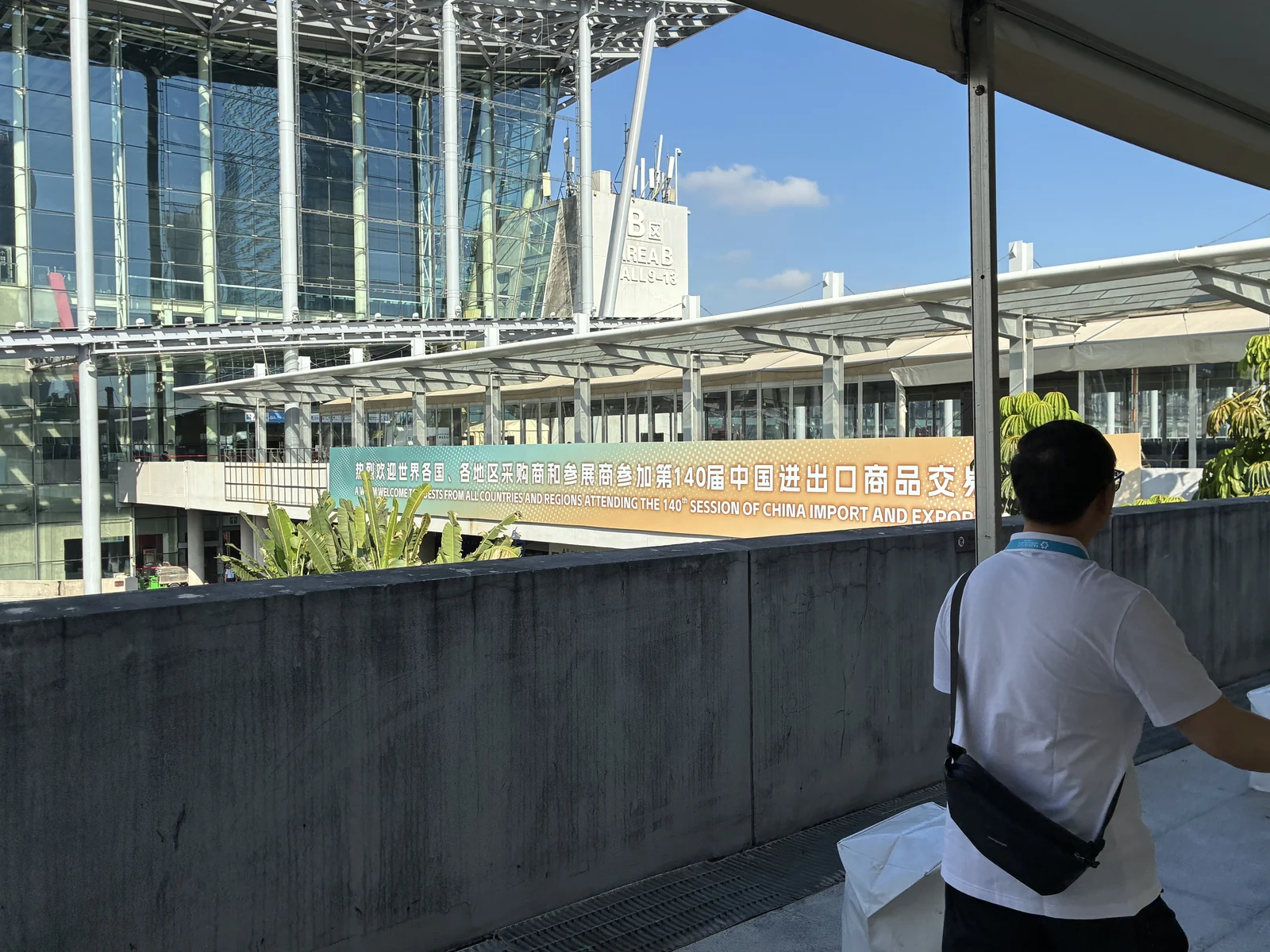
During the first phase of the 140th China Import and Export Fair, held in Guangzhou from October 15 to 19, overseas buyers compared products, met potential suppliers and explored manufacturing opportunities across a broad range of industries. [2] [14]
A notable sourcing practice has also attracted attention: buyers are using the exhibition to identify promising suppliers before visiting production facilities and examining their manufacturing capabilities.
An October 19 StringersHub video report made available through Reuters Connect documented this approach among international visitors to the fair. Russian buyer Azat described the exhibition as an opportunity to compare products and understand the market before going deeper into manufacturing operations through factory visits. The platform identifies StringersHub as the provider and states that Reuters Connect has not verified or endorsed the material. [1]
His experience reflects an important distinction in international procurement.
A supplier may offer the right product at an attractive price, but buyers still need to establish who will manufacture it, whether the specifications can be met and how quality will be maintained during bulk production.
For industrial equipment buyers, including importers of trailer jacks, jockey wheels and other mechanical components, these questions can have a direct impact on product compatibility, delivery reliability and the total cost of sourcing.
Price versus total procurement cost
Price remains a major factor in international sourcing.
Importers and distributors operate under competitive market conditions, and even a relatively small difference in unit cost can become significant across a large order.
However, comparing two quotations requires more than comparing their final numbers.
Consider two suppliers offering a trailer jack described as having a 2,000 lb capacity.
Both quotations may appear to cover the same product category. Yet the supplied equipment could differ in mounting arrangements, adjustment travel, surface finishes, operating mechanisms or other technical characteristics.
These differences may affect compatibility with the intended trailer.
Even where the technical specifications appear identical, commercial conditions can differ.
One quotation might include a particular packaging arrangement, while another assumes bulk packaging. Delivery terms, inspection requirements, production quantities and the treatment of nonconforming goods may also vary.
The International Chamber of Commerce's Incoterms rules help define how certain delivery costs, responsibilities and risks are allocated between buyers and sellers. Consequently, two prices offered under different delivery terms should not be treated as directly equivalent. [8]
A lower initial quotation can become more expensive when the buyer encounters incorrect specifications, rework, rejected shipments or unexpected logistics costs.
The objective is not necessarily to select the most expensive supplier.
It is to understand what the quoted price includes, what evidence supports the product specification and which risks remain with the buyer.
From booth selection to accountable manufacturing
The 140th Canton Fair provides an opportunity to compare suppliers and products within a concentrated exhibition environment.
However, an exhibition booth reveals only part of a company's capabilities.
A displayed sample can demonstrate product design, appearance and selected technical features. It does not necessarily establish how consistently the supplier can produce the same product across a larger order.
The distinction has become particularly visible during the current fair.
In an October 19 StringersHub report available through Reuters Connect, titled Foreign Buyers Adopt "Fair First, Factory Next" Sourcing Strategy at Canton Fair, international buyers were shown visiting manufacturing facilities after identifying potential suppliers at the exhibition.
One Russian buyer visited a robotics manufacturer in Guangzhou's Panyu District to observe the manufacturing process after comparing equipment at the fair. [1]
The value of this approach is that different purchasing questions are answered at different stages.
At the exhibition, buyers can determine whether a product deserves further evaluation.
During a factory visit, they can investigate production equipment, manufacturing processes, quality-control arrangements and the relationship between the supplier's stated capabilities and the products being offered.
A factory visit is particularly useful when an order involves customization, substantial purchasing quantities or technically demanding products.
However, physical visits are not the only method of verification. Depending on the order's value and risk, buyers may also use documented facility reviews, live video inspections, production records or independent audits.
The central principle is to connect the supplier's claims with appropriate evidence.
One question frequently discussed among international buyers is whether a potential supplier is actually the manufacturer of the products being offered.
A discussion on Reddit's r/Alibaba community examined how buyers could evaluate manufacturing claims rather than relying solely on company photographs or promotional material. [3]
The discussion highlighted the relationship between a supplier's legal identity, production facility, manufacturing process and specific product.
This distinction is important because international supply arrangements can take several legitimate forms.
A supplier may operate its own production facility, coordinate manufacturing through associated companies, work with specialized subcontractors or act primarily as an exporter or trading company.
None of these business models automatically determines whether the supplier is reliable.
What matters is whether its role is clearly defined and whether it can demonstrate adequate control over product specifications, quality and delivery.
Confirm the Contracting Entity
Before finalizing a substantial order, buyers should be able to establish the legal entity responsible for the transaction.
The company named in the quotation, purchase agreement, invoice and receiving bank account should be understood, including any legitimate differences arising from an authorized export or group-company arrangement.
Understand Who Performs the Manufacturing
Where production capability is important, relevant questions include:
- Which facility manufactures the ordered product?
- Which operations are performed directly and which are subcontracted?
- How are product specifications communicated to production?
- How are critical dimensions and performance requirements checked?
- Who is responsible for correcting nonconforming products?
These questions help identify responsibility throughout the manufacturing chain.
Match the Evidence to the Product
A factory photograph or an impressive equipment list is most useful when it relates to the actual products being purchased.
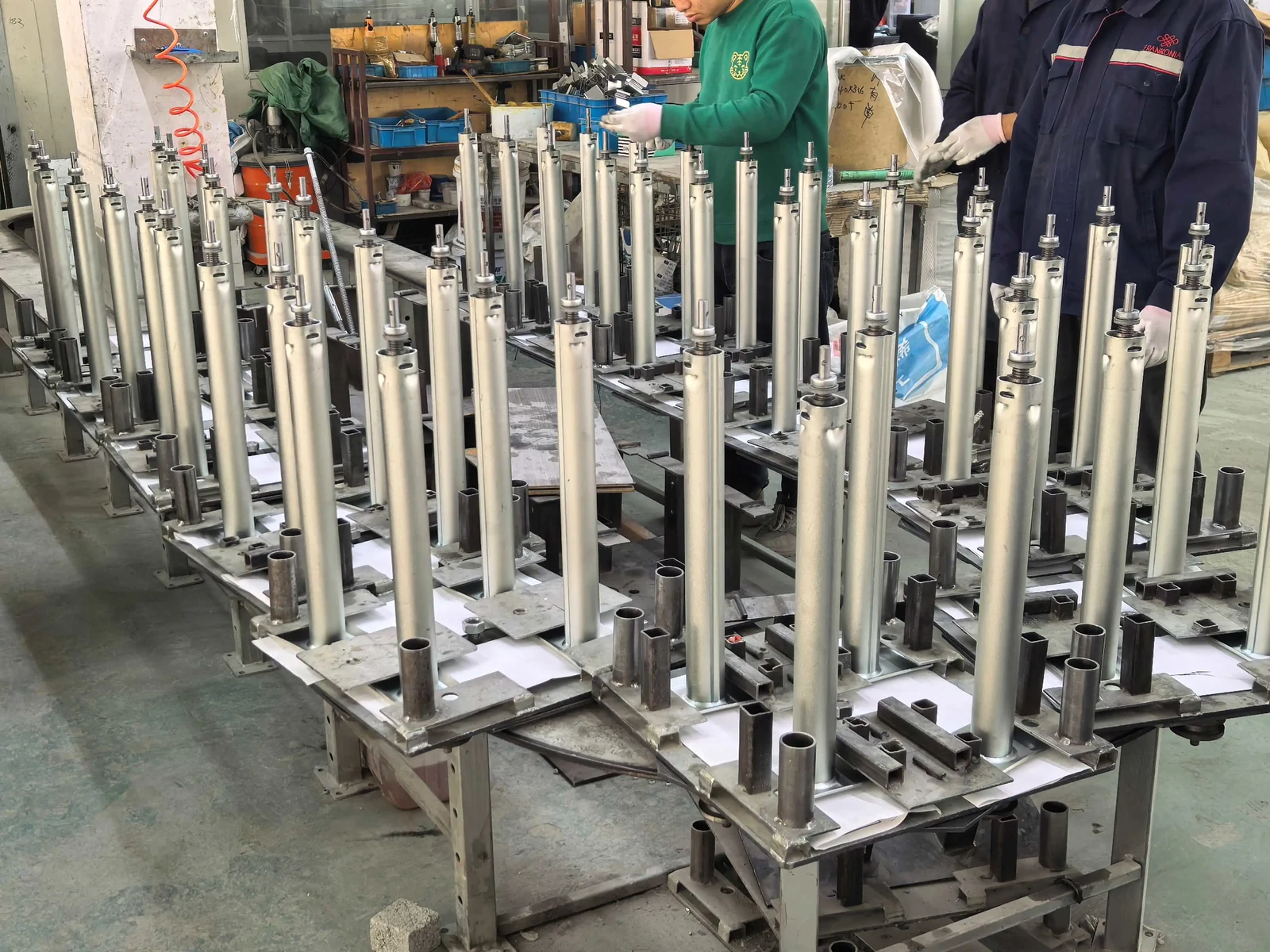
For example, a buyer sourcing trailer jacks may want to understand how the relevant tube components, lifting mechanisms, welded assemblies and finishing processes are managed.
The purpose of verification is not simply to determine whether a factory exists. It is to understand whether the supply arrangement can meet the order's defined requirements.
Documents, certification and applicable requirements
Product documentation is another area where buyers benefit from making more precise distinctions.
A supplier may provide a business registration, ISO management system certificate, laboratory test report or product-related declaration.
These documents serve different purposes.
A company registration confirms aspects of legal identity. It does not demonstrate the mechanical performance of a trailer jack.
An ISO 9001 quality management system certificate concerns the certified organization's management system within its stated scope. It is not a product-specific performance approval. [13]
A test report may provide evidence of a particular product's performance under identified test conditions. Its relevance depends on the tested model, configuration, method and results.
Verify Certificates Against Their Scope
For accredited management system certifications, IAF CertSearch provides a database for checking certification information and status. [7]
Product-specific documents should be evaluated through the applicable issuing body, certification scheme or laboratory records.
Useful details include the exact company or product identity, model designation, scope, applicable standard, issuing organization and document status.
CE Marking Is Not a Universal Requirement
Buyers sourcing for European markets should also distinguish between products that require CE marking and those that do not.
The European Commission states that CE marking is required only for product categories covered by legislation that specifically provides for it. [6]
Therefore, the correct starting point is to identify the applicable legislation for the particular product and its intended use—not to request a generic CE certificate for every item in a supplier's catalog.
Requirements can differ significantly between ordinary mechanical trailer components and regulated marine safety equipment.
For products requiring third-party conformity assessment, the relevant assessment body and its authorized scope also matter.
A credible compliance review connects the document to the exact product configuration and destination-market requirements.
Supplier certification, product testing and regulatory conformity are related considerations, but they are not interchangeable.
MOQ, samples and the first production order
Minimum order quantity, or MOQ, is another recurring concern among overseas buyers.
In another Reddit discussion, a buyer considering an unverified supplier questioned whether a very low MOQ was sufficient reason to switch from an established supplier. [4]
An earlier discussion in r/smallbusiness raised a related issue: whether a buyer should commit to a 500-unit order before receiving and evaluating a sample. [5]
These individual discussions are examples of purchasing questions, not statistics about supplier risk or Chinese manufacturing. They show why MOQ should be evaluated alongside product verification rather than as an isolated commercial number.
A Lower MOQ Can Reduce Initial Exposure
For a distributor testing a new product category, a smaller initial order may reduce inventory exposure.
It can also allow the buyer to assess product fit, packaging and customer acceptance before committing to a larger quantity.
However, a lower MOQ does not establish manufacturing quality or supplier reliability by itself.
Similarly, a higher MOQ does not necessarily indicate an unwillingness to support smaller customers. Production setup, material purchasing, packaging and customization can all affect the economically viable order size.
Samples Confirm a Specific Configuration
A sample can help buyers evaluate physical dimensions, operation, appearance and other agreed characteristics before approving production.
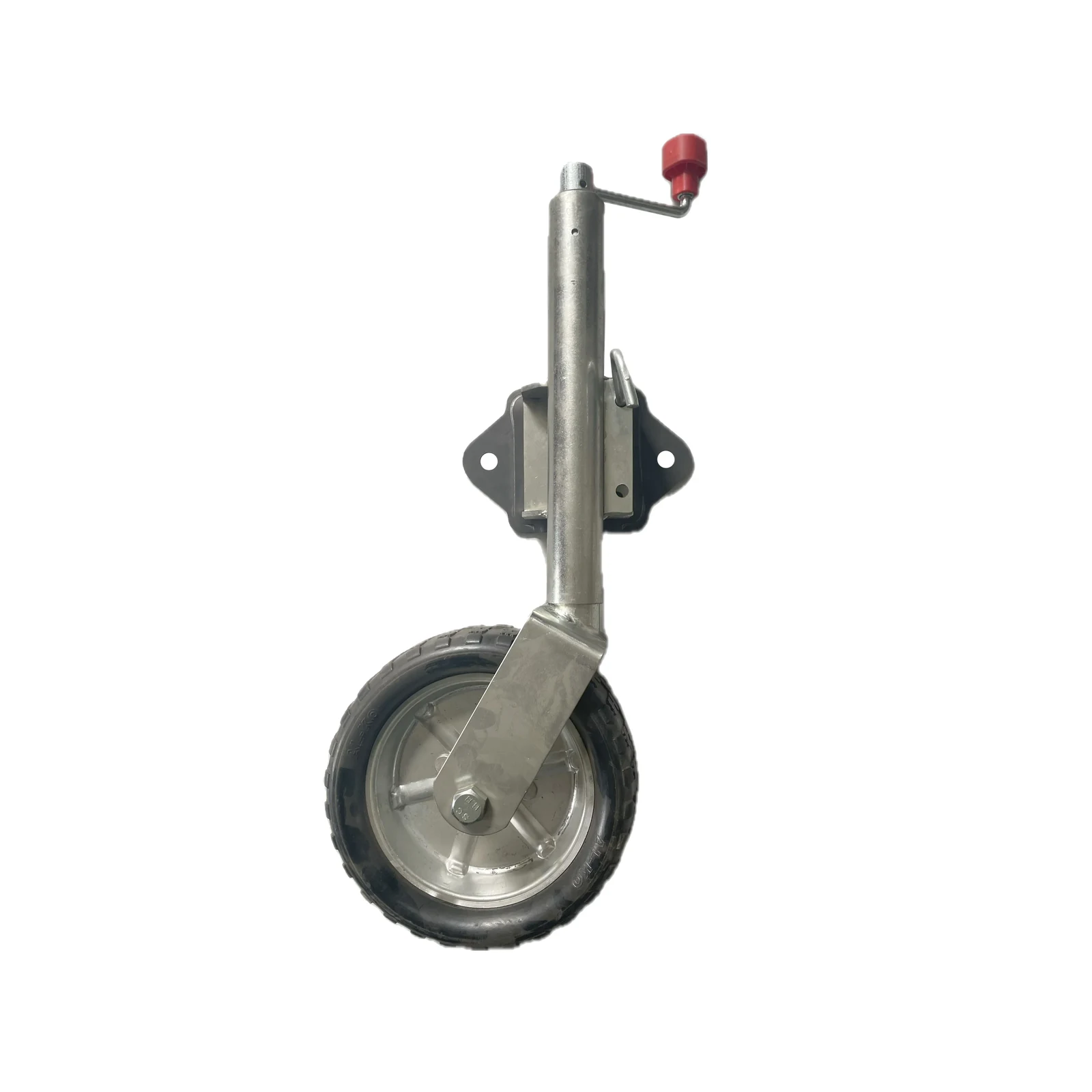
For a jockey wheel, that may include the tube dimensions, wheel construction, mounting arrangement, adjustment travel and locking mechanism.
For a trailer jack, it may include the crank position, working height, attachment interface and the performance characteristics identified in the purchasing specification.
Where load testing or other specialized testing is required, the sample evaluation should use suitable test methods and equipment rather than relying on appearance or informal demonstrations.
A Good Sample Is Not the Same as a Verified Production Batch
Sample approval confirms that the evaluated unit meets certain requirements.
It does not automatically prove that every subsequent production unit will meet them.
This is why buyers should establish a documented reference specification and appropriate production inspection arrangements.
Where practical, a smaller initial production order can provide additional information about consistency, packaging, identification and delivery performance.
The transition from sample approval to repeatable bulk production is a separate stage of supplier evaluation.
Technical verification of functional components
Mechanical trailer parts provide a useful example of why product verification needs to go beyond catalog descriptions.
Consider two trailer jacks with similar advertised capacity.
They may differ in mounting height, adjustment stroke, handle orientation, bracket configuration or wheel construction.
A replacement component with sufficient nominal capacity can still be unsuitable if it does not fit the existing trailer.
Trailer Jack: Confirm Capacity and Installation Geometry
GOODIN's LF962-1510B is a 1,500 lb sidewind trailer jack with a 6-inch wheel and 10 inches of published travel. [11]
These specifications provide useful starting points, but a buyer replacing an existing jack must also confirm the mounting arrangement and relevant installed dimensions.
A capacity figure alone cannot establish interchangeability.
For an OEM application, the purchasing specification should identify the actual load at the jack position, the trailer-side mounting interface, working-height requirements and available crank clearance.
Jockey Wheel: Verify More Than Wheel Diameter
GOODIN's GD-LF-AU-7510 heavy-duty jockey wheel has a published 750 kg capacity, a 10-inch rubber wheel, topwind operation and 10 inches of travel. [12]
The wheel diameter is important, but it does not define the complete installation.
The buyer also needs to evaluate the mounting bracket, stored and deployed positions, support load, ground conditions and required operating clearance.
When comparing different suppliers, these technical details should be aligned before the prices are considered equivalent.
Material and Finish Claims Need Clear Definitions
Descriptions such as "zinc plated" or "corrosion resistant" are useful starting points, but they do not define every aspect of coating performance.
Where corrosion exposure is a significant purchasing requirement, buyers may need to agree on the relevant coating process, measurable characteristics and acceptance criteria.
This is particularly important for equipment exposed to road salt, marine environments or prolonged outdoor storage.
The purpose of technical verification is to confirm that the product is appropriate for its intended application—not simply that it resembles the requested product.
From approved sample to bulk delivery
Even after the supplier and sample have been approved, several important purchasing decisions remain.
Confirm the Production Specification
The purchase order should reference the agreed model, drawings, technical requirements, packaging and other applicable specifications.
Any changes between the approved sample and production version should be documented and agreed upon.
Define Inspection and Acceptance Requirements
Inspection requirements should be appropriate to the product and purchasing risk.
They may cover dimensions, operation, visible workmanship, identification, packaging and selected performance characteristics.
For higher-risk applications, specialized testing or additional production-stage checks may be appropriate.
Pre-shipment inspections can provide an independent assessment of selected finished goods against agreed requirements. [9]
However, sample-based inspection has defined limits and should not be treated as proof that every unit is defect-free.
Confirm Delivery and Commercial Terms
Buyers should also understand the agreed delivery term, production lead time, payment milestones, shipping arrangements and procedures for resolving nonconforming goods.
A quotation that does not clearly define these conditions can be difficult to compare with another supplier's offer.
For repeat purchasing relationships, consistent communication and traceable order specifications help reduce misunderstandings between the initial inquiry and final delivery.
A risk-proportionate verification framework
A structured purchasing process can help buyers allocate verification efforts according to the size and complexity of the order.
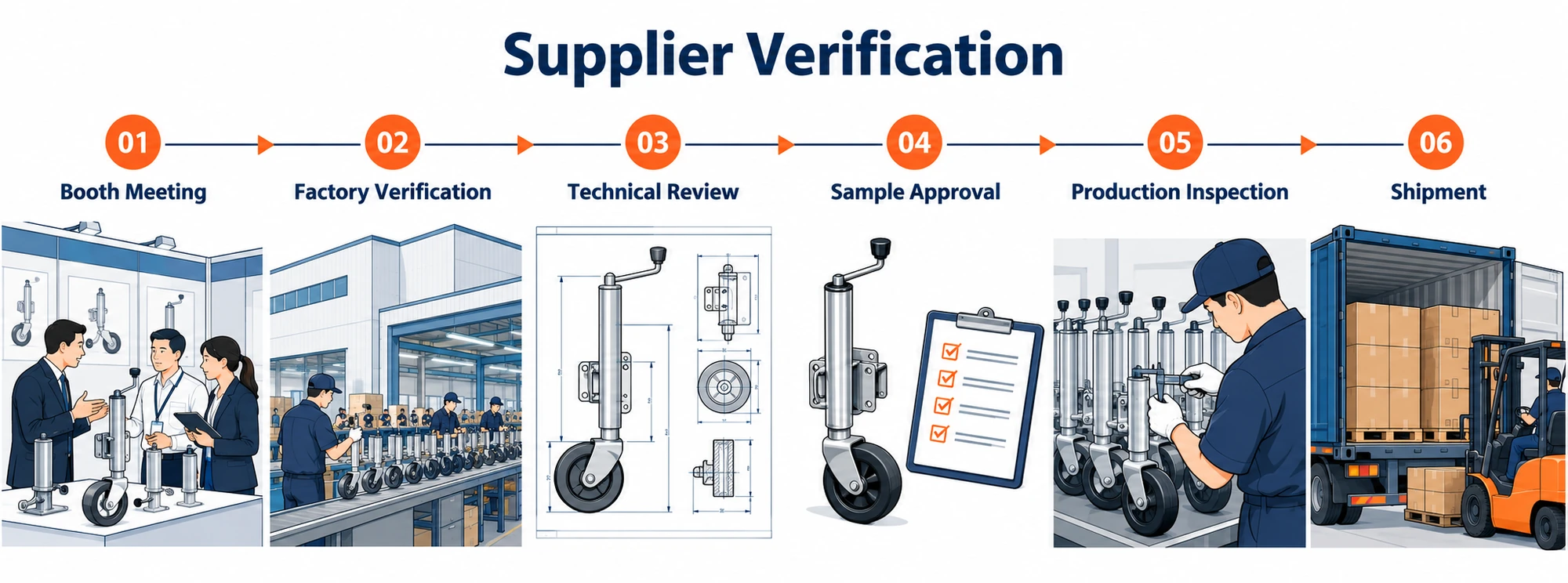
| Stage | Main purchasing question | Useful evidence |
|---|---|---|
| Exhibition meeting | Is the product relevant to our application? | Physical sample, model information, technical discussion |
| Supplier qualification | Who is responsible for manufacturing and delivery? | Company identity, production arrangements, facility information |
| Technical review | Does the product meet our requirements? | Drawings, specifications, model-specific test evidence |
| Sample approval | Does the proposed configuration function as required? | Evaluated sample and recorded acceptance results |
| Commercial review | Are the quantity, price and delivery terms workable? | MOQ, quotation, lead time, agreed trade terms |
| Production verification | Does the order match the approved specification? | Production records and appropriate inspections |
| Shipment approval | Are the agreed goods ready for delivery? | Final inspection results, quantities, packing and shipping documents |
Not every order requires the same level of supplier auditing.
A standard low-value replacement component and a customized, safety-critical industrial assembly may justify different verification arrangements.
What matters is that the extent of verification reflects the product's consequences of failure, commercial exposure and intended application.
GOODIN: application requirements and verifiable information
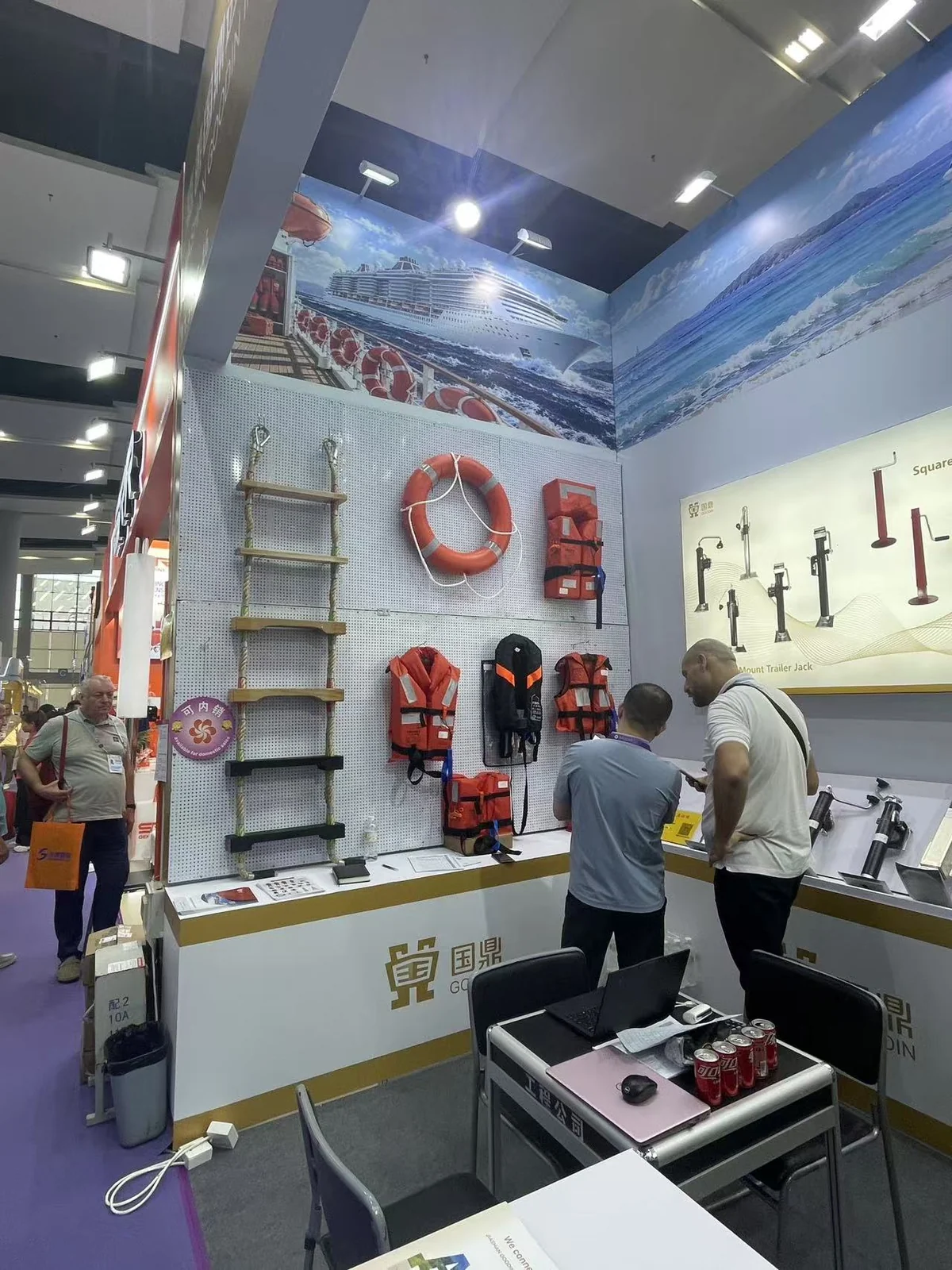
GOODIN participated in Phase 1 of the 140th Canton Fair, presenting trailer components and marine safety equipment to international buyers.
During the exhibition, our team received inquiries from the United States, United Kingdom, Australia, Brazil, Sri Lanka, Pakistan and Dubai in the United Arab Emirates. [14]
These interactions created opportunities to introduce product configurations and establish communication with buyers operating in different markets.
For companies sourcing trailer components, the next stage after an exhibition discussion is often to clarify the technical and commercial requirements of the intended application.
A distributor may need a product that matches an existing aftermarket range. A trailer manufacturer may need drawings and mounting information for a particular design. A buyer developing a new product program may need to compare configurations before requesting samples or quotations.
GOODIN's range includes trailer jacks, jockey wheels, winches, trailer accessories and marine safety products, each with different application and purchasing considerations.
The appropriate sourcing discussion therefore begins with the actual product requirements.
For mechanical trailer components, dimensions, load ratings, installation arrangements and operating conditions are especially important.
For marine safety equipment, applicable standards, product-specific documentation and intended use require separate attention.
These considerations help turn an initial exhibition inquiry into a more informed technical and commercial evaluation.
GOODIN View: Supplier Confidence Is Built Through Verifiable Product Information
The 140th Canton Fair illustrates the continuing importance of face-to-face meetings in international sourcing.
Buyers can examine products, discuss requirements and compare suppliers efficiently.
But a promising conversation is only the beginning of a purchasing relationship.
For GOODIN, a useful sourcing process should allow customers to connect three essential elements:
Product specification: What exactly is being supplied, and how does it match the intended application?
Manufacturing and quality requirements: What information or verification is needed to establish that the ordered product meets the agreed requirements?
Commercial execution: How will quantities, samples, production arrangements and delivery terms be confirmed?
These questions are particularly relevant to OEM manufacturers and distributors handling multiple product models or serving different destination markets.
Clear product identification and realistic technical discussions help buyers make comparisons on a consistent basis.
Likewise, suppliers benefit when customers provide accurate requirements for dimensions, mounting, capacity, materials, quantity and intended operating conditions.
The result is a more productive purchasing process for both sides.
For buyers evaluating GOODIN trailer components, the company offers product information across multiple trailer jack and jockey wheel configurations, including the LF962-1510B Sidewind Trailer Jack and GD-LF-AU-7510 Heavy-Duty Jockey Wheel.
These model-specific specifications provide a practical starting point for further sourcing discussions.
Conclusion: verification begins where the quotation ends
The 140th Canton Fair continues to bring international buyers and Chinese suppliers together.
Recent reporting on factory visits, alongside ongoing discussions among overseas buyers, highlights an important purchasing principle: selecting a supplier involves more than comparing prices.
Company identity, production arrangements, technical documentation, samples, order quantities and delivery requirements each answer a different procurement question.
For industrial components such as trailer jacks and jockey wheels, these checks are especially valuable because even small differences in specifications can affect installation compatibility and product performance.
A competitive quotation helps identify an opportunity. Clear specifications and appropriate verification help determine whether that opportunity can develop into a reliable order.
The most valuable supplier is not necessarily the one offering the lowest initial price, but the one whose products, capabilities and commercial arrangements can be evaluated against the buyer's actual requirements.
International importers, distributors and OEM customers can explore GOODIN Trailer Jack Range and contact the GOODIN team to discuss product specifications, suitable configurations and sourcing requirements.
Sources & Further Reading
The field report is supplied by StringersHub via Reuters Connect, not Reuters-verified reporting. Reddit posts illustrate individual questions, not industry risk rates. Verification should be proportionate to the order.
- StringersHub / Reuters Connect — Foreign buyers adopt “fair first, factory next” sourcing at Canton Fair
- Canton Fair — Official exhibition information
- Reddit · r/Alibaba — Verifying a supplier’s manufacturing claims
- Reddit · r/Alibaba — Purchasing from newer, unverified suppliers
- Reddit · r/smallbusiness — Samples before committing to a 500-unit order
- European Commission — CE marking: scope and responsibilities
- IAF CertSearch — Management system certification verification — FAQ
- International Chamber of Commerce — Incoterms rules
- QIMA — Pre-shipment inspection
- GOODIN — Trailer jack product range
- GOODIN — LF962-1510B — 1,500 lb sidewind trailer jack
- GOODIN — GD-LF-AU-7510 — 750 kg heavy-duty jockey wheel
- ISO/CASCO — Attestations of conformity: management systems versus products
- GOODIN — GOODIN at the 140th Canton Fair
From Smart Mobility to Outdoor Adventures: Vehicle Accessory Trends at the 140th Canton Fair
Record Overseas Buyer Attendance at the 140th Canton Fair: What It Reveals About Global Sourcing in 2026
Related Article