The 2026 Trailer Market Is Splitting: Why Utility Demand Is Holding Up While Towable RVs Cool
On this page
The most useful way to describe the North American trailer market in 2026 is not growth or decline.
It is divergence.
Trailers bought to move equipment, support contractors, replace aging fleet assets or serve construction and infrastructure work are responding to a different set of economics than trailers purchased primarily for recreation.
That distinction is becoming visible in the data.
U.S. heavy-duty trailer orders strengthened sharply in July 2026. FTR reported 16,862 net orders, up 22% from June and 130% from the unusually weak July 2025 comparison. Year-to-date orders were 25% above the prior year, although production remained nearly flat and analysts continued to describe the recovery as uneven rather than a broad expansion cycle.
Towable RVs are telling a very different story.
RV Industry Association data show 17,754 towable RV wholesale shipments in July, down 9.8% year over year. Through the first seven months of 2026, towable shipments were down 16.1%, with conventional travel trailers down 15.7% and fifth wheels down 19.5%.
The result is a trailer market that increasingly needs to be analyzed by end use, not as one industry.
Market Takeaway: Commercial demand and recreational demand are not interchangeable. A contractor replacing a trailer that earns revenue every day makes a fundamentally different purchase decision from a household considering a discretionary travel trailer.

1. There Is No Single “Trailer Market” in 2026
The word trailer covers businesses with very different customers, replacement cycles and economic sensitivities.
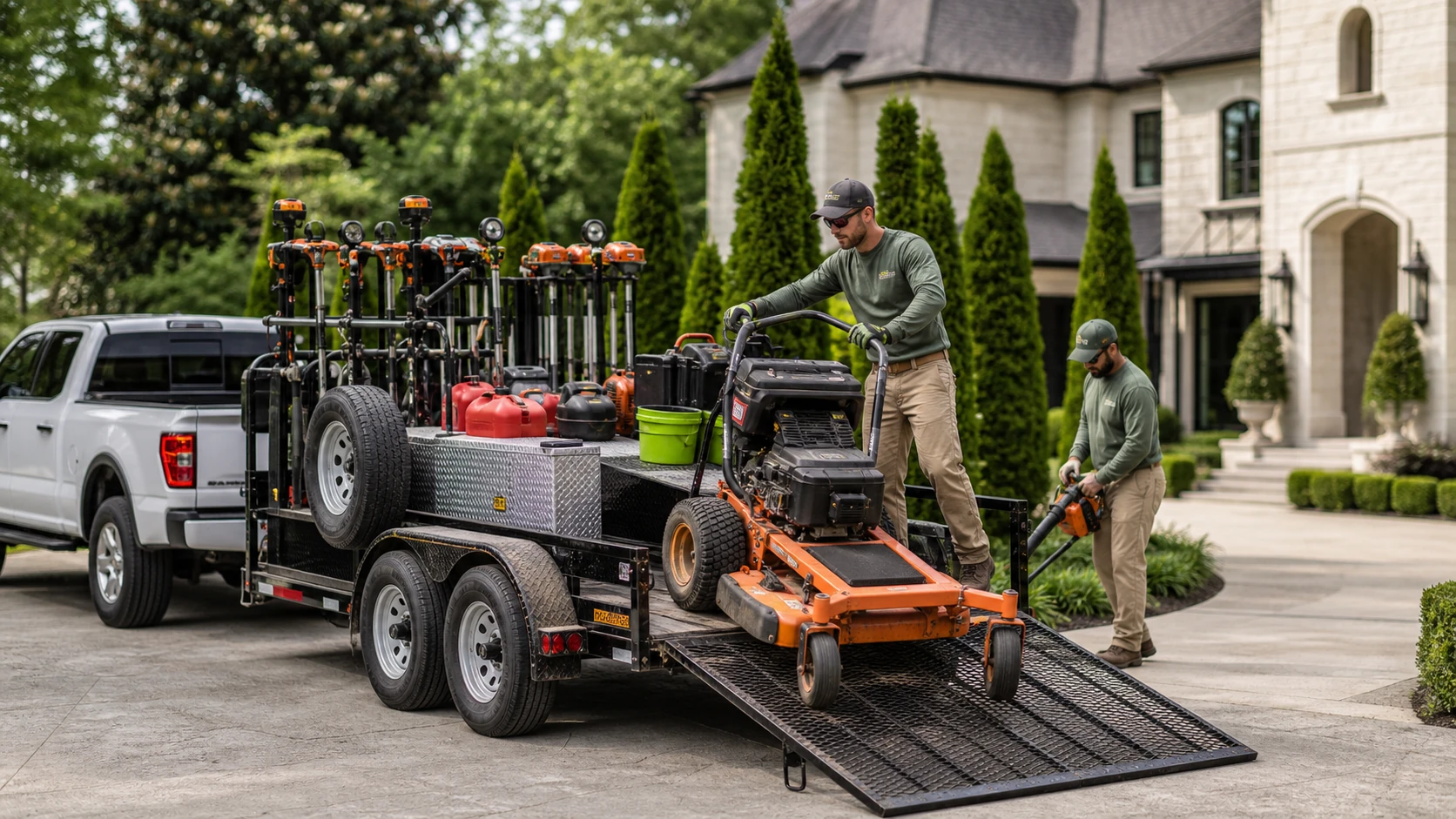
A landscaping contractor may need an open utility trailer to transport zero-turn mowers.
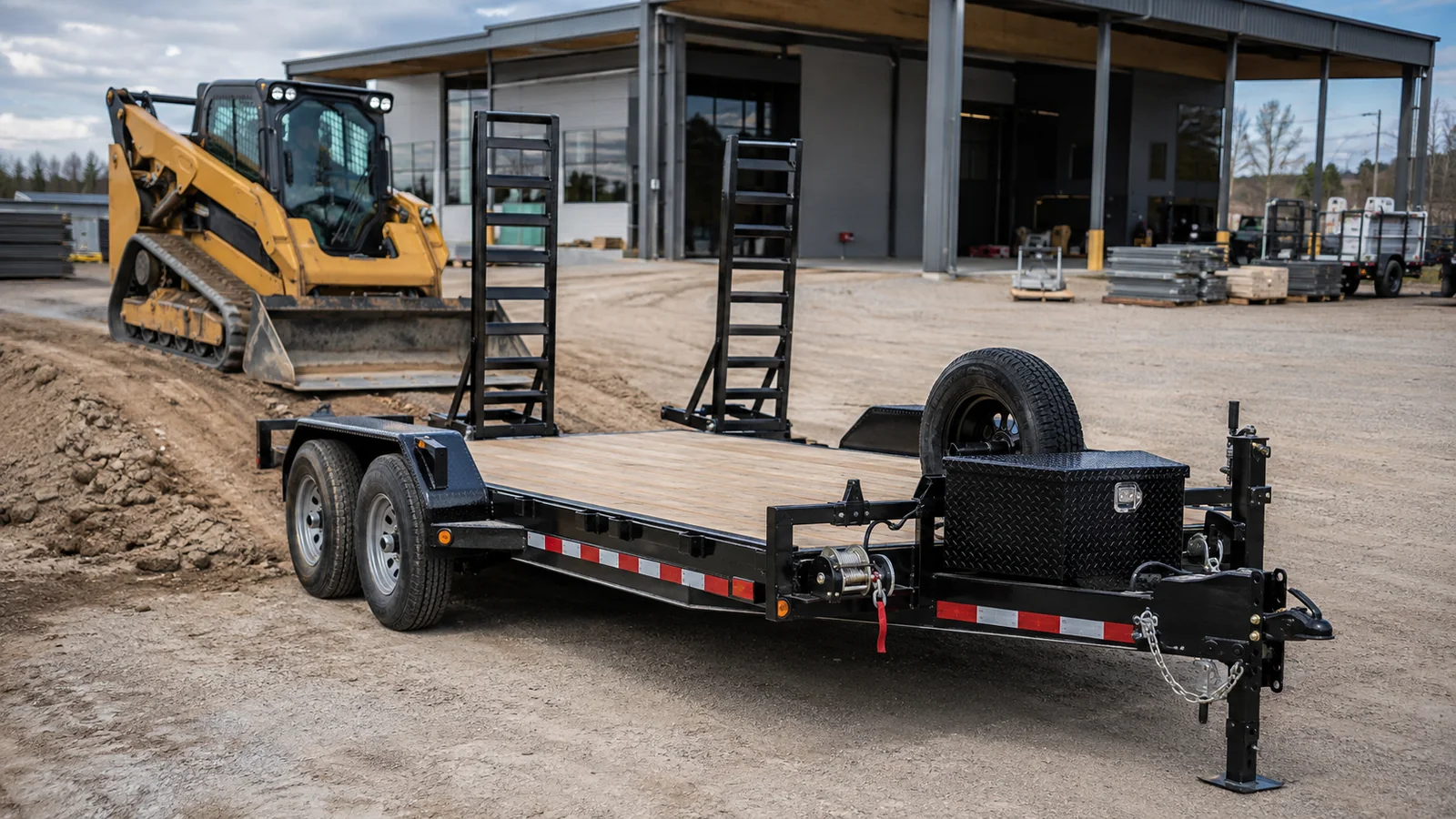
A construction company may need equipment, dump or flatbed trailers to move machines between jobsites.
A utility contractor may require specialized transport equipment regardless of whether household consumer sentiment is improving.
A freight fleet may replace aging dry vans, reefers or flatbeds when maintenance costs, utilization and freight economics justify the investment.
A family purchasing a travel trailer faces another calculation entirely.
That purchase competes with vacations, vehicles, home improvements and other discretionary spending. Financing cost, household budgets, consumer confidence and the perceived cost of future travel all matter.
This is why a headline such as “The Trailer Market Is Growing” is increasingly unhelpful.
In 2026, the better questions are:
- Which trailer segment?
- Who is buying it?
- Does the trailer generate revenue or consume discretionary income?
- Is the purchase a replacement, an expansion or a lifestyle decision?
- How much financing is involved?
- What does dealer inventory look like?
- Are OEMs building ahead of demand or responding to confirmed orders?
Those questions reveal the split.
2. Commercial Trailer Orders Are Showing Firmer Signals
The clearest hard-data evidence comes from the commercial trailer market.
FTR reported July U.S. heavy-duty trailer net orders of 16,862 units, 130% above July 2025 and 23% above the 10-year July average. ACT Research's preliminary estimate also showed a very strong year-over-year improvement, although both firms caution that the comparison is amplified by exceptionally weak ordering conditions in 2025.
That distinction matters.
A 100%-plus year-over-year increase does not mean the trailer industry has suddenly entered a boom.
It means the comparison base was low and customers are returning to the market selectively.
June provided another clue. FTR found refrigerated van and flatbed orders produced much of the year's improvement, while dry-van demand was less consistent. Almost all other tracked segments improved from the prior year.
ACT Research similarly describes 2026 flatbed and vocational trailer demand as receiving support from construction, infrastructure, utility, energy and data-center-related activity.
That is much closer to the underlying story:
work-related trailer demand has reasons to exist even when consumers are cautious.
3. Why Utility and Work Trailers Can Be More Resilient
There is an important data limitation here.
Unlike the RV sector, where RVIA publishes a consistent monthly wholesale series, the fragmented light- and medium-duty utility trailer market does not have one equally comprehensive public monthly retail index covering every open utility, landscape, equipment, dump and specialty trailer.
So claims that “utility trailer sales are up X% nationally” should be treated cautiously unless the dataset and segment definition are clearly specified.
But the demand environment surrounding those trailers provides useful evidence.
Equipment World's 2026 Tech & Spec research found that 83% of responding construction contractors planned to purchase equipment during the year. A separate reader poll found 78% of participating contractors expected to buy at least one piece of construction equipment. These surveys are not trailer-sales statistics, but they show continued capital spending among the type of businesses that routinely use utility and equipment trailers.
The broader equipment market provides similar signals. Deere reported 18% year-over-year sales growth in its construction and forestry segment in its latest quarter, citing U.S. infrastructure investment and data-center development among the demand drivers.
The correct conclusion is therefore not:
“Every utility trailer manufacturer is growing.”
It is:
Commercial and vocational demand has stronger functional support than purely discretionary recreation demand.
Revenue-producing equipment changes the purchase equation
For a contractor, a trailer may be:
- required to transport revenue-producing machinery;
- necessary to mobilize crews between jobsites;
- replacing an asset with excessive maintenance downtime;
- needed to support a new contract;
- part of fleet standardization;
- required because payload, deck length or equipment dimensions have changed.
That makes the trailer a business tool.
The purchase can still be delayed by financing costs or uncertainty, but delaying it may also create an operational cost.
A recreational trailer rarely has the same economic urgency.

4. Towable RVs Are Experiencing a Clearer Downcycle
The recreational side of the market is much easier to quantify.
In July 2026:
| Towable RV category | July 2026 vs. July 2025 | 2026 YTD vs. 2025 YTD |
|---|---|---|
| Travel trailers | -9.2% | -15.7% |
| Fifth wheels | -16.7% | -19.5% |
| Folding camping trailers | +36.4% | -3.4% |
| Truck campers | +18.8% | +6.2% |
| All towable RVs | -9.8% | -16.1% |
Source: RV Industry Association July 2026 manufacturer shipment survey.
Retail has also been weak.
Statistical Surveys reported that new towable RV sales in May were 19.61% below the same month in 2025. Travel-trailer retail registrations were down 20.29% year over year.
This is no longer just a soft wholesale ordering month.
The weakness is visible across both manufacturer shipments and consumer registrations.

5. The 2026 RV Forecast Has Already Been Rewritten
One of the strongest signals is not a monthly number.
It is the change in expectations.
In March 2026, RVIA's Spring forecast still projected a median of roughly 349,000 wholesale RV shipments for the year.
By the Summer 2026 forecast, that median had been reduced to approximately 314,000 units—8.2% below the 342,200 RVs shipped in 2025. RVIA cited higher financing costs, uncertainty, inflationary pressure on household budgets and softer discretionary demand.
That forecast revision tells manufacturers and suppliers something important:
the industry is not simply waiting for a seasonally stronger month. Expectations for the full year have been reset.
And because towables account for most RV industry volume, weakness in conventional travel trailers and fifth wheels has a particularly large effect on OEM production and component demand.
6. Dealer Inventory Is Being Worked Down—not Simply Piled Up
Inventory requires careful interpretation.
It is tempting to describe every weak RV market as an “inventory glut,” but the 2026 picture is more nuanced.
Patrick Industries estimated that second-quarter RV retail sales were approximately 99,200 units while wholesale shipments were only about 77,600. That implies dealers sold significantly more units than manufacturers shipped into the channel during the quarter, producing an estimated inventory reduction of roughly 21,600 units.
Patrick estimated dealer inventory at approximately 18–20 weeks of supply, down from 20–22 weeks at the end of the first quarter and below historical pre-pandemic averages.
THOR Industries reported a similar adjustment. Independent dealer inventory of its North American towable products was down 17.3% year over year at the end of April, while the company described the selling season as muted and dealer ordering as cautious.
So the 2026 story is not simply:
too many RVs sitting at dealers.
It is increasingly:
OEMs and dealers are actively reducing exposure to weak retail demand.
That distinction matters to suppliers.
7. OEM Production Is Becoming More Disciplined
When retail demand weakens, manufacturers have three basic choices:
- continue building and push inventory into dealers;
- reduce pricing aggressively to maintain volume;
- slow production and protect channel inventory.
The RV industry is clearly using the third lever.
THOR reported a 25% year-over-year decline in North American towable wholesale shipments in its fiscal third quarter. Winnebago's towable unit deliveries in its latest reported quarter were down 26.5% year over year.
Patrick Industries specifically described OEMs as maintaining lower production volumes while dealers worked inventory down.
For the market, that discipline is healthier than uncontrolled overproduction.
For component manufacturers, however, it creates an immediate operational reality:
a 15% decline in retail demand can create a larger short-term reduction in OEM purchasing when customers are simultaneously destocking.
This is why suppliers should watch build schedules and dealer inventory—not just retail registrations.
8. Pricing Pressure Does Not Always Mean Lower Sticker Prices
Another mistake is assuming a cooling market must immediately produce dramatically lower trailer prices.
Pricing pressure can appear in several forms:
- dealer incentives;
- financing promotions;
- lower-priced floorplans;
- a shift toward entry-level configurations;
- fewer optional components;
- OEM cost-down requests;
- supplier price negotiations;
- reduced production absorption;
- margin compression.
LCI Industries reported that North American travel-trailer and fifth-wheel production declined significantly in the second quarter. It also noted a shift in RV mix toward lower-content single-axle travel trailers, even while targeted price increases were required to recover higher material costs.
THOR's North American towable gross margin fell sharply year over year in its fiscal third quarter as lower sales volumes and material-cost pressure affected profitability.
The important implication is:
Consumers may be demanding value at the same time manufacturers are still facing elevated input costs.
That is an uncomfortable combination for OEMs and suppliers.

9. Why Recreational Demand Is More Sensitive
Towable RV demand sits much closer to the household discretionary economy.
An RV buyer often has the option to wait.
That makes the purchase sensitive to several factors simultaneously.
Financing cost
RVIA explicitly identifies higher financing costs as one reason households are delaying purchases in 2026.
A higher monthly payment can move an RV purchase from “affordable lifestyle upgrade” to “maybe next year.”
Consumer confidence
The Conference Board's Consumer Confidence Index remained weak in mid-2026, with expectations below levels normally associated with a confident household outlook.
THOR has also identified low consumer confidence as an important pressure on the North American RV retail environment.
Household inflation
Even when consumers still want to travel, higher recurring living costs reduce the amount available for large discretionary purchases.
Trip economics
Fuel is only one part of RV ownership, but tow-vehicle fuel consumption, campground rates, insurance, storage and maintenance all influence the perceived cost of the lifestyle.
None of these factors necessarily destroys long-term interest in RV travel.
They change the timing of the purchase.
And in a cyclical manufacturing industry, timing is enough to change factory schedules dramatically.
10. Commercial Buyers Are Sensitive to Cost Too—But in a Different Way
Commercial demand should not be mistaken for cost-insensitive demand.
Contractors and fleets also face:
- financing costs;
- steel and aluminum pricing;
- tariffs and supply-chain uncertainty;
- labor costs;
- insurance;
- equipment prices;
- uneven project pipelines.
EquipmentWatch's 2026 dealer survey found rising equipment costs, inflation and financing challenges among the industry's biggest concerns.
But commercial buyers evaluate those costs against productivity.
For a work trailer, the question often becomes:
What does it cost us if we do not replace or upgrade this asset?
That calculation may include:
- lost crew hours;
- downtime;
- inability to transport a new machine;
- excessive repair expense;
- insufficient payload;
- poor loading efficiency;
- safety risk;
- missed contracts.
This is why commercial demand can remain active even when consumers become more cautious.
11. What Dealers Should Read From the Split
For trailer dealers, the 2026 market rewards segmentation.
A dealership cannot assume that weakness in recreational products automatically predicts weakness in:
- open utility trailers;
- landscape trailers;
- equipment trailers;
- dump trailers;
- specialty vocational trailers;
- fleet-oriented configurations.
Likewise, a strong construction market does not guarantee that every trailer SKU deserves more inventory.
The more useful inventory questions are:
- Which customer uses this trailer to earn revenue?
- Which GVWR classes are actually turning?
- Is demand replacement-driven or expansion-driven?
- Which configurations require discounting?
- How old is current inventory?
- Which options increase selling price without increasing buyer value?
- Which components create genuine serviceability or uptime benefits?
In a divided market, SKU quality becomes more important than headline unit volume.
12. What Trailer OEMs Should Do Differently
The market split changes product planning.
For commercial and utility-oriented OEMs
The priority should remain practical value:
- usable payload;
- structural durability;
- corrosion protection;
- fast loading;
- secure tie-down geometry;
- dependable jacks and support hardware;
- standardized service parts;
- easy repair;
- low downtime.
Customers may accept higher acquisition cost if the equipment produces measurable operating value.
For towable-RV OEMs
Value engineering becomes more important.
That does not necessarily mean stripping products to the cheapest specification.
It means understanding which features consumers will still pay for and which features increase production cost without materially improving the purchase decision.
The shift toward lower-content units already visible in supplier data makes this increasingly relevant.

13. What Component Suppliers Should Watch
For trailer-component manufacturers, the biggest mistake in 2026 would be treating “the trailer market” as one demand forecast.
A supplier serving trailer jacks, couplers, support hardware, winches, toolboxes, landing systems or related fabricated components should segment forecasts by customer exposure.
Ask how much revenue depends on:
- travel trailers and fifth wheels;
- light utility trailers;
- equipment and flatbed trailers;
- agricultural trailers;
- marine trailers;
- fleet and vocational products;
- aftermarket replacement.
Then ask a second question:
Is the component specified because the end user needs it, or because it was historically included?
In a cost-sensitive market, that distinction becomes critical.
Components that improve:
- uptime;
- safe loading;
- support capacity;
- serviceability;
- corrosion life;
- manual recovery;
- installation efficiency;
have a much stronger value argument than components that depend primarily on optional feature content.
14. The Signal for Trailer-Jack and Hardware Suppliers
For trailer support-hardware suppliers specifically, market divergence has several practical implications.
A utility or equipment-trailer manufacturer may prioritize:
- reliable static support;
- simple manual operation;
- higher lift capacity;
- robust mounting;
- corrosion resistance;
- field replacement;
- competitive OEM cost.
A towable-RV OEM may place more emphasis on:
- powered operation;
- integration;
- consumer convenience;
- noise;
- styling;
- electrical architecture;
- feature differentiation.
When recreational OEMs move toward lower-content products, suppliers can experience pressure on both unit volume and content per unit.
Commercial trailer demand behaves differently because the jack or support system is more likely to be evaluated as working hardware rather than lifestyle content.
For OEM component sourcing, 2026 therefore favors suppliers capable of supporting multiple end markets instead of relying on a single trailer cycle.

15. What to Watch Through the Rest of 2026
The split is visible today, but it is not guaranteed to remain unchanged.
Five indicators matter most.
1. Commercial trailer orders after the 2027 order boards open
July's large year-over-year increase is encouraging, but one strong summer month does not confirm a durable recovery.
Watch whether order strength continues into the normal autumn ordering season.
2. Trailer production versus orders
FTR reported July heavy-duty trailer production down 9% year over year even as orders improved sharply. That gap shows why order headlines alone can be misleading.
3. Towable-RV retail registrations
Wholesale reductions are already substantial. A healthier RV cycle requires retail demand to stabilize rather than simply more factory production.
4. Dealer inventory
If retail stabilizes after dealers have reduced inventory, OEM production can recover quickly.
If retail remains weak, low inventory alone will not create sustainable demand.
5. Consumer financing and confidence
Towable RVs remain particularly exposed to the household willingness to finance discretionary purchases.
These variables will determine whether 2026 is merely a correction—or the beginning of a longer realignment in product mix.
The Bottom Line
The 2026 trailer market is not uniformly strong, and it is not uniformly weak.
It is separating according to why the customer needs the trailer.
Commercial and vocational trailers benefit from replacement needs, infrastructure activity, construction investment and the basic requirement to move equipment and perform work.
Towable RVs face a more difficult environment because the purchase is discretionary, financing remains important, household budgets are under pressure and dealers and OEMs are responding cautiously to softer retail demand.
That creates two very different operating environments inside what is often described as one industry.
For trailer manufacturers, dealers and component suppliers, the implication is simple:
Do not forecast 2026 from the trailer market average. Forecast from the end user.
The companies that understand whether their customer is buying a trailer to make money, move equipment or spend leisure money will read this cycle far more accurately than those following a single headline market-growth number.
Focused FAQ
Is the U.S. trailer market growing in 2026?
There is no single answer. Heavy-duty commercial trailer orders have strengthened from weak 2025 comparisons, while towable RV wholesale shipments and retail registrations are down materially. Segment-level analysis is more useful than an overall trailer-market growth rate.
Are utility trailer sales increasing in 2026?
Public national data for light- and medium-duty utility trailers are fragmented, so a precise industry-wide growth rate should be treated cautiously. However, contractor equipment spending, construction activity and improving vocational trailer demand suggest work-driven trailer demand is more resilient than recreational towable demand.
Why are towable RV sales weaker?
Higher financing costs, household budget pressure, soft consumer confidence and cautious discretionary spending are affecting purchases. OEMs and dealers have responded by reducing production and managing inventory more tightly.
Is dealer RV inventory still too high?
The picture has changed. Industry supplier data indicate dealers reduced inventory substantially during the second quarter of 2026 as retail sales exceeded wholesale replenishment. The issue is increasingly weak retail demand rather than simply excessive inventory.
What does the market split mean for trailer component suppliers?
Suppliers should forecast by end market rather than total trailer volume. Exposure to RV OEM production may create different order patterns from exposure to utility, equipment, vocational, fleet or replacement markets.
Will towable RV demand recover later in 2026?
It can improve if retail confidence, financing conditions and household purchasing power stabilize, particularly after dealer inventory has been reduced. Current data, however, do not justify assuming a rapid recovery.
Technical References
- ACT Research — State of the Industry: U.S. Trailers and 2026 trailer/freight market commentary.
- FTR Transportation Intelligence — U.S. Trailer Orders, July 2026.
- RV Industry Association — July 2026 RV Shipment Report.
- RV Industry Association / ITR Economics — Summer 2026 RV RoadSigns forecast.
- Statistical Surveys — State of the RV Industry: May 2026.
- THOR Industries — Fiscal 2026 Third Quarter Results and investor materials.
- Winnebago Industries — Fiscal 2026 Third Quarter Results.
- Patrick Industries — Second Quarter 2026 Results and Form 10-Q.
- LCI Industries / Lippert — Second Quarter 2026 Results and Form 10-Q.
- Equipment World — 2026 contractor equipment purchasing research.
- EquipmentWatch — 2026 Dealer Insights.
- The Conference Board — 2026 U.S. Consumer Confidence data.
Steel, Aluminum & Tariffs in 2026: How Material Costs Are Reshaping Trailer Design and Sourcing
EV Trucks and Utility Trailers: What Really Determines Towing Range?
Related Article