Steel, Aluminum & Tariffs in 2026: How Material Costs Are Reshaping Trailer Design and Sourcing
On this page
For years, trailer material discussions usually began with a familiar question:
Steel or aluminum?
Steel offered strength, familiarity and relatively straightforward fabrication. Aluminum offered lower weight and strong corrosion resistance at a higher material cost.
In 2026, that question is no longer enough.
Trailer manufacturers now have to ask:
What does the material cost after tariffs, regional premiums, fabrication, coating, logistics and supplier risk are included—and is the weight saving still worth it?
That change is reshaping trailer engineering.
U.S. steel and aluminum tariffs have altered domestic price relationships, while aluminum users are also dealing with unusually high regional premiums. At the same time, trailer OEMs still face payload targets, corrosion requirements, fuel-efficiency expectations and customer resistance to higher equipment prices.
The result is not a wholesale shift from aluminum back to steel.
It is something more important:
OEMs are recalculating where each material creates enough value to justify its true landed cost.
Market Takeaway: In 2026, material selection is becoming an economic design decision. The winning material is increasingly the one that delivers the required function, weight and durability with the most controllable total cost—not simply the lowest price per pound.
1. The Trailer Industry Is No Longer Buying Metal at a Simple Commodity Price
The raw-material benchmark is only the beginning of the cost.
Aluminum's cost stack
- the global aluminum benchmark;
- regional physical premium;
- alloy conversion premium;
- extrusion, rolling or forming charges;
- tariff exposure;
- freight;
- inventory financing;
- scrap recovery;
- fabrication yield.
Steel's cost stack
- coil, plate or tube price;
- grade premium;
- processing;
- forming;
- welding;
- coating or galvanizing;
- tariff exposure;
- freight;
- scrap.
When all of these variables were relatively stable, OEM engineering teams could treat the material decision largely as a technical tradeoff.
That stability has disappeared.
S&P Global reported that on May 26, 2026, Platts assessed U.S. hot-rolled coil at approximately $1,201.50 per metric ton, about 31% higher than when the steel tariff was imposed and more than twice its assessed Southeast Asian price of $571/mt. S&P also reported downstream manufacturers facing input-cost increases in the range of roughly 10%-13% as tariff-related metal inflation moved through supply chains.
For aluminum, the regional distortion has been even more dramatic.
2. Aluminum's Midwest Premium Has Become a Design Variable
Aluminum pricing in the U.S. is not simply the London Metal Exchange price.
Manufacturers also pay the Midwest Premium, which reflects regional supply, transportation, physical availability and trade conditions.
On June 2, 2026, Platts assessed the U.S. Midwest aluminum premium at 117 cents per pound above LME cash.
One year earlier, it was 54 cents.
That represents an increase of approximately 116.7%.
For a beverage can, automotive structure or trailer component, that premium changes the economics before fabrication even begins.
This is especially important to trailer manufacturers because transportation is one of the largest users of aluminum in the U.S. S&P Global, citing U.S. Geological Survey data, reported transportation accounting for approximately 36% of domestic aluminum consumption.
Trailer Body Builders reported the same concern directly from trailer OEMs in July.
Industry executives described not only higher underlying aluminum prices but a Midwest Premium that had risen from below $500 per ton to more than $2,500 per ton over roughly three years. Manufacturers were responding with hedging, revised pricing structures, customer communication and, in selected applications, material substitution.
For designers, this creates a new question: How much are we paying for each pound of weight we remove?
That question can change a component specification.
3. Tariffs Are No Longer Just a Purchasing Department Problem
The current U.S. tariff environment makes the calculation more complex.
In April 2026, the United States expanded Section 232 treatment for steel, aluminum and copper products. The proclamation established 50% additional duties for many covered metal articles and certain derivative products and applied duties to the full customs value of relevant imported products rather than only the value of their metal content.
But the policy did not remain a simple 50% blanket structure.
A June 2026 proclamation introduced modified rates for specified aluminum and steel products, including 25% treatment for certain listed articles, different treatment for several trading partners, provisions relating to U.S.-origin metal content and special rules affecting qualifying Canada and Mexico trade.
For trailer manufacturers, the important lesson is not memorizing one tariff percentage.
It is recognizing that tariff exposure can now depend on:
- HTS classification;
- whether the item is raw metal or a derivative product;
- country of origin;
- metal origin;
- U.S. content;
- product composition;
- current exemptions or temporary provisions.
In other words: tariff classification is becoming part of product costing.
A sourcing team can no longer assume that importing a fabricated component instead of raw metal automatically avoids metal-related trade exposure.
4. Steel Is Not a Cheap Escape Route
Higher aluminum costs naturally make manufacturers look at steel.
But the story is not: aluminum became expensive, therefore steel became cheap.
Steel prices have also been elevated.
S&P Global reported that the steel tariff reduced imports and allowed U.S. prices to separate significantly from global markets. Domestic steel producers benefited from higher pricing and utilization, while downstream manufacturers faced tighter margins.
This changes the substitution equation.
Material saving minus additional weight plus coating plus fabrication differences plus payload impact plus customer value plus future price risk.
Steel may still win.
But it must win on the complete system.
5. OEMs Are Selectively Substituting Materials
This is already happening in the trailer industry.
Trailer Body Builders reported that Utility Trailer Manufacturing is reconsidering where aluminum is necessary and where steel can perform the same function at a more attractive economic point.
The company has increased the use of steel in areas such as:
- crossmembers;
- wear bands;
- side skins;
- posts.
It is also examining high-strength steels, composites and other technologies.
This is a particularly important industry signal.
Utility Trailer is not saying: “Aluminum no longer works.”
It is effectively asking: Which parts of the trailer still justify aluminum at today's cost?
That is a much more sophisticated response.
The future trailer may not be steel or aluminum.
It may increasingly be: steel where cost and load favor steel + aluminum where weight matters most + engineered coatings where corrosion protection is necessary + composites where they genuinely reduce lifecycle cost.
Material strategy is becoming component-specific.
6. Some Aluminum Cannot Easily Be Designed Out
Material substitution has limits.
Hyundai Translead noted that moving from aluminum to steel in certain refrigerated-trailer applications is not necessarily practical because the design, customer expectation and equipment performance are built around aluminum-intensive construction.
That illustrates an important distinction.
Material-flexible components
- selected crossmembers;
- mounting brackets;
- wear surfaces;
- support structures;
- accessory housings;
- noncritical panels;
- toolbox structures;
- fabricated brackets.
Material-locked components
Changing these may affect:
- payload;
- thermal performance;
- structural architecture;
- axle loading;
- corrosion strategy;
- customer specification;
- homologation;
- tooling;
- production processes.
If changing material forces a redesign of half the trailer, the raw-material saving may disappear.
That is why the industry response will be selective rather than universal.
7. Lightweighting Still Has an Economic Value
High aluminum prices do not eliminate the value of weight reduction.
For many trailers, weight is money.
Reducing empty trailer mass can provide:
- additional legal payload;
- greater cargo flexibility;
- easier towing;
- lower operating energy;
- improved EV towing efficiency;
- reduced stress on certain vehicle systems.
This remains especially important in transportation applications where the trailer operates near gross weight limits.
Trailer Body Builders noted that OEMs continue to rely on aluminum for lightweighting even while its cost has become more difficult to absorb.
So the question is changing from: Is aluminum lighter?
To: How much economic value does this weight saving create over the life of the equipment?
For one trailer, removing 300 lb may create meaningful payload value.
For another, the trailer rarely approaches its GVWR and the same weight saving may generate almost no economic return.
The correct answer depends on duty cycle.
8. Material Choice Is Becoming a Total-Landed-Cost Calculation
A basic material comparison might look at steel price per unit weight versus aluminum price per unit weight.
A 2026 sourcing calculation should be broader.
Total material cost
- raw material;
- regional premium;
- alloy or grade premium;
- tariff.
Conversion cost
- cutting;
- stamping;
- extrusion;
- bending;
- machining;
- welding.
Surface protection
- hot-dip galvanizing;
- zinc coating;
- powder coating;
- paint;
- anodizing.
Logistics
- inbound freight;
- warehousing;
- minimum order quantity;
- safety stock.
Commercial risk
- price volatility;
- tariff change;
- origin verification;
- currency exposure;
- supplier concentration.
Lifecycle economics
- corrosion life;
- repair;
- replacement;
- payload impact;
- residual value.
Only after those layers are added together does an OEM know what the material really costs.

9. Zinc and Coating Costs Matter Too
The material conversation also extends beyond steel and aluminum.
A steel component intended for outdoor trailer service usually needs some form of corrosion protection.
That may involve:
- zinc plating;
- hot-dip galvanizing;
- zinc-rich coatings;
- e-coating;
- powder coating;
- multi-stage paint systems.
Zinc therefore becomes another input in the trailer cost structure.
In August 2026, Reuters reported that London Metal Exchange zinc prices had reached approximately $3,858 per metric ton, a four-year high, amid low visible inventory and tight physical-market conditions.
That does not mean every galvanized trailer component suddenly rises in cost by the same percentage.
Galvanizing economics also depend on:
- coating thickness;
- steel surface area;
- process cost;
- zinc recovery;
- plant utilization;
- transportation;
- energy;
- local competition.
But it reinforces a larger point:
Moving from aluminum to coated steel does not eliminate commodity exposure. It changes which commodities and processes the manufacturer is exposed to.
10. The Lowest Raw-Material Cost Can Produce the Wrong Trailer
Suppose an OEM can save money by replacing an aluminum component with carbon steel.
If that substitution adds weight, requires additional welding and creates a more demanding corrosion-protection process, the result may not actually be cheaper.
Similarly, replacing steel with aluminum can create:
- higher raw-material cost;
- different joining requirements;
- galvanic corrosion concerns;
- tooling changes;
- supplier changes.
A smart material-cost program therefore starts with the function, not the metal.
Ask:
- What load must the component carry?
- How much deflection is acceptable?
- Does its weight meaningfully affect payload?
- What environment will it operate in?
- How long should it last?
- How easily must it be repaired?
- Does the customer value appearance?
- Can the current factory process the material efficiently?
- How volatile is the supply base?
- Can the design accept another material without full revalidation?
Only then should purchasing compare prices.

11. Tariffs Are Increasing the Value of Material Traceability
Trade policy is also making origin data more important.
Historically, a trailer OEM might have cared primarily about:
- price;
- specification;
- delivery time;
- supplier quality.
Now sourcing teams increasingly need to understand:
- where the metal was melted or poured;
- where aluminum was smelted or cast;
- where the component was fabricated;
- the percentage of domestic content;
- tariff classification;
- whether country-specific treatment applies.
The June 2026 U.S. proclamation explicitly introduced different treatment linked to source country and U.S. metal content for some products.
That makes documentation economically valuable.
A supplier that can provide clear material-origin records may be easier for an OEM to cost than a cheaper supplier with an opaque supply chain.
12. Supply-Chain Strategy Is Moving From Cheapest Source to Controllable Source
Trailer manufacturing spent decades becoming increasingly global.
Metal may come from one country.
Tube from another.
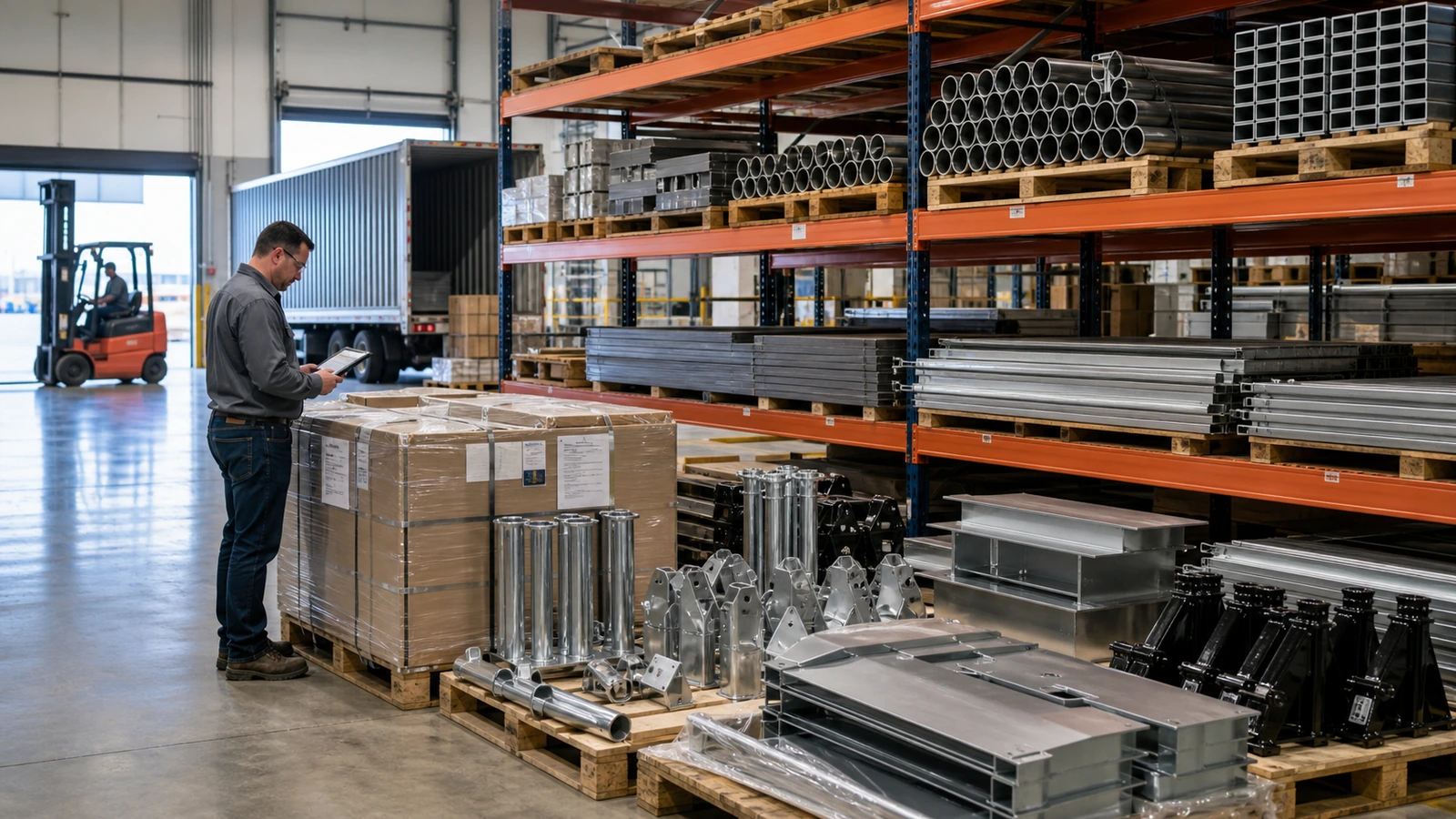
A fabricated jack or toolbox from another.
Final trailer assembly may happen somewhere else.
The old objective was often: Minimize the component purchase price.
The new question is: How predictable is the landed cost after trade rules, freight and material volatility?
Trailer Body Builders described this shift directly, noting that trailer manufacturers are increasingly focusing on traceable supply chains capable of operating through a more fragmented trade environment.
That does not necessarily mean everything will move to domestic manufacturing.
In some cases, domestic supply remains more expensive.
In others, domestic capacity may not exist at the required scale.
Instead, OEMs are likely to use a combination of:
- domestic sourcing;
- regional sourcing;
- dual sourcing;
- strategic imports;
- supplier hedging;
- longer-term contracts;
- indexed pricing.
The goal becomes resilience rather than pure localization.
13. Price Volatility Is Changing How OEM Contracts Are Written
A fixed price is attractive when materials are stable.
It becomes dangerous when a metal can move rapidly.
Manufacturers and component suppliers therefore increasingly have to decide who absorbs commodity movement.
Shorter quotation validity
A quote may remain valid for 15, 30 or 60 days rather than an extended period.
Material surcharges
The base manufacturing price remains stable while a metal surcharge changes.
Index-linked pricing
The price moves according to an agreed benchmark, such as an HRC index, LME aluminum, Midwest Premium or zinc index.
Price collars
The supplier absorbs normal movements within a defined range while unusually large changes trigger adjustment.
Scheduled reviews
Long-term programs may reprice material quarterly or semiannually.
Trailer Body Builders reported manufacturers increasingly emphasizing transparency with customers as aluminum costs change and using purchasing strategies designed to avoid taking excessive positions in a volatile metal market.
In 2026, pricing architecture is becoming part of supply-chain engineering.
14. Different Trailer Segments Will Respond Differently
The material reset will not affect every trailer category the same way.
Heavy commercial vans and reefers
Weight and payload economics can justify continued aluminum usage even when prices are high.
Major structural substitution can also require significant engineering changes.
Utility and equipment trailers
These trailers can offer more flexibility.
High-strength steel, optimized sections and targeted corrosion protection can provide attractive economics where extreme lightweighting is not essential.
Boat trailers
Corrosion exposure remains central.
Material cost cannot be evaluated independently from saltwater durability, galvanic compatibility and coating life.
Towable RVs
OEMs must balance consumer price sensitivity, trailer weight, tow-vehicle requirements, appearance, corrosion and optional content.
A softer recreational market makes expensive lightweighting harder to recover unless buyers perceive direct value.
Specialty and fleet trailers
Lifecycle economics often dominate.
If reducing weight creates more legal payload or reduces operating cost every day, the business case can support a higher initial material cost.
15. The Impact Extends Far Beyond the Trailer Frame
Material-cost inflation is not only a problem for companies building entire trailers.
A trailer contains hundreds of fabricated and purchased components.
Examples include:
- trailer jacks;
- jack mounting brackets;
- couplers;
- toolboxes;
- winch mounts;
- handles;
- support legs;
- landing gear;
- tie-down hardware;
- hinges;
- latches;
- fenders;
- spare-tire carriers;
- battery boxes;
- structural brackets.
Each component has its own material equation.
A jack may use
- structural steel tube;
- formed steel;
- zinc-plated parts;
- gears;
- fasteners;
- powder-coated surfaces.
A toolbox may use
- aluminum sheet;
- steel sheet;
- stainless hardware;
- extrusions;
- locks;
- hinges.
A relatively small change in the metal market can therefore affect a large number of purchased components simultaneously.
16. What This Means for Trailer Component Suppliers
For component manufacturers, 2026 rewards flexibility.
The strongest suppliers are increasingly those that can discuss more than unit price.
OEM buyers may need answers to questions such as:
- Can this steel grade be substituted?
- Can wall thickness change?
- Is a high-strength grade more economical?
- Is aluminum necessary in this component?
- Can galvanized material replace a more expensive construction?
- Can powder coating deliver enough corrosion life?
- What metal origin documentation is available?
- Can the product be sourced from more than one country?
- Can pricing be indexed?
- What is the MOQ under each material option?
This turns the supplier relationship from: “How much is this component?”
Into: “How can this component be engineered and sourced with less cost volatility?”
That is a much more valuable conversation.
17. A GOODIN Perspective: Components Need Their Own Material Strategy
For a trailer component manufacturer, there is no reason every product should follow the same material strategy.
At GOODIN, categories such as trailer jacks, toolboxes, support components and trailer hardware are affected differently by movements in steel, aluminum, zinc and coating costs.
A trailer jack, for example, is primarily a structural and mechanical device.
Its priorities may include:
- rated load;
- tube strength;
- gear durability;
- weld quality;
- mounting geometry;
- corrosion protection;
- service life.
Using the lowest-cost material would make little sense if it reduces structural reliability.
A toolbox has another equation.
Weight, corrosion resistance, sheet thickness, appearance and forming cost may make aluminum attractive—but at a sufficiently large aluminum premium, an OEM may want to compare steel alternatives for specific applications.
Support hardware creates yet another decision.
In many components, a few ounces of weight have almost no measurable effect on trailer performance.
In those cases, paying a large premium purely for lightweighting may not create value.
This is why component-level engineering matters.
OEM Sourcing Takeaway: Do not ask whether steel or aluminum is cheaper for the trailer industry. Ask whether the specific component creates enough weight, corrosion or manufacturing value to justify its material premium.
18. What OEM Buyers Should Ask Suppliers in 2026
For metal-intensive trailer components, an RFQ should increasingly include more than dimensions and annual volume.
Material specification
- grade;
- alloy;
- thickness;
- mechanical properties;
- allowed substitutes.
Surface protection
- zinc plating;
- galvanizing;
- powder coating;
- paint specification;
- corrosion requirement.
Material origin
- melt-and-pour country for steel where relevant;
- aluminum origin information where relevant;
- component country of origin.
Cost structure
- fixed or indexed material cost;
- quote-validity period;
- tariff assumptions;
- freight terms;
- surcharge mechanism.
Supply resilience
- alternate mills;
- secondary supplier availability;
- manufacturing location;
- safety-stock policy;
- normal lead time.
Engineering flexibility
- alternative grades;
- alternative thicknesses;
- alternative coatings;
- weight-saving options;
- cost-down proposals.
An RFQ that includes these questions gives both buyer and supplier a better chance of managing volatility.
19. What to Watch Through the Rest of 2026
The industry's material equation can change again quickly.
Several indicators deserve close attention.
U.S. steel prices
If domestic prices remain well above international markets, steel-intensive trailer manufacturers will continue facing pressure despite stronger domestic production.
Aluminum Midwest Premium
For U.S. transportation manufacturers, this may be as important as the global aluminum benchmark itself.
Section 232 modifications
Product coverage, origin rules and temporary provisions can materially alter landed cost.
Zinc
Higher zinc prices can affect the economics of galvanized and zinc-coated components.
Trailer production
OEMs are more likely to absorb high material costs when order books are strong. Weak demand makes cost-down pressure much more aggressive.
Customer willingness to pay for lightweighting
This may ultimately determine how much aluminum remains in price-sensitive trailer categories.
20. The Bigger Trend Is Not Steel Versus Aluminum
The most important change in 2026 is not that one material has defeated another.
It is that trailer manufacturers can no longer treat materials as fixed engineering assumptions.
An aluminum part that made economic sense three years ago may deserve another look.
A steel component may need redesign with a higher-strength grade.
A galvanized assembly may need its lifecycle economics recalculated as zinc changes.
A low-cost imported component may no longer have the lowest landed cost once tariffs and origin rules are included.
And a domestic part may still be uneconomic if capacity, fabrication efficiency or material availability are poor.
The industry is therefore moving toward a more dynamic design philosophy:
Function first. Then weight. Then lifecycle. Then supply-chain risk. Then total landed cost.
The winners will not necessarily be the manufacturers that use the most steel or the most aluminum.
They will be the ones that know exactly why each material is where it is—and what would have to change before they replace it.
Focused FAQ
Are steel prices higher in the U.S. in 2026?
Yes. S&P Global reported U.S. hot-rolled coil at approximately $1,201.50/metric ton on May 26, 2026, significantly above international benchmarks. Tariffs, lower imports and domestic market conditions have contributed to the difference.
Are aluminum trailers becoming too expensive?
Not necessarily. Aluminum costs have risen substantially, particularly through the U.S. Midwest Premium, but lightweighting, payload and corrosion benefits can still justify aluminum in many applications. The economic case must be evaluated component by component.
Are trailer manufacturers switching from aluminum to steel?
Some are selectively doing so. Utility Trailer Manufacturing has publicly discussed increasing steel usage in certain components and evaluating high-strength steels and other alternatives, while other applications remain difficult to convert from aluminum.
Are U.S. steel and aluminum tariffs still 50% in 2026?
There is no single rate that accurately describes every product. The U.S. expanded 50% Section 232 treatment in April 2026, while a June proclamation introduced modified rates and origin/content provisions for specified products. Actual exposure depends on classification, origin, content and current rules.
Why does the aluminum Midwest Premium matter?
It is an additional regional cost above the LME aluminum benchmark. In June 2026, Platts assessed it at 117 cents/lb, more than double the level one year earlier.
Do tariffs affect trailer parts as well as raw metal?
Potentially, yes. U.S. Section 232 rules extend to many derivative metal products, which means fabricated components can also have tariff exposure depending on their HTS classification, origin and current exemptions or special treatment.
What should trailer OEMs prioritize when sourcing components in 2026?
Total landed cost, material origin, price-adjustment mechanisms, alternate sourcing, engineering flexibility, corrosion requirements and supply continuity should increasingly be evaluated alongside the quoted unit price.
Technical References
- Trailer Body Builders — Global aluminum price plus U.S. tariffs drive OEM rethink, July 11, 2026.
- S&P Global Commodity Insights — YEAR OF THE TARIFF: Steel tariff boosts US industry, raises costs for end-users, June 2, 2026.
- S&P Global Commodity Insights — YEAR OF THE TARIFF: US aluminum end-users endure major tariff headwinds, June 4, 2026.
- The White House — Strengthening Actions Taken to Adjust Imports of Aluminum, Steel, and Copper Into the United States, April 2, 2026.
- The White House — Further Adjusting the Tariff Regimes for Imports of Aluminum, Steel, and Copper Into the United States, June 1, 2026.
- Reuters — Zinc-market reporting, August 25, 2026.
The Smart Trailer Shift: GPS, Telematics and Predictive Maintenance Move Beyond Fleet Niches
The 2026 Trailer Market Is Splitting: Why Utility Demand Is Holding Up While Towable RVs Cool
Related Article