CBAM Is Now Real: What Europe’s Carbon Border Rules Mean for Steel and Aluminum Trailer Components
In this article
A European buyer sourcing trailer hardware from Asia still asks about unit price, minimum order quantity, lead time and coating. Increasingly, another conversation follows: Where was the material produced? Which installation made the goods? What emissions data can support the import declaration?
CBAM entered its definitive regime on January 1, 2026. For goods inside its scope, carbon information is becoming part of the commercial data attached to the component. The procurement change is bigger than another line in a landed-cost spreadsheet: buyers are beginning to evaluate the material chain behind the part.
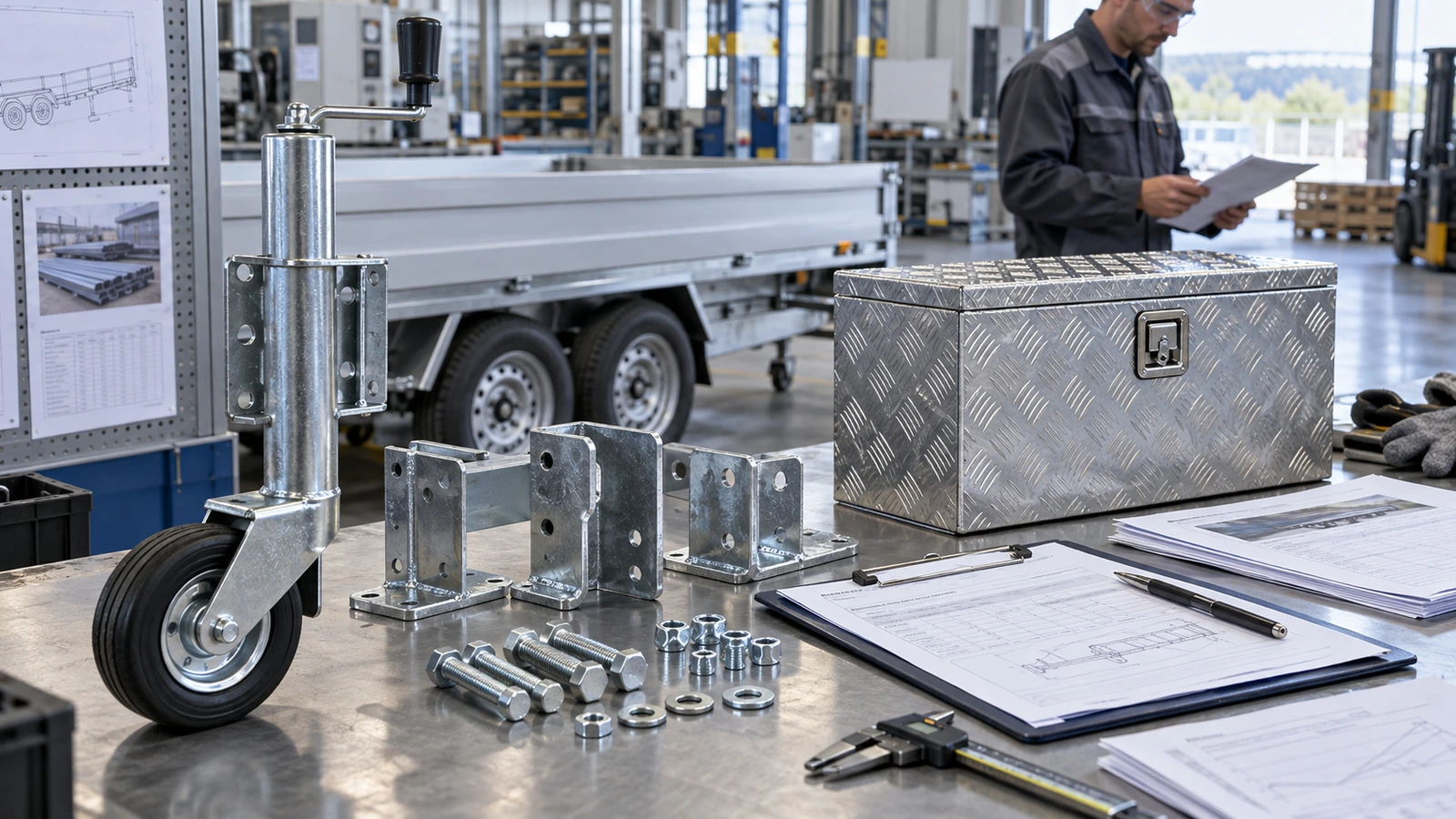
Policy snapshot: September 10, 2026. Coverage depends on the product’s CN classification, origin and importer circumstances—not simply its metal content.
Start With the Product, Not the Metal
CBAM covers selected goods in six sectors: iron and steel, aluminum, cement, fertilizers, electricity and hydrogen. Its legal product boundary is the Combined Nomenclature (CN) codes in Annex I, not labels such as “trailer accessory” or “steel part.” Origin-based exclusions and other applicable exemptions must also be checked.
The current scope includes many Chapter 72 goods, with listed exceptions, and specified steel products such as fasteners under heading 7318 and other iron or steel articles under 7326. Aluminum coverage includes, among other categories, articles under 7616. These headings are relevant to trailer supply chains, but they are not ready-made classifications for every product in a catalog.
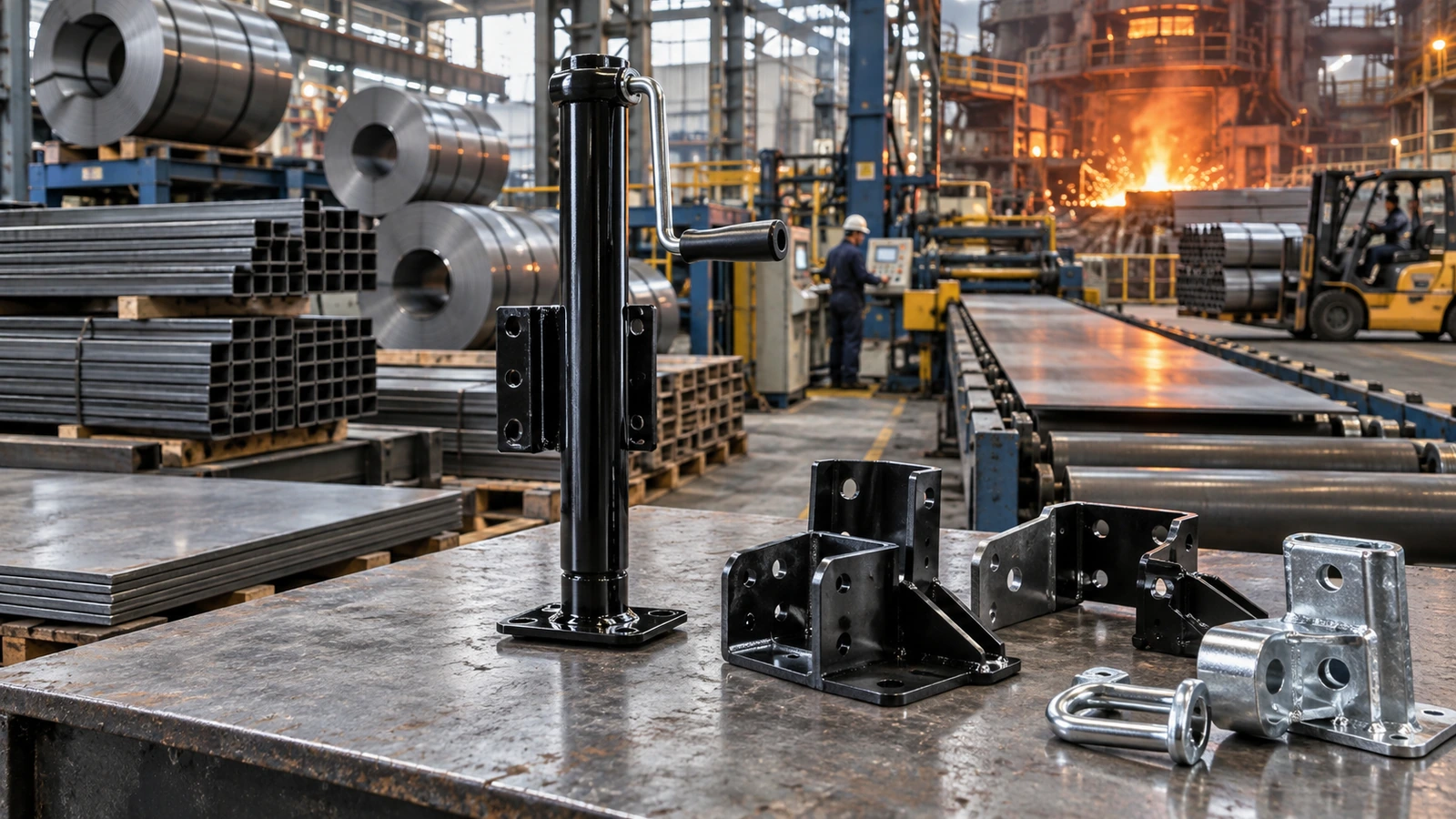
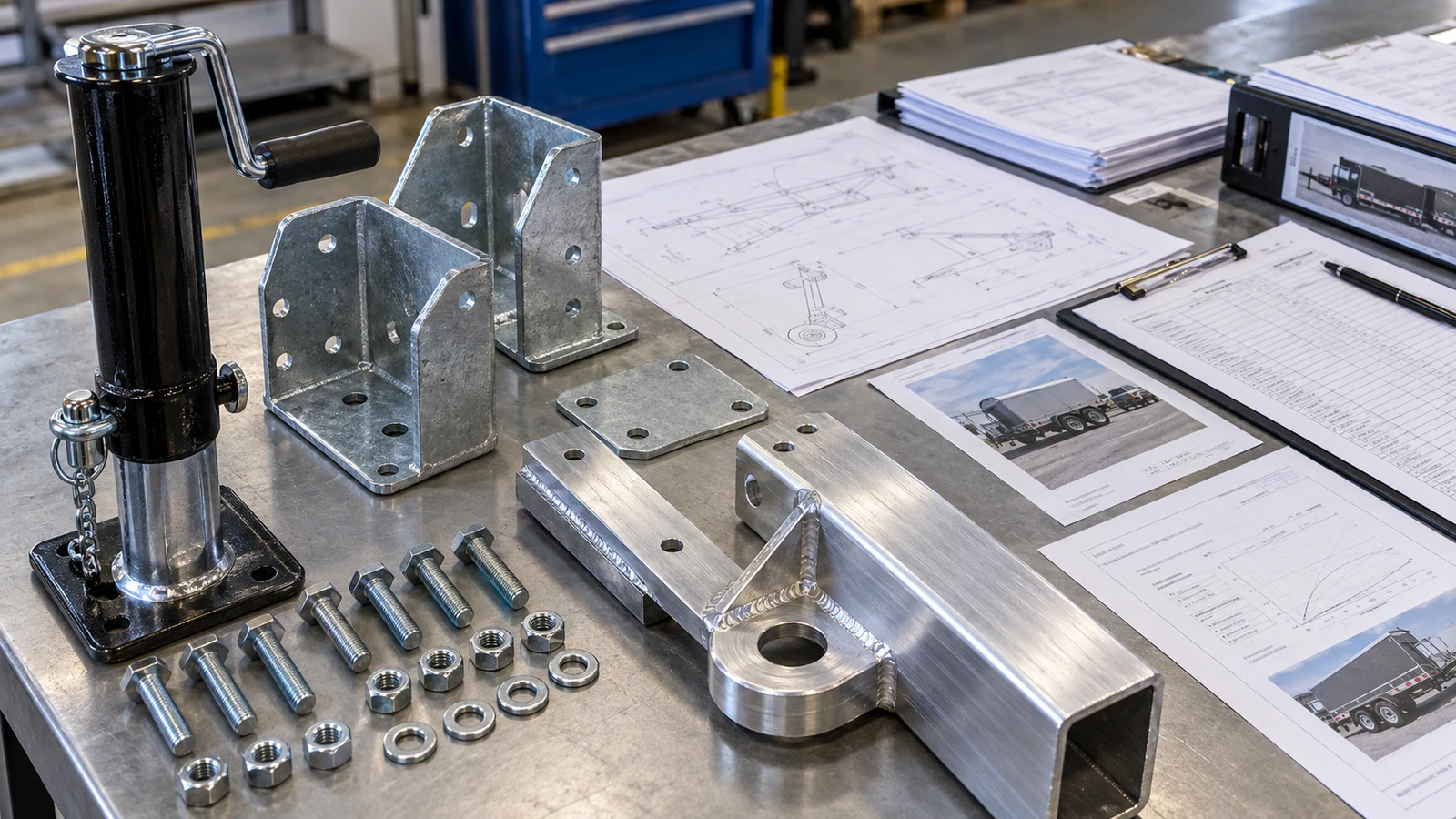
Consider an order containing mounting brackets, bolts and trailer jacks. The bolts may fall within a covered fastener heading. A bracket requires its own analysis. A mechanically functioning jack may be classified according to its design and function outside a covered metal heading. Likewise, calling a product an aluminum toolbox does not settle its CN classification.
The useful sequence is to identify the article, establish its CN code and check Annex I before requesting a CBAM calculation. A technical drawing, operating description and material specification help the importer reach a defensible classification; a supplier’s commercial product name does not replace that work.
The threshold belongs to the importer
For iron and steel, aluminum, cement and fertilizers, the single annual threshold is 50 tonnes of net mass per importer, combined across those four sectors. Imports not exceeding that threshold are generally exempt from the corresponding obligations. If the threshold is exceeded, the relevant imports for the entire calendar year become subject to CBAM—not just the excess tonnes. Electricity and hydrogen do not benefit from this mass-based exemption.
One small order therefore cannot establish the customer’s position. A distributor buying only a few pallets from GOODIN may also import covered goods from many other suppliers. Conversely, a customer legitimately below the threshold may not need the same data package as a large OEM. Ask about the importer’s circumstances rather than assuming that every European order creates identical obligations.
Material Traceability Becomes a Sourcing Capability
Material traceability already supports engineering decisions. Steel grade affects strength; coating specifications affect corrosion performance; an aluminum alloy affects weight and fabrication. CBAM adds another potential use for the same supply-chain discipline: connecting covered goods to their prescribed embedded-emissions information.
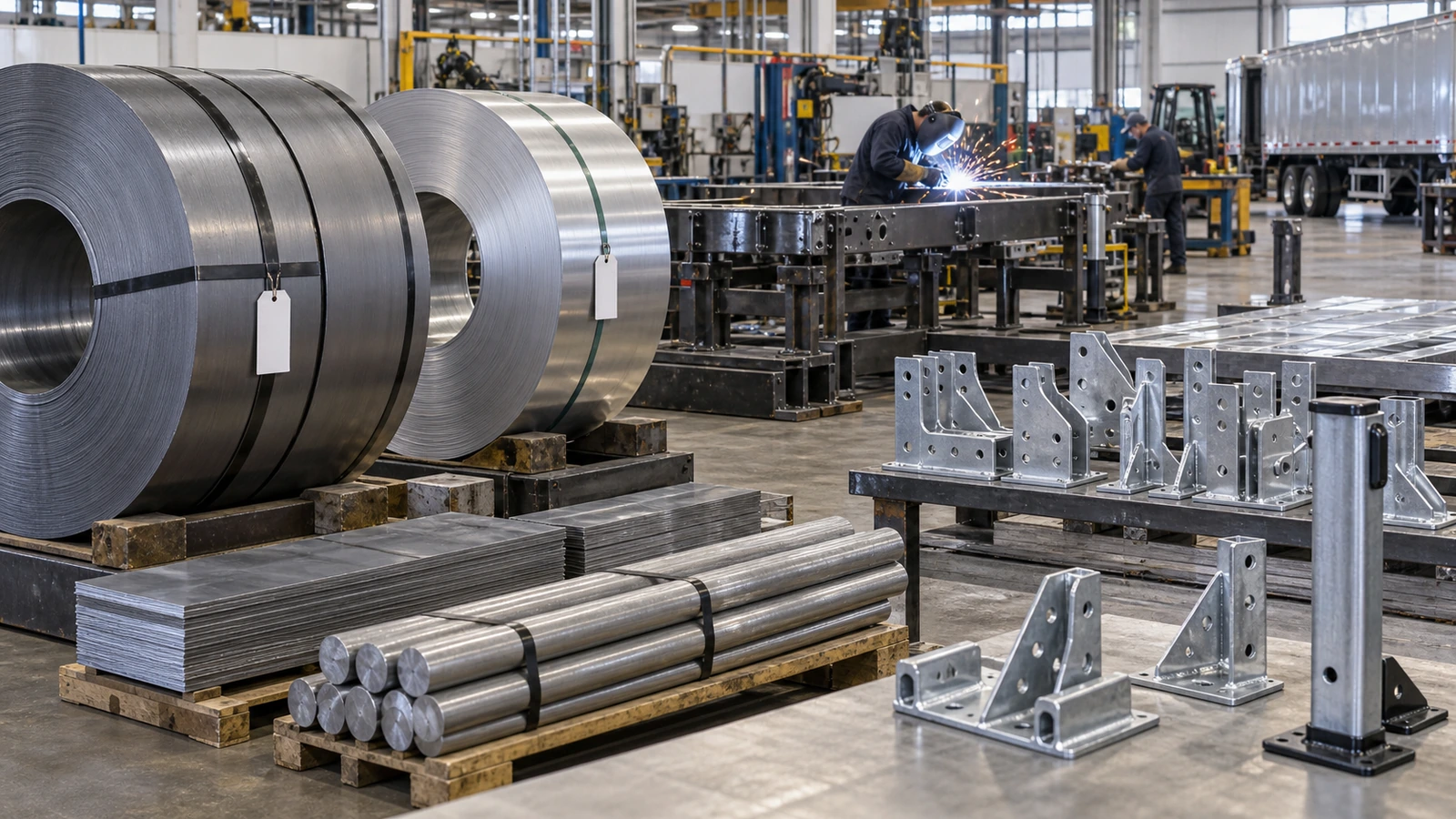
For a fabricated bracket, buying plate through a distributor can obscure the installation and production route farther upstream. Knowing the immediate seller is useful, but it may not provide the information required for the relevant precursor. The purchasing record may need to develop from grade, thickness and price into a traceable connection between the material, its producer and usable emissions data.
This does not mean attaching every environmental metric in the factory to every exported part. For the iron, steel and aluminum goods currently listed in Annex II, CBAM liability takes account of direct emissions, rather than indirect electricity emissions. Relevant precursor emissions may nevertheless form an important part of a complex good’s calculation under the prescribed method.
Production boundaries matter
The definitive methodology is not a whole-factory electricity bill divided by the number of brackets shipped. It defines production processes, relevant precursors and attribution rules. For iron and steel products, it expressly excludes processes such as plating, cutting, welding and finishing from the specified production boundary. Other operations have their own treatment; suppliers should not assume that every activity described informally as “finishing” receives the same classification.
The practical lesson is that emissions associated with producing the underlying metal can matter even where certain final fabrication operations are excluded. A material certificate remains valuable evidence of grade and identity, but it is not automatically an embedded-emissions report. The supplier must connect the right records to the right methodology, not simply produce a thicker document folder.
2026 Imports Create a Later Financial Obligation
2026 is no longer the transitional “reporting-only” period. Qualifying imports made this year create reporting and financial obligations, although the settlement timetable runs into 2027. Certificates for 2026 imports become available for purchase from February 2027; the first annual declaration and required certificate surrender are due by September 30, 2027.
That timing matters when an OEM signs an annual supply agreement. The absence of an immediate certificate purchase does not mean the imported component has no future CBAM cost. Buyers need to plan data collection and financial responsibility while the imports are occurring, not reconstruct a year of material purchases at the last moment.
The Commission has published 2026 certificate prices of €75.36 per tonne of CO₂ equivalent for Q1 and €75.28 for Q2. As of this article’s date, the Q3 publication is scheduled for October 5, 2026. Prices are based on EU ETS auction results: quarterly for 2026 and weekly from 2027.
However, multiplying all embedded emissions by the latest price is not a complete liability calculation. The number of certificates reflects applicable free-allocation adjustments and, where conditions are met, a carbon price effectively paid in the country of origin. The free-allocation phase-out is not a universal flat discount that can be applied identically to every component.
The commercial point is therefore not that every imported bracket now carries the same surcharge. It is that a measurable emissions value can enter import economics. Classification, quantity, the applicable emissions route, adjustments and price timing need to be understood together before a buyer compares supposedly equivalent offers.
Actual Values and Default Values Are Different Routes
Importers can use applicable default emissions values or actual values that satisfy the CBAM methodology and verification requirements. Those are different evidence routes, not two names for the same supplier questionnaire.
The actual-values route requires verified emissions data. Independent verifiers must hold the appropriate CBAM accreditation granted by EU national accreditation bodies. A supplier’s self-declaration, a generic sustainability certificate or an ordinary quality audit is not a substitute for that verification.
The Commission’s current implementation timeline places the first verification work in 2026 and the first verification reports in 2027. Procurement teams should distinguish a supplier organizing its monitoring records from a supplier already holding the required report. Promising a completed verification too early can create a new compliance problem instead of solving one.
Default values provide another route under the applicable rules. A buyer using defaults does not first need a supplier-specific actual-emissions verification report. Nor should the buyer assume that verified actual values are always financially better: the comparison depends on the relevant default, the actual value and the complete calculation.
What better actual data offers is a more specific basis for assessing the supplier’s product. Two qualified manufacturers may use different material routes or precursor sources. Reliable data helps the importer evaluate those differences rather than treating their emissions profiles as interchangeable.
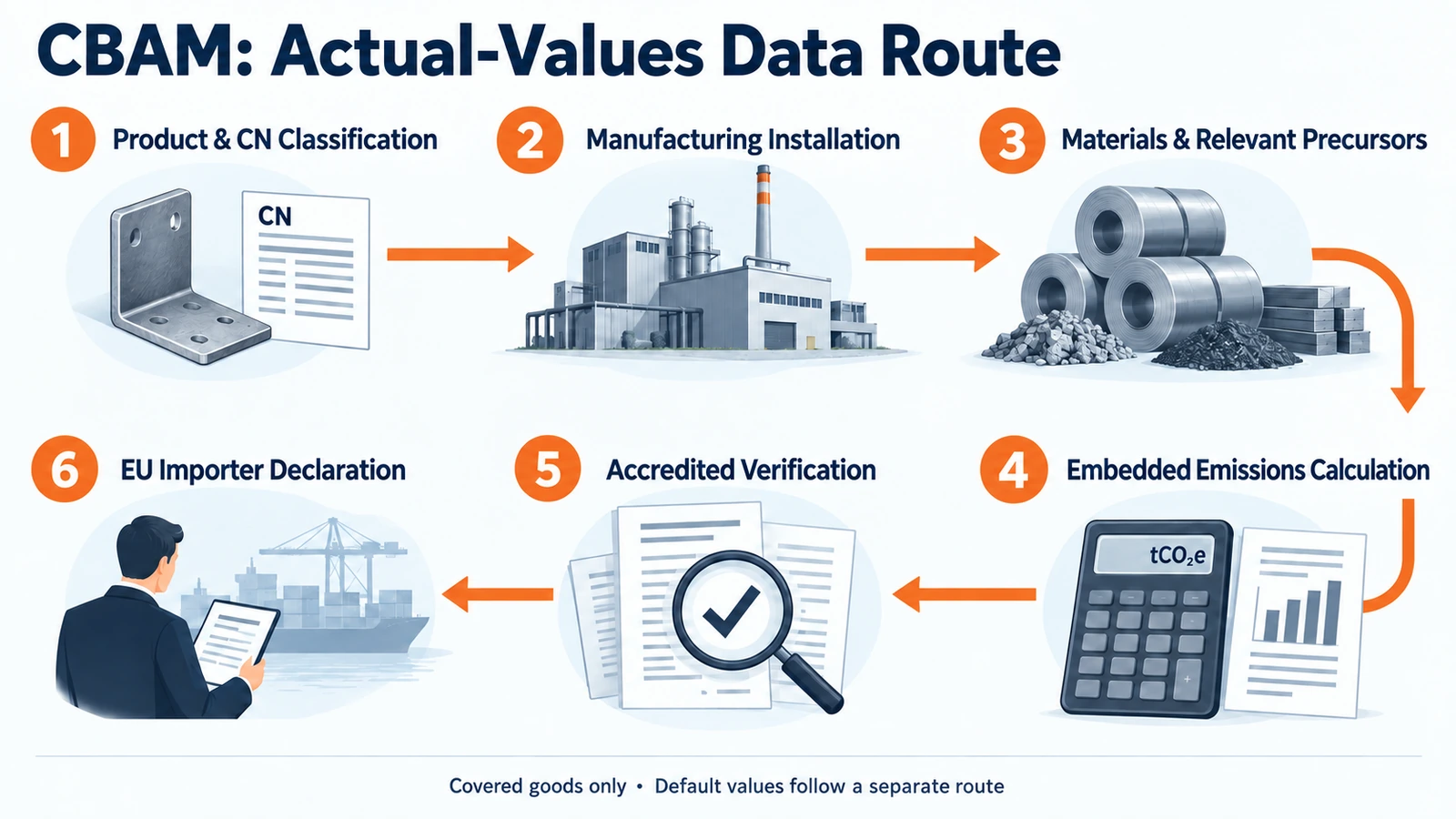
The infographic below therefore shows the actual-values data route for covered goods. It is not a claim that every trailer component needs verification or that the default-values option has disappeared. Classification and the importer’s obligations must be established before choosing the appropriate route.
The Factory-to-Importer Data Link Is Taking Shape
On August 14, 2026, the European Commission released ten guidance documents for installation operators outside the EU. They include introductory and quick-reference material, emissions calculations, free-allocation adjustments and sector guidance for iron and steel and aluminum. The supplier side is becoming an operational task, not just a European buyer’s legal concern.
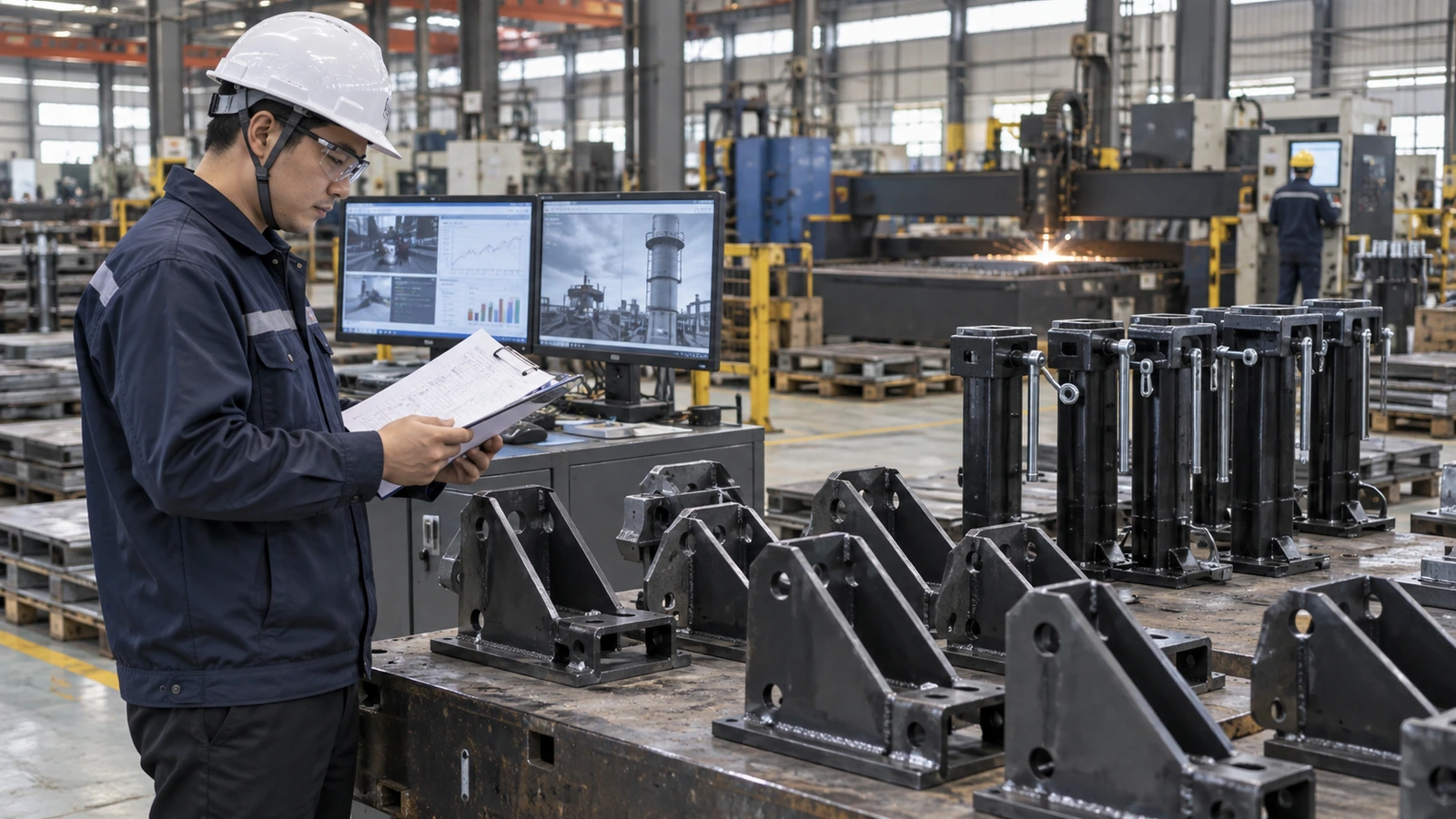
For a non-EU factory, the useful starting point is to identify which product families and production processes are relevant, who holds the precursor records and who will maintain the data. This may require cooperation between purchasing, production, quality and the customer-facing team. A sales representative cannot repair missing upstream evidence merely by completing an RFQ spreadsheet.
The CBAM Registry’s Operators of Third-Country Installations (O3CI) module allows non-EU operators to register installations and share emissions information with declarants. It can reduce repeated transmission of the same data to separate customers and supports controlled treatment of commercially sensitive information.
Registration, however, is not certification of a product or proof that its emissions calculation is correct. Access permissions, product and installation matching, relevant reporting periods and verification status still matter. A factory should organize those responsibilities before treating the registry as a finished compliance solution.
For a supplier serving several European buyers, the opportunity is a reusable evidence system. The underlying records can support more than one commercial relationship, while each importer remains responsible for its own applicable declaration and certificate obligations.
A Better Quote Includes a Better Evidence Trail
A European RFQ may increasingly ask for six connected items: an accurate product description and proposed classification; manufacturing location; material-source records; the relevant installation; usable emissions information; and verification status where actual values will be used. Those requests belong beside the drawing and inspection requirements, not in an unrelated ESG presentation.
For trailer hardware, the importer may need to distinguish the immediate fabricator from the producer of the relevant metal precursor. For aluminum toolboxes, the first question remains whether the specific finished article falls within Annex I at all. Similar materials do not guarantee identical customs treatment or identical data requirements.
Consider a hypothetical comparison. Supplier A quotes €18.50 per component and Supplier B €19.20. Both meet the mechanical specification. B also provides a stable material-source trail, clear installation identification and records organized for the selected CBAM route. A can provide the invoice and grade certificate, but cannot connect the material to reliable upstream evidence.
The €0.70 price difference does not by itself determine the better purchase. B is not automatically lower-carbon, cheaper after CBAM or fully compliant. Its documentation may nevertheless reduce the buyer’s uncertainty and administrative effort. Those benefits should be evaluated separately from the actual certificate liability.
This complements the classification discipline discussed in our Section 232 component analysis and the broader policy exposure explored in our global sourcing-risk analysis. The European emphasis is different: the buyer is asking how the material was produced and what evidence can support the declared emissions. Origin, classification and material provenance increasingly belong in the same sourcing conversation, while remaining distinct legal questions.
Watch Downstream Scope—Without Assuming Blanket Coverage
The discussion is already moving beyond the present product list. On December 17, 2025, the Commission proposed extending CBAM to selected steel- and aluminum-intensive downstream goods and strengthening anti-circumvention rules. The proposal envisages downstream coverage from 2028; that proposed timetable must not be confused with today’s operative Annex I.
The policy concern is that a carbon cost applied to basic materials can encourage production to move farther downstream outside the EU if comparable finished goods escape coverage. That concern helps explain why a trailer-component supplier should monitor the policy even when a particular finished product is currently outside scope.
It does not establish a blanket rule for all trailers, jacks, toolboxes or accessories. A future expansion still depends on the enacted legal text, the specified codes and implementation dates. A proposed scope list is not a basis for charging a customer as though it were already law.
A proportionate response is to improve records that also support ordinary quality and purchasing needs. Preserve the connection between material batches, suppliers and finished products; identify evidence gaps early; and check scope again when legislation changes. That is more useful than declaring every product “CBAM-ready” without defining what the claim means.
GOODIN View: Make the Component Easier to Buy
For CBAM-covered components, carbon data is becoming part of the product—commercially, not physically.
GOODIN’s sourcing perspective is that material traceability is developing from a quality-control capability into a customer-access capability. A good part can become harder to integrate into an OEM’s purchasing system when the evidence behind it is unclear. The response should be practical, not a promise to act as a carbon consultancy.
- Map product families against potential CN classifications, with importer confirmation.
- Preserve upstream material and relevant production-source records.
- Identify the installations and production processes required by the chosen methodology.
- Organize data responsibilities before offering an actual-emissions value.
- Keep corporate ESG reporting distinct from product-level CBAM calculations.
- Prepare evidence for independent verification where that route is selected.
These are recommended capabilities to build, not assertions that GOODIN already holds a particular CBAM accreditation, verified emissions value or certification. Any customer-facing commitment should reflect the evidence actually available for the product and reporting period.
Quality, price, delivery and engineering support remain essential. An emissions report does not compensate for an unreliable jack or inconsistent welds. Traceability becomes another differentiator once suppliers can meet the mechanical requirements.
The stronger question is not “How do we avoid CBAM?” but “How do we become easier for a CBAM-regulated customer to buy from?” That approach supports a more durable sourcing relationship as the policy develops.
Planning a European OEM component program? Contact GOODIN to discuss product specifications and the documentation requirements your team needs to evaluate.
Frequently Asked Questions
Does CBAM cover every steel or aluminum trailer component?
No. Coverage depends on the specific CN classification in Annex I, origin and applicable exemptions. A jack or toolbox is not automatically covered merely because it contains steel or aluminum.
Are 2026 imports still reporting-only?
No. The definitive regime began on January 1, 2026. Certificates for 2026 imports become available from February 2027, with the first annual declaration and required surrender due by September 30, 2027.
How does the 50-tonne threshold work?
It is a single annual net-mass threshold per importer, combined across covered iron/steel, aluminum, cement and fertilizer goods. If exceeded, relevant imports for the whole year are subject to CBAM. Electricity and hydrogen do not receive this exemption.
Must every importer obtain actual verified supplier emissions?
No. Applicable default values are an alternative. When actual values are used, the prescribed methodology and independent CBAM-accredited verification requirements must be met.
Are electricity emissions included for steel and aluminum?
For the goods currently listed in Annex II, CBAM liability takes account of direct emissions, not indirect electricity emissions. Relevant precursor emissions and the defined production boundaries still need to be assessed.
Can a Chinese factory share information through the EU registry?
Yes. Non-EU installation operators can use O3CI to register installations and share emissions data with declarants. Registration itself does not certify a product or replace required verification.
Sources & Further Reading
This article is an industry sourcing analysis, not transaction-specific customs or emissions advice. Confirm current legislation, classification, exemptions and calculation requirements with qualified customs, CBAM and verification professionals. Illustrations do not establish coverage or certify a supplier.
- European Commission — CBAM definitive regimeAccessed September 10, 2026
- European Union — Regulation (EU) 2023/956 — scope and AnnexesAccessed September 10, 2026
- European Union — Regulation (EU) 2025/2083 — simplification and strengtheningAccessed September 10, 2026
- European Commission — Implementing Regulation (EU) 2025/2547 — emissions methodologyAccessed September 10, 2026
- European Commission — CBAM sectors — definitive-period operator guidanceAccessed September 10, 2026
- European Commission — Verification of CBAM emissionsAccessed September 10, 2026
- European Commission — CBAM Registry — non-EU installation operatorsAccessed September 10, 2026
- European Commission — Price of CBAM certificatesAccessed September 10, 2026
- European Commission — COM(2025) 989 — downstream extension proposal, December 17, 2025Accessed September 10, 2026
- European Commission — Guidance package for non-EU operators — August 14, 2026Accessed September 10, 2026
Origin Is No Longer Enough: Why Forced-Labor Enforcement Is Turning Traceability Into a Sourcing Requirement
Section 301 Is Under Review Again: What Trailer Component Importers Should Watch in 2026
Related Article