USMCA 2026 Review: Why Rules of Origin Could Reshape North American Trailer Manufacturing
In this article
A trailer can be welded, painted and assembled in Mexico. Its frame may come from a Mexican plant and its labor may be Mexican. Yet its jack, fasteners, electrical assemblies or axle components may have arrived from outside North America.
The 2026 USMCA review makes the sourcing structure behind that trailer increasingly consequential. The purchasing question is no longer only where final assembly happens. It is which inputs qualify as originating, which rule applies to the finished product and what the manufacturer can prove.
Review status — September 7, 2026: USMCA remains in force. Negotiating objectives do not themselves amend the product-specific origin rules. The trailer rule discussed below is the published Annex 4-B rule, not a proposed automotive-style replacement.
The Review Is Changing the Planning Horizon
The United States and Mexico launched review discussions on March 5 with an emphasis on stronger regional supply chains and less dependence on outside imports. On March 18, technical teams were asked to examine production and employment alongside non-market inputs. These statements establish a negotiating direction; they do not change a trailer’s qualification by themselves.
By July, USTR’s agenda explicitly included steel, aluminum and derivative products, automobiles and economic security. Its concern about non-party participation signals closer attention to where manufacturing inputs originate. Non-party and non-market are not interchangeable legal categories: one refers to countries outside the agreement, while the other describes a separate policy concern.
At the July 1 review, the United States did not confirm an extension. USTR confirmed the next day that USMCA remained in effect. Under Article 34.7, a lack of unanimous extension leads to annual reviews during the remaining term; it is not immediate termination, and a later agreement to extend remains possible.
The July 23 bilateral statement scheduled a fourth negotiating round for Washington in September. For an OEM committing tooling or capacity, uncertainty can affect investment before a new tariff or origin rule takes effect. The practical response is to distinguish the rule that supports today’s claim from assumptions about the next program’s operating life.
GOODIN View: Assembly Location and Preferential Origin Are Different Questions
The traditional nearshoring proposition is attractive: move manufacturing closer to U.S. demand, use Mexico’s production capacity and source internationally where it makes commercial sense. That model still has a place. What needs more attention is the evidence connecting regional production to preferential treatment.
Assembly in Mexico is a production fact. USMCA originating status is a conclusion reached under the applicable product-specific rule.
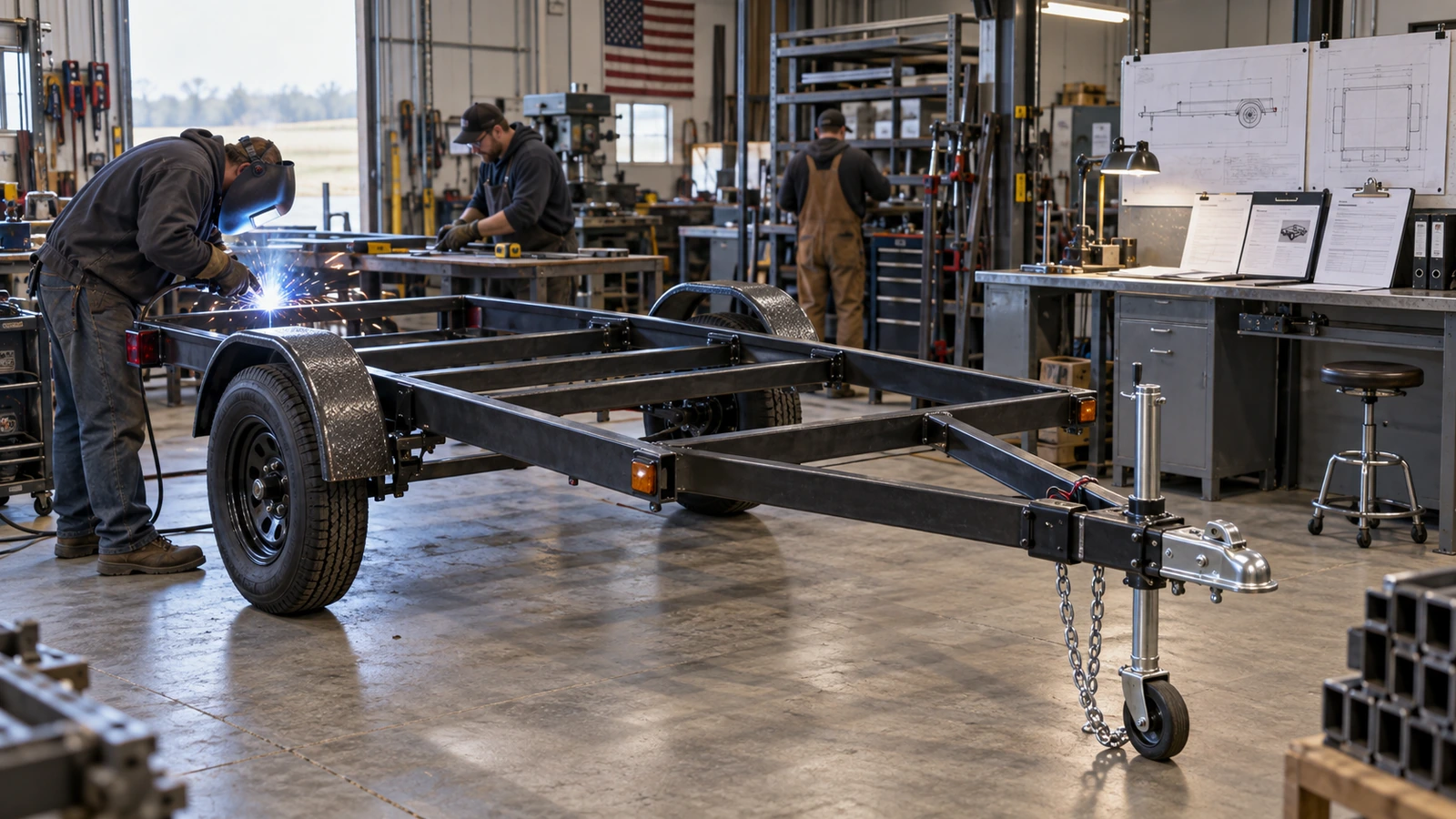
Trailers make this distinction especially important because they are modular. Frames, axles, jacks, landing gear, couplers, toolboxes, suspension, fasteners and wiring can come from different suppliers before integration into one product. No single supplier’s address resolves the complete analysis.
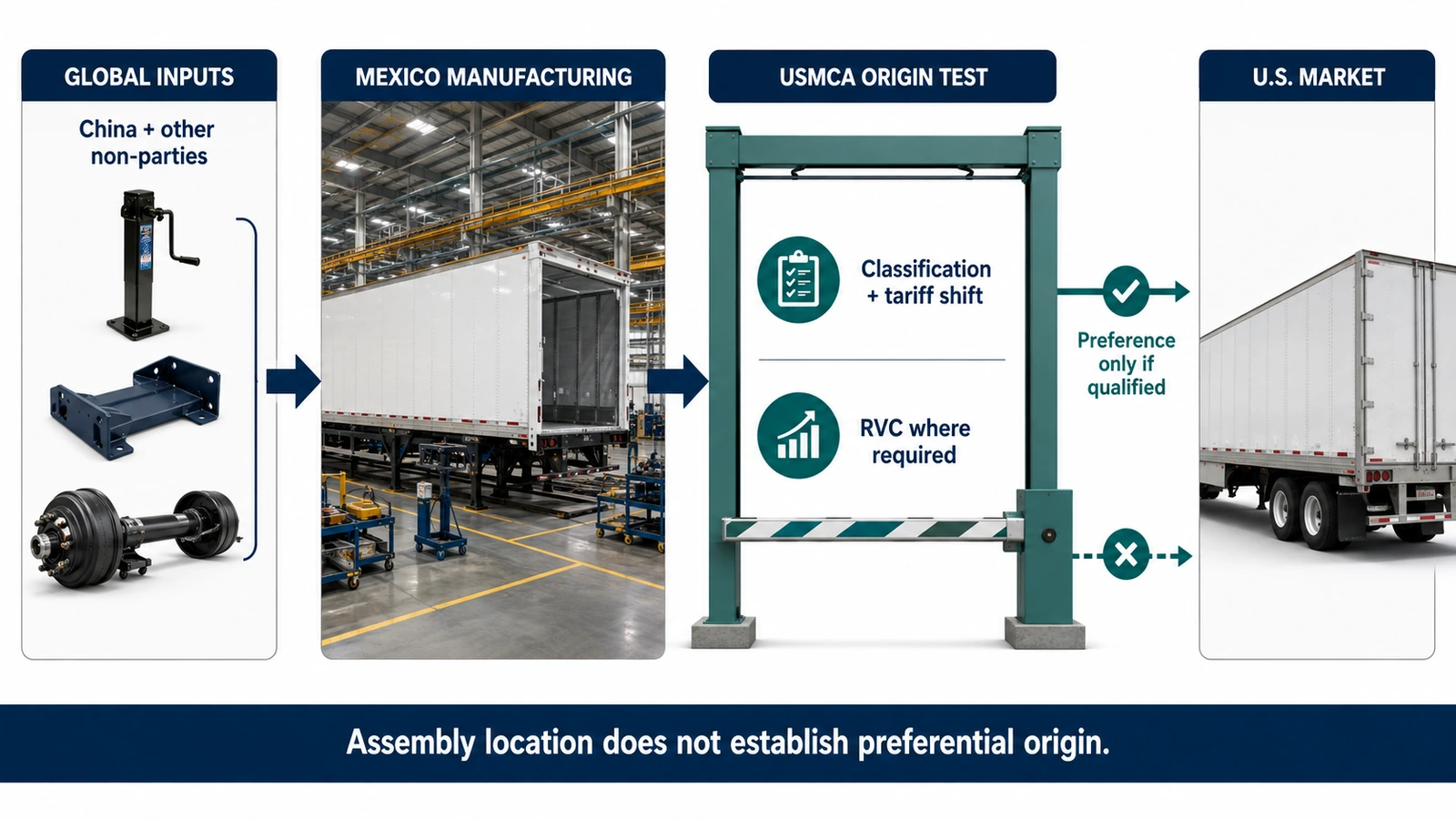
GOODIN’s view is that origin should be considered when the supply chain is designed. Start with the finished trailer’s classification, map the non-originating materials and determine the permitted route. Where regional value content is required, use the agreement’s valuation method. Where tariff shift is sufficient, do not invent an additional universal percentage.
This separates a valid commercial concern about outside inputs from the incorrect assumption that every imported component disqualifies the trailer. It also prevents a supply-chain diagram from promising preference merely because the final arrow passes through Mexico.
What the Current 8716 Rule Actually Allows
Annex 4-B gives subheadings 8716.10–8716.80 a route based on a change from another heading. It also provides a route from 8716.90, whether or not materials from another heading are present, with regional value content of at least 60% under the transaction-value method or 50% under the net-cost method.
Parts classified in 8716.90 have a separate rule: a change from another heading, or a route without a required classification change subject to the same 60%/50% thresholds. These are alternative rule structures, not percentages that every trailer must meet irrespective of its inputs. All other applicable agreement requirements still matter.
Consider a Chinese component correctly classified outside heading 8716 and used in Mexican production of a finished trailer. It may satisfy the required heading change. That does not prove the entire trailer qualifies: the producer must evaluate all relevant non-originating materials and the applicable conditions. But the component’s Chinese origin does not automatically defeat the claim.
There is no general rule that a Mexico-built trailer loses USMCA qualification once Chinese parts exceed 25%.
The familiar 75% automotive RVC benchmark belongs to different rules, including those for passenger vehicles and light trucks. It should not be imported into the 8716 trailer analysis. In the reviewed official materials, no replacement imposing that automotive threshold on all trailers was identified.
Nor should a catalog label substitute for classification. A jack, toolbox or mounting bracket cannot be assigned 8716.90 merely because it is sold for trailers. Our Section 232 and trailer-component landed cost article explains why product identification must precede the trade calculation.
Mexico’s Nearshoring Model Meets Regional Sourcing Pressure
Mexico combines proximity to U.S. customers with established metalworking, automotive suppliers and cross-border logistics. A trailer factory can gain real delivery and production advantages from that location while continuing to import specialized components. Nearshoring therefore does not necessarily mean that every major input has become regional.
For a manufacturer, relocating final production may be a successful operational decision. For policymakers seeking stronger regional supply chains, the remaining imported content can still be a negotiating issue. The review brings these two perspectives into the same investment decision.
A stricter future rule could increase demand for Mexican, Canadian or U.S. component production. It would not necessarily require all manufacturing to move to the United States. The sourcing competition could become more focused on qualifying North American inputs versus non-originating inputs across the wider world.
This is a scenario, not an announced trailer rule. OEMs should compare the cost and capacity of regional alternatives, the time required to qualify them and the durability of their current origin route. Keeping an alternative supplier identified is different from assuming that international sourcing must stop.
Origin analysis also remains separate from the manufacturing and scope questions discussed in our van-trailer AD/CVD supply-chain analysis. A preferential-origin conclusion does not automatically resolve AD/CVD coverage or another trade remedy.
A Trailer BOM Makes the Exposure Visible
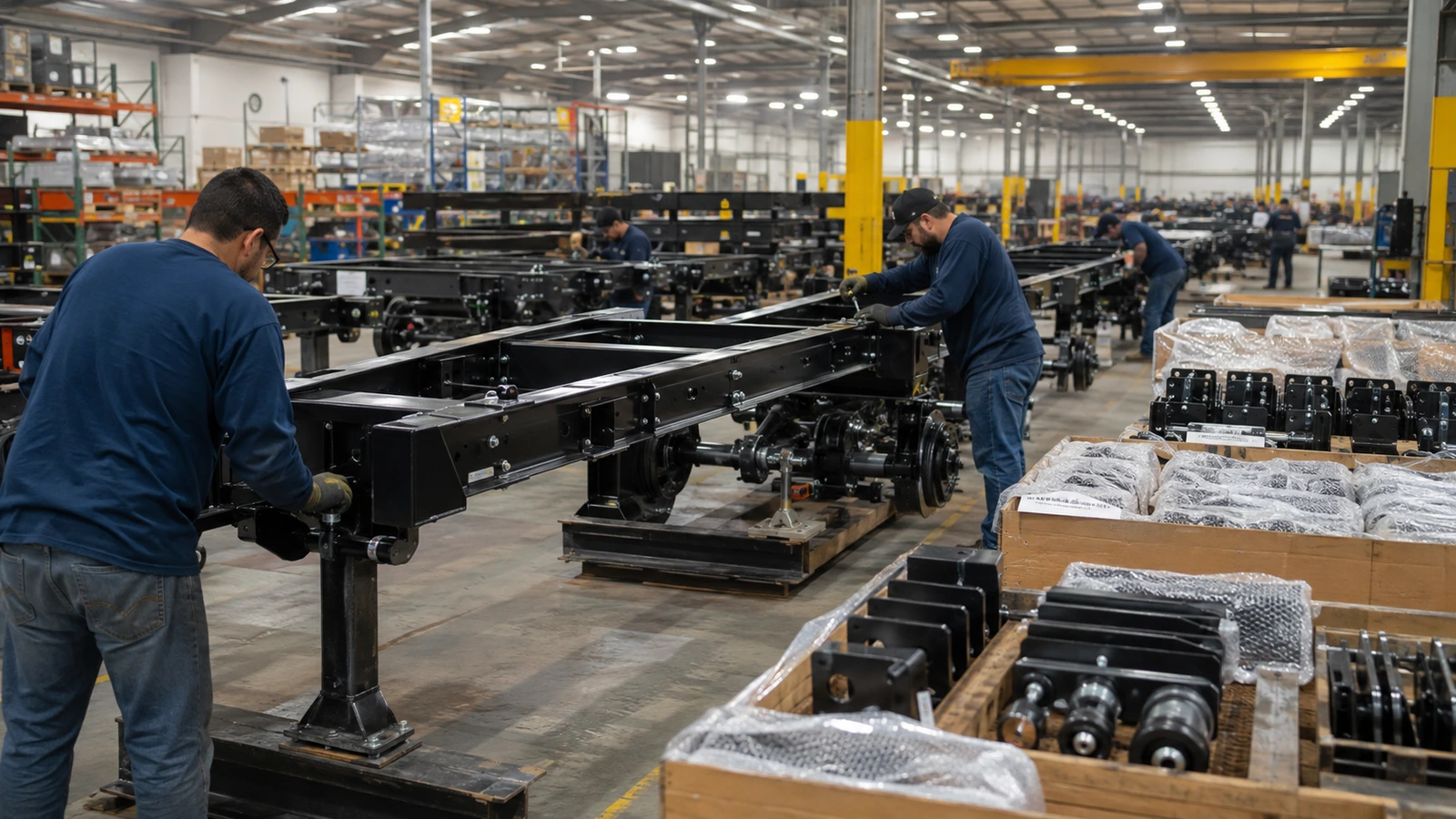
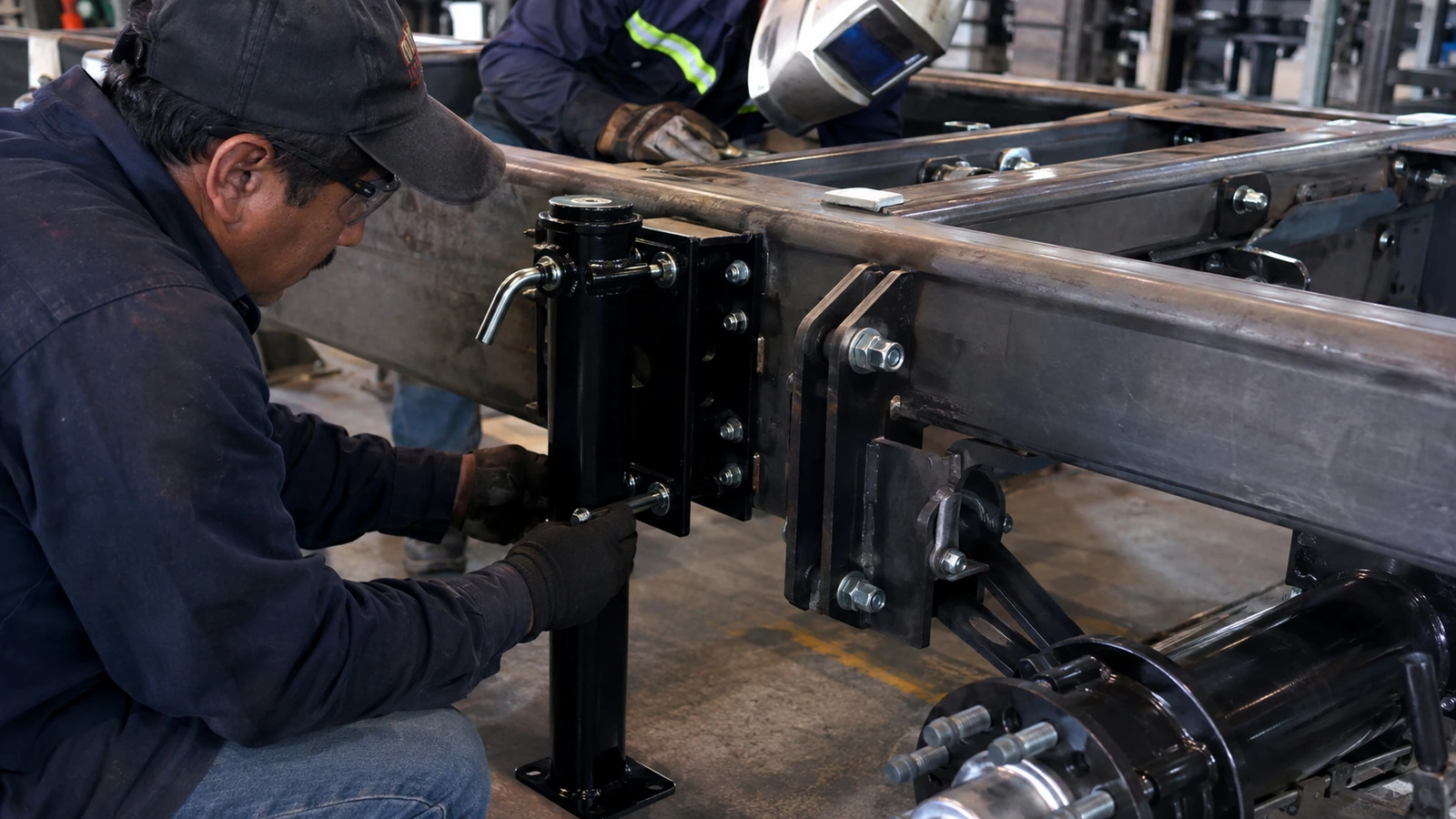
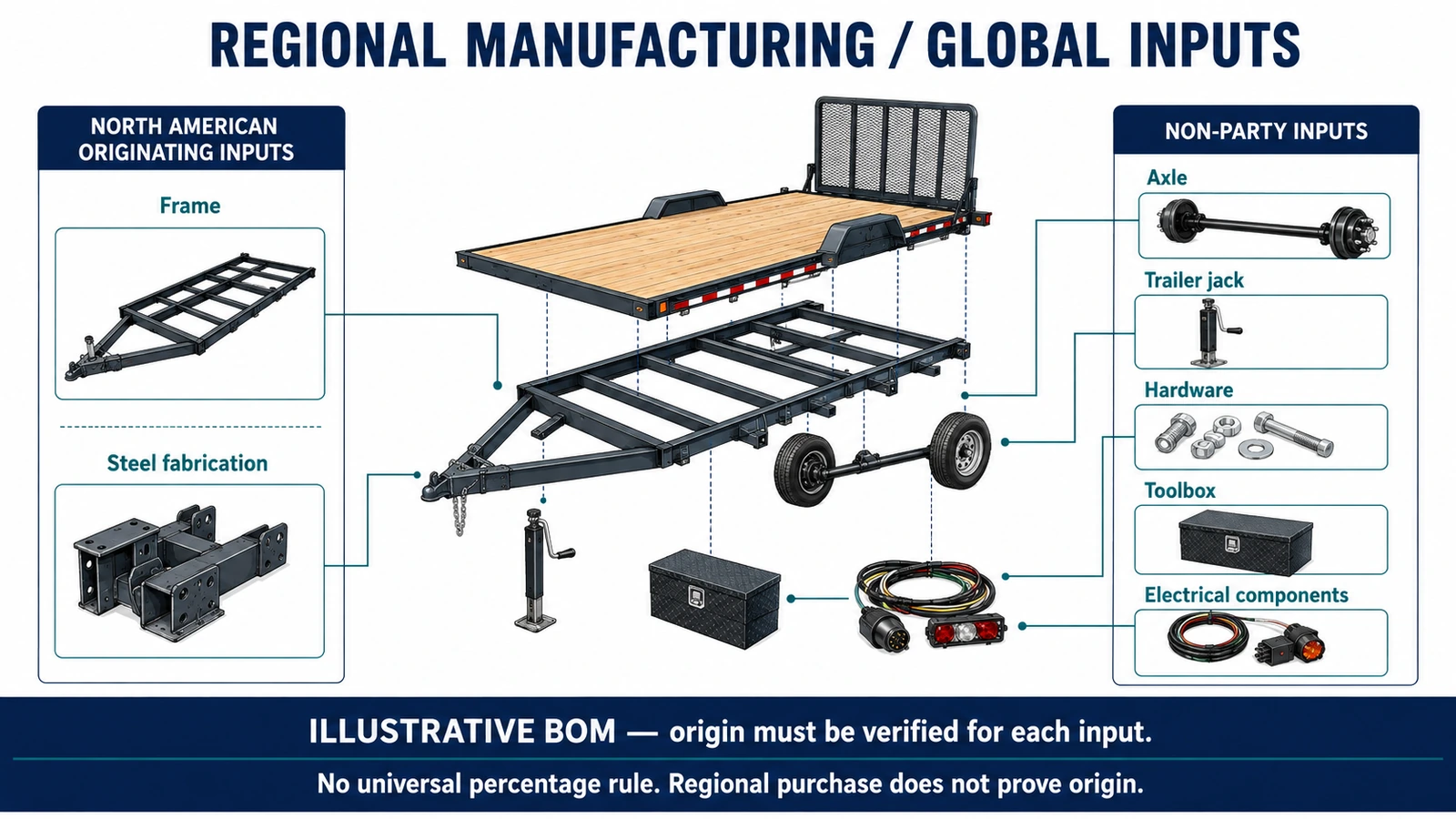
Imagine a trailer program in Monterrey with a locally fabricated frame and flooring, an imported jack, mounting brackets, electrical hardware, toolbox and fasteners, plus an axle assembly from another supplier. This is an illustrative sourcing mix, not a determination that any listed part is originating.
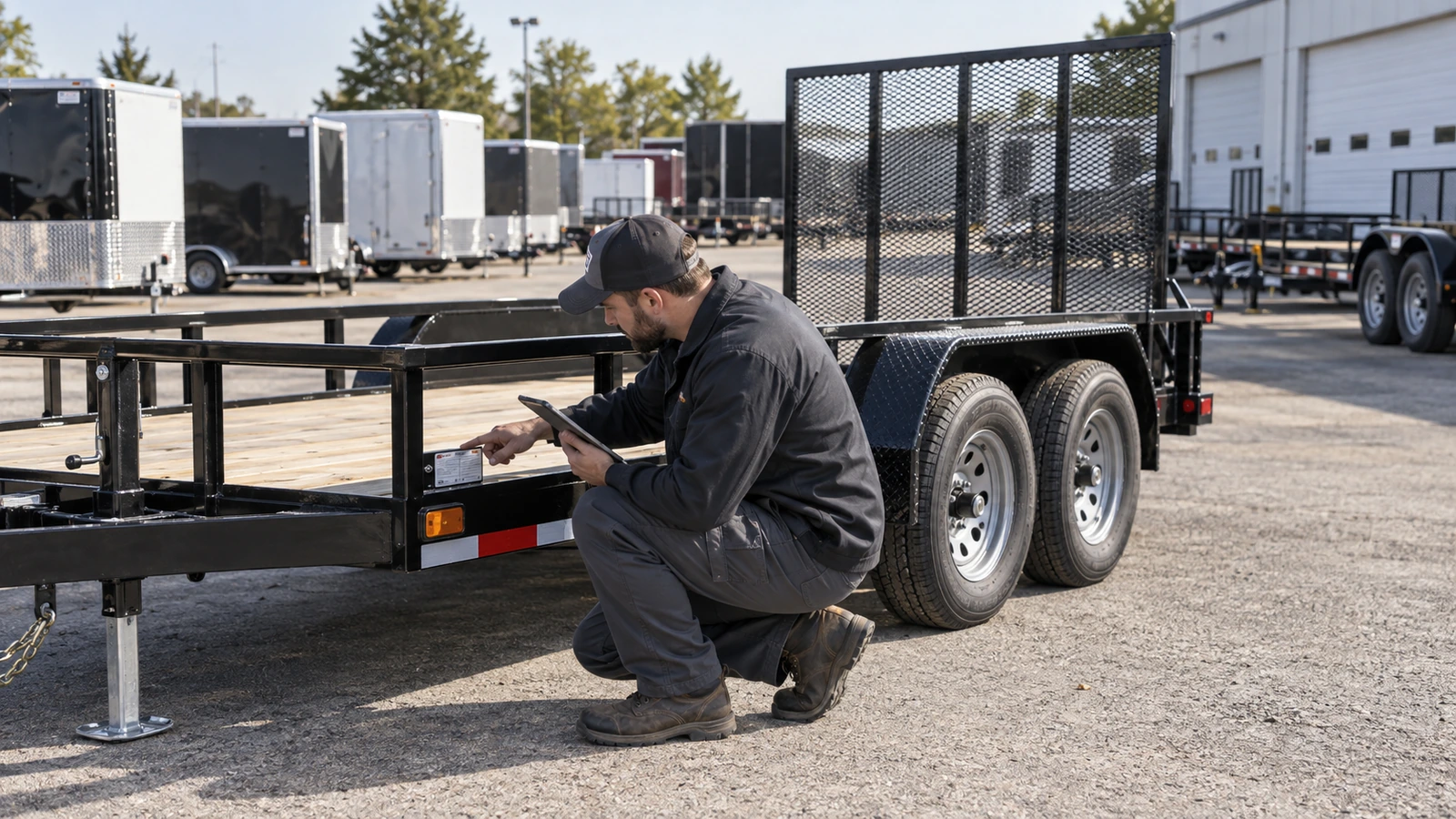
The useful BOM records each part number, actual classification, manufacturing source, origin evidence and relevant value. A purchase from a Mexican distributor does not, by itself, make a Chinese-manufactured component originating. Likewise, Mexican fabrication must be assessed under the rule that applies to that material.
Follow the rule before ranking the spend
A high-value axle or fabricated assembly may matter more to an RVC scenario than a small bracket. But value alone does not determine tariff-shift compliance: even a low-cost item can need attention if its classification does not meet the required change, subject to any applicable agreement provisions.
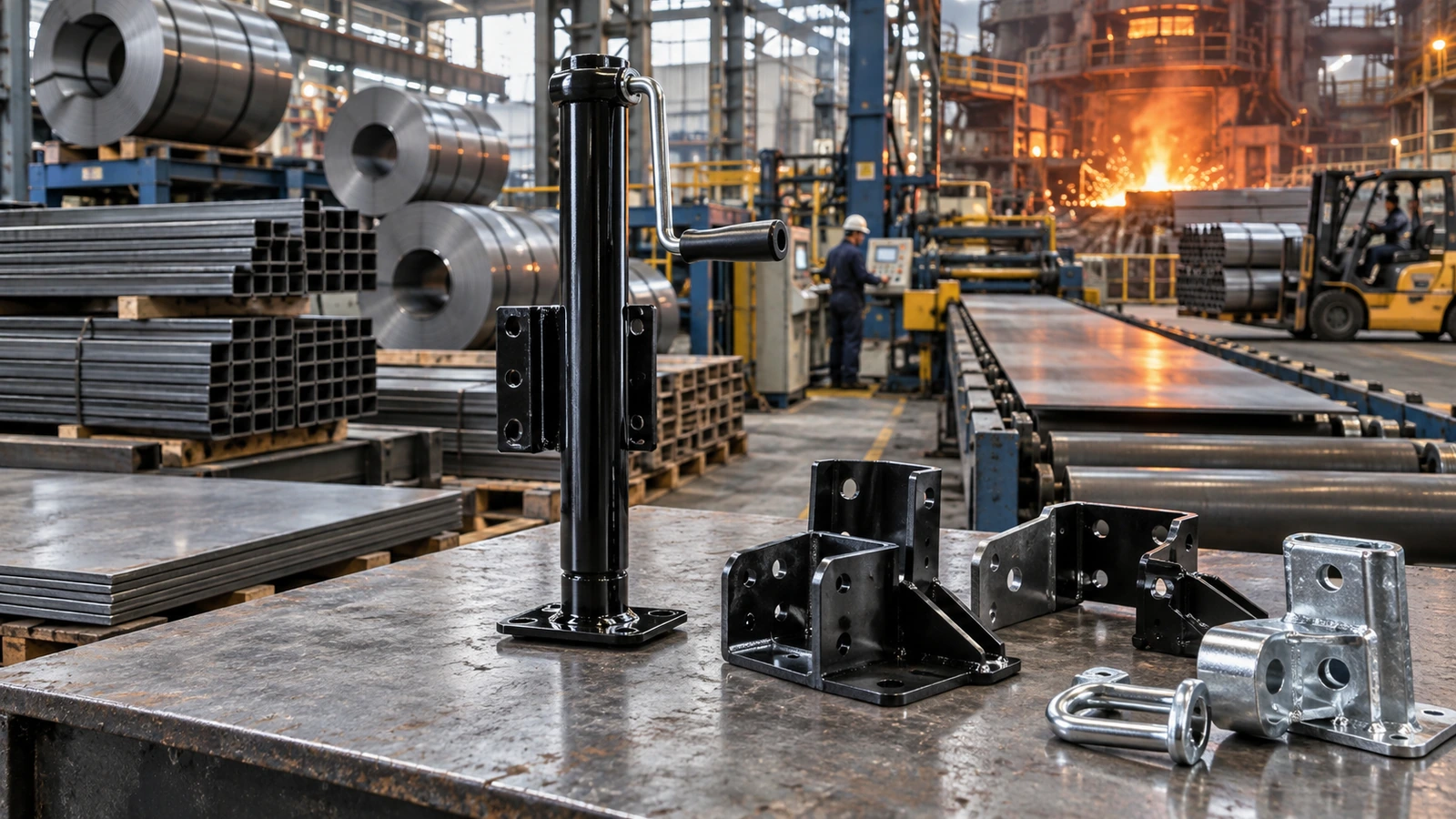
For trailer jacks, GOODIN trailer accessories, aluminum toolboxes and clamps and mounting hardware, purchasing teams need technical facts that support classification rather than a generic “trailer parts” line. The illustrative graphic shows component families, not a universal allocation of regional or foreign status.
Model possible changes without treating them as law
Three scenarios deserve a purchasing model: greater reliance on RVC, separate requirements for selected strategic inputs, and more detailed verification. None should be represented as an enacted replacement for 8716. They help identify which evidence, suppliers or cost assumptions would become important if negotiations move in that direction.
Regional purchase, regional manufacturing and originating status should remain separate columns in the analysis. Combining them hides the very exposure the review is making more visible.
Three Origin Questions That a Mexican Address Cannot Answer
Manufacturers often use “Mexican origin” as shorthand for several different questions. The tests need to be kept distinct.
- Preferential origin asks whether the merchandise satisfies USMCA’s applicable rules and procedures.
- Marking origin concerns the country identification required under the applicable marking rules.
- Origin and coverage for other trade measures must be assessed under those measures’ own requirements.
A result under one system should not be assumed to answer the others. Nor does qualifying for a preferential base-duty rate guarantee freedom from every additional duty. This article focuses on preferential origin; the complete entry analysis still needs the relevant customs provisions.
Ownership is another distinct fact. A Chinese-owned company manufacturing in Mexico is not automatically producing Chinese-origin goods, and a Mexican-owned distributor is not automatically supplying originating goods. The actual inputs, processing and applicable rule govern the preferential-origin analysis. Separate investment or economic-security policies may raise ownership questions of their own.
For a Chinese supplier, a durable North American strategy depends on identifiable manufacturing and traceable inputs. Simply routing components through Mexico or relabeling an invoice is not evidence of qualification. Where the facts are uncertain, the parties should resolve them before pricing the program on an assumed preference.
Supplier Documentation Becomes Part of the Product
Engineering, purchasing and trade compliance need to work together earlier. A supplier’s contribution is to provide a reliable product record; the finished-product claim still requires an evaluation of the complete production and material structure.
Compare two suppliers quoting a similar trailer jack. One identifies the manufacturing location, materials, function, consistent part number and production records. The other supplies only a quantity and a generic description. Even at a similar price, the second offer creates an information gap that the OEM must close before defending an origin claim.
A practical supplier package includes:
- stable product specifications and drawings;
- actual manufacturing location and process information;
- material descriptions and supporting origin evidence;
- BOM details and relevant value information where required;
- consistent part numbers, invoices and shipment records;
- a process for notifying buyers when materials or production change.
USMCA already provides certification, recordkeeping and verification procedures. Documentation is not a future-only requirement. The review may increase its commercial significance, but it is useful under the existing framework today. A certification must be supported by facts rather than treated as a substitute for them.
For GOODIN, the supplier proposition is clearer origin information and dependable technical records that support the buyer’s analysis. A supplier should not promise to convert a Chinese part into a Mexican part by administrative wording, or guarantee that a customer’s finished trailer qualifies without evaluating the complete facts.
Better records lower uncertainty before tooling and production are committed. They also make it easier to review the claim when a supplier, material or manufacturing process changes.

What OEMs Should Watch—and Build Into the Next Program
The next negotiating rounds matter most when they produce specific proposed language, product coverage and implementation dates. Broad calls for regional production should inform planning, but they do not replace the published rule.
Watch industrial-goods origin rules, steel and aluminum treatment, derivative products, the definition and handling of non-party inputs, and verification requirements. Distinguish a policy announcement from an agreed amendment and an effective customs provision. Each stage supports a different business decision.
For the next trailer program, preserve today’s classification and origin rationale, identify the assumptions on which it depends, and test plausible alternatives. Purchasing should know who supplies each component, where it is produced, which evidence supports its status, how it enters the relevant calculation and whether an alternative source can meet the engineering specification.
Global sourcing remains commercially valuable because manufacturing capabilities differ by region. The strategic change is that access to a preferential market increasingly rewards a supply chain that can explain itself. Mexico can remain a strong production center while its supplier ecosystem becomes more deeply regional.
GOODIN View: design the origin analysis into the supply chain before the finished trailer reaches the border.
Questions from trailer buyers
Do Chinese components automatically disqualify a Mexican trailer?
No. The published 8716 rule permits a qualifying tariff-shift route and an alternative route involving 8716.90 materials with 60% transaction-value or 50% net-cost RVC. The complete facts and all applicable requirements must be checked.
Does every trailer require 75% North American content?
No. Do not transfer the automotive benchmark to heading 8716. The trailer-specific rule must be applied to the actual product and materials.
Is USMCA still in force after the July review?
Yes. Non-extension at the review is not immediate termination. The agreement continues while the review process and negotiations proceed.
Have stricter trailer rules already been enacted by the review?
The reviewed official materials did not identify a replacement imposing a universal automotive-style rule on trailers. Negotiating objectives and possible scenarios must be distinguished from current rules.
Does Chinese ownership determine a Mexican factory’s preferential origin?
No. Ownership alone does not determine preferential origin. The product’s actual materials, production and applicable origin rule are central; other policies may consider ownership separately.
Sources & Further Reading
This article distinguishes current rules from policy scenarios. Preferential origin depends on the actual product, classification, materials and production. Confirm individual claims using the applicable agreement text and qualified trade advice; qualification does not by itself settle every other duty or origin question.
- USTR — USMCA Chapter 4 and Annex 4-B — heading 8716, p. 4-B-159Accessed September 7, 2026
- USTR — Review discussions launched — March 5, 2026Accessed September 7, 2026
- USTR — Next steps in bilateral discussions — March 18, 2026Accessed September 7, 2026
- USTR — USMCA remains in effect — July 2, 2026Accessed September 7, 2026
- USTR — Third bilateral negotiating round — July 17, 2026Accessed September 7, 2026
- USTR — Joint statement — July 23, 2026Accessed September 7, 2026
- USTR — USMCA Chapter 5 — Origin ProceduresAccessed September 7, 2026
- Global Affairs Canada — CUSMA Chapter 34 — Article 34.7, Review and Term ExtensionAccessed September 7, 2026
- International Trade Administration — USMCA overview and origin documentationAccessed September 7, 2026
- USTR — Statement on the USMCA Joint Review — July 1, 2026Accessed September 7, 2026
The Next Tariff Wave? Why USTR’s 2026 Excess-Capacity Investigations Matter to Trailer Manufacturers
When a Trailer Part Becomes a Tariff Problem: How 2026 Section 232 Rules Are Rewriting Landed-Cost Math
Related Article