
China Firmly Responds to UK Sanctions Involving Russia, Export Company GOODIN Calls for Upholding Fairness in International Trade
2026-03-03

On March 2, 2026, the UK Foreign Office suddenly announced a new round of sanctions targeting Russia, listing several Chinese companies on its restrictions list on the grounds of so-called "assisting Russia in circumventing military supply chain restrictions." The Chinese Ministry of Commerce expressed strong dissatisfaction and resolute opposition in an official statement the same day. A spokesperson emphasized that China has always adhered to lawful and compliant controls on the export of dual-use items in the Ukraine crisis, stressing that any unilateral sanctions against Chinese companies lack international legal basis and UN Security Council authorization, and further disrupt normal business cooperation between China and Russia. China urged the UK to immediately revoke its erroneous decision and stated it would take all necessary measures to protect the legitimate rights and interests of Chinese entities. This stance underscores the Chinese government’s consistent position of restraint: under the global trade framework, Chinese companies deserve equal rights free from politically motivated stigmatization. This broader stance echoes the 2025 White Paper on Export Control of Dual-Use Items, wherein China highlighted its rigorous review mechanisms to ensure export compliance and advocated for multilateral dialogue—rather than confrontational sanctions—to resolve disputes.
The trigger for this incident lies in the escalating Russia-Ukraine conflict and rising international tensions. Since early 2026, Russia resumed large-scale offensives on the Ukrainian battlefield, including military drills in the Baltic Sea region in January, intensifying Western demands for containment. British and American intelligence agencies later alleged that Chinese companies were supplying dual-use equipment via third-country channels. Following the U.S., the UK pushed for sanctions—not only aligning with G7 alliance pressure but also driven by its domestic economic struggles and soaring inflation (7.2%), which prompted the government to divert public attention through "external threats." The short-term repercussions of such unilateral actions may include disrupted supply chains and market losses for Chinese enterprises, particularly those in critical sectors like semiconductors and machinery. Long-term consequences could deepen global trade fragmentation and heighten China-UK tensions. For instance, post-Brexit efforts by the UK to reshape its global standing may backfire, triggering chain reactions among RCEP members and the Shanghai Cooperation Organization, ultimately undermining the postwar international trade ecosystem.
As a leading Chinese export company, GOODIN strongly condemns the absurdity and injustice of these UK sanctions. From a corporate perspective, such geopolitically biased accusations severely undermine fairness in international trade—normal business cooperation is labeled as a "security threat," inflating global operational costs and uncertainty. We acknowledge China’s forceful countermeasures as necessary to protect the fundamental interests of Chinese exporters and prevent unjust economic losses. Simultaneously, GOODIN solemnly declares its commitment to upholding a healthy and stable global trade environment. We pledge strict compliance with all export control laws, ensuring cross-border commerce operates on rules—not prejudice. We urge global partners to respect fair competition and avoid distorting economic logic with political interference. As part of China’s export sector, GOODIN will collaborate with peers, leveraging national support and international frameworks—such as enhancing supply chain resilience—to safeguard the integrity of "Made in China" and defend the foundations of the multilateral trade system.
Hormuz Strait Crisis Threatens Global Supply Chains
Trump Raises "Global Import Tariff" from 10% to 15%
Related Article
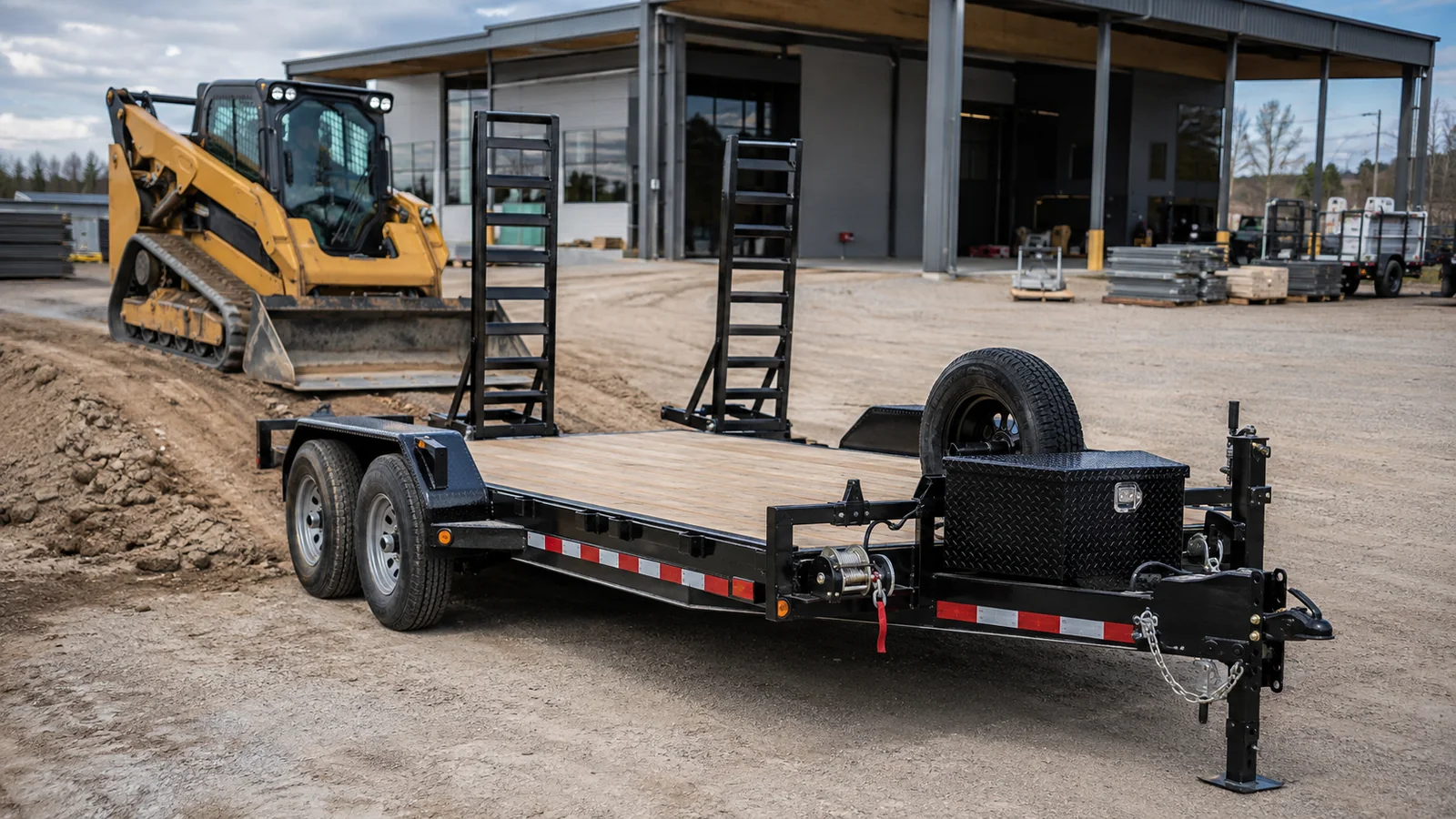
Trailer buyers increasingly want equipment that arrives ready for work, not a bare platform requiring weeks of aftermarket modification. This article examines why modular wiring, factory options, dealer upfits and application-specific accessory packages are becoming more important to trailer OEMs, dealers and commercial customers.
From Base Model to Work Platform: Why Modular Accessories and Factory-Ready Upfits Are Growing

Contractors increasingly evaluate trailers by the time, labor and job capacity they can save. This article examines why utility and dump trailers are becoming productivity investments for landscapers and small businesses—and why work-ready hardware, serviceability and the right configuration can matter more than the lowest purchase price.
Trailers as Productivity Tools: Why Contractors and Small Businesses Are Driving Utility and Dump-Trailer Demand

Trailer buyers are looking beyond flashy features and asking harder questions about frames, welds, seals, wiring, hardware and repairability. This article examines why build quality and serviceability are becoming stronger buying signals—and what that shift means for trailer OEMs and component suppliers.
The Build-Quality Backlash: Why Trailer Buyers Are Looking Past Features to Frames, Hardware and Serviceability

Powered trailers are moving from prototypes into customer deliveries and real fleet trials. This article examines how e-axles, onboard batteries, regenerative braking and mobile energy systems could turn trailers from passive loads into active participants in towing—and what still stands between today’s early products and broader adoption.
Powered Trailers Are Coming: How e-Axles and Onboard Energy Could Change Towing