Hand Winch Ratchet Slips Under Load: How to Identify Pawl, Gear and Locking Failures
In this guide
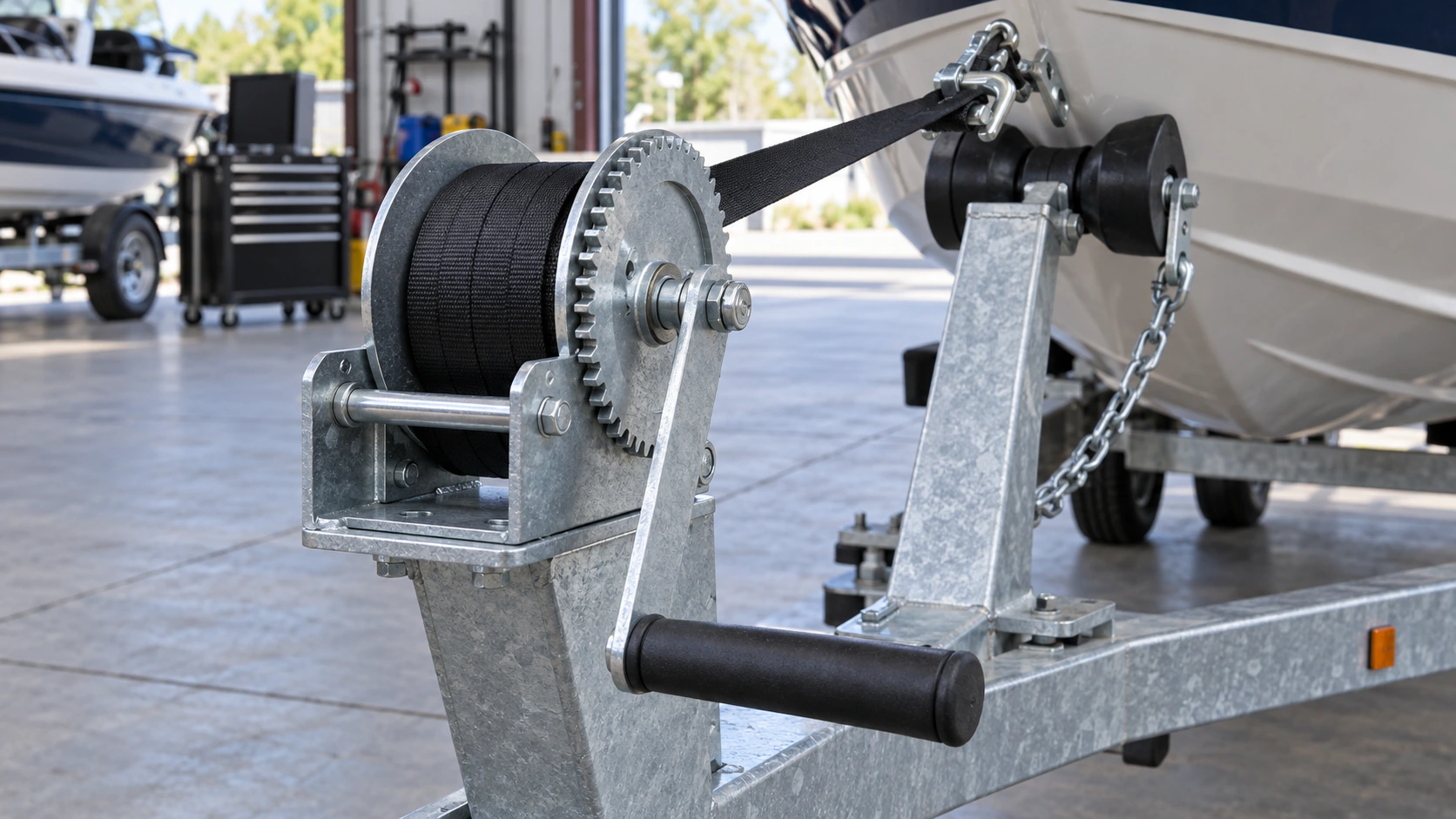
A boat trailer hand winch can appear to work normally until the operator stops cranking.
The handle turns, the drum winds the cable or strap, and the boat moves toward the bow stop. But when pulling stops, the line loses tension, the drum begins to reverse, or the boat moves away from its intended position.
Is the ratchet slipping? Has a gear failed? Or is the boat moving for a reason unrelated to the winch's locking mechanism?
These symptoms require different explanations. A pawl that cannot engage properly is a mechanical locking problem. A damaged drive gear may interrupt the connection between the crank and drum. A boat that shifts as the trailer leaves the water may instead have a support or positioning problem.
If a hand winch cannot reliably retain the load during its intended pulling operation, stop using it. Further diagnosis must begin with the load independently secured, not by repeatedly testing the faulty mechanism under tension.
Cranking, pulling, retaining tension during a pause and securing the boat for transport are four separate conditions. None proves the others. [1] [2]
Installation & Maintenance · Article 02 · Independently secure and unload before fault inspection. Follow the instructions for the exact model.
What Moved—and What the Ratchet Actually Does
Boat owners frequently describe winch problems based on what happens to the boat rather than what happens inside the winch.
Questions about additional bow straps and safety chains illustrate the distinction between pulling a boat into position and independently securing it for transport.
Consider an illustrative scenario: a boat sits correctly against the bow support while the trailer is submerged. After leaving the ramp, it moves backward by approximately one foot, despite the winch strap initially being tight. One strap has already broken and been replaced. This scenario is not presented as an independently verified owner case.
Such observations raise legitimate concerns, but they do not establish that the ratchet pawl failed.
Consider two different situations.
Situation A: The drum reverses when pulling stops.
The winch appears to lose its ability to retain cable or strap tension. The ratchet, drive transmission or associated locking components may be involved.
Situation B: The drum remains stationary, but the boat moves away from the bow stop.
The movement may come from changing hull support, an unsuitable winch pulling angle, a shifting winch stand, line stretch or slack developing within the complete trailer arrangement.
Both situations deserve attention, but replacing the ratchet cannot automatically correct the second.
The first diagnostic question is therefore not simply whether the boat moved. It is:
What moved relative to what—the drum, the pulling line, the winch mounting structure or the boat itself?
How a Hand Winch Ratchet Is Supposed to Hold
Understanding the mechanism helps distinguish a locking failure from a transmission failure.
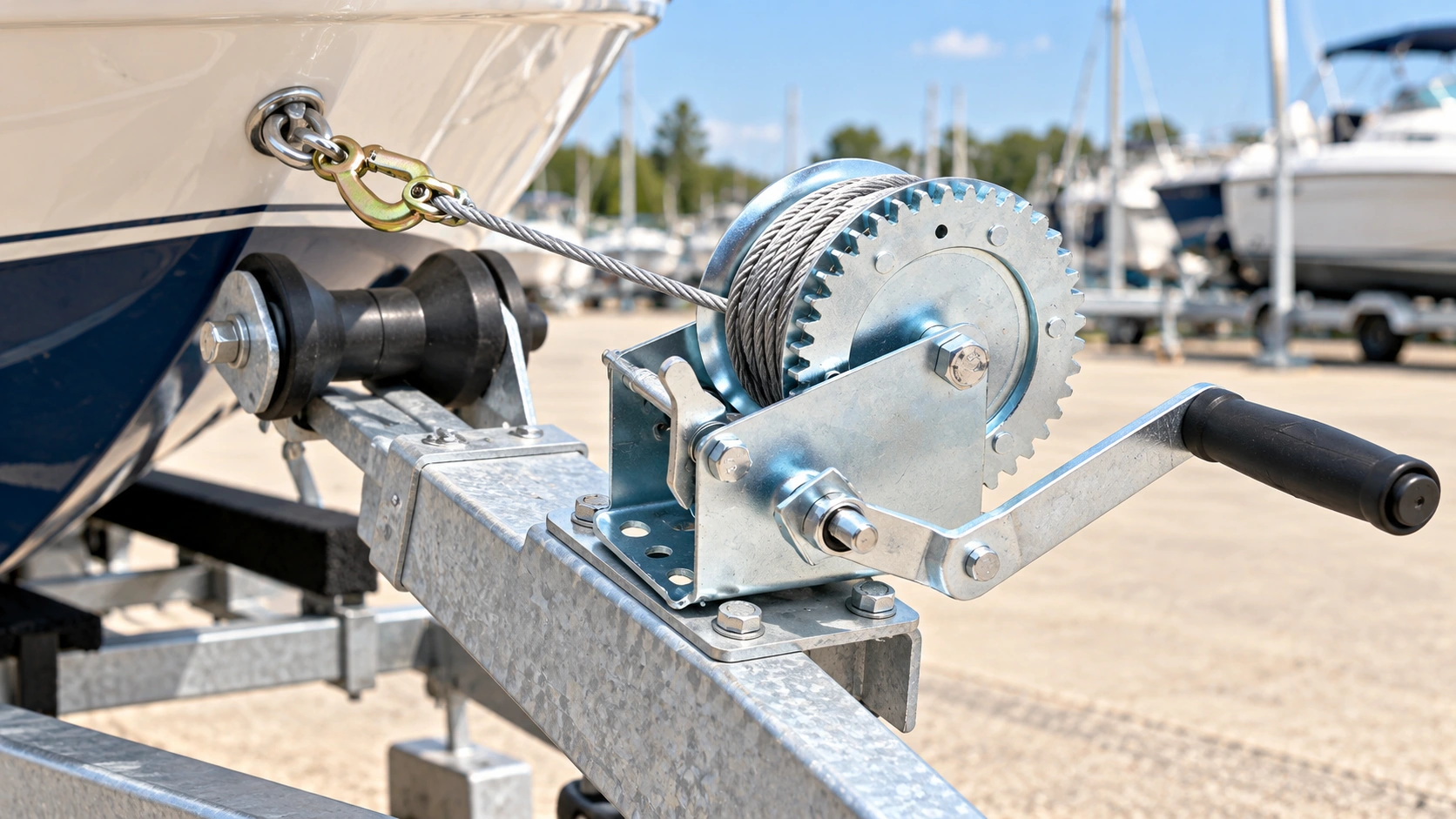
A conventional ratchet-type boat trailer winch generally contains several related components:
- A crank handle and drive shaft that receive manual input.
- A pinion and main drive gear that transmit torque to the drum.
- A ratchet wheel or toothed locking surface.
- A pawl and its spring or retaining mechanism that control reverse rotation.
- A drum attachment that transfers pulling force into the cable or strap.
The exact arrangement varies by manufacturer and model.
The Pawl Prevents Unintended Reverse Rotation
During retrieval, a properly positioned pawl allows the relevant ratchet teeth to move in the winding direction while resisting motion in the opposite direction.
The familiar clicking sound on many hand winches comes from the pawl moving over successive teeth.
When the operator stops, the pawl must engage securely with the intended locking surface.
If it remains partly lifted, sits against the edge of a tooth or fails to enter the tooth space, the locking connection may be unreliable.
The handle may have turned normally throughout retrieval because forward rotation does not prove that the mechanism will resist reverse torque.
The Gears Transfer Force Between the Handle and Drum
The main drive gear and pinion perform a different function.
They multiply and transmit the operator's input to rotate the drum.
If gear teeth become severely worn, broken or displaced, the crank may turn without transmitting force consistently to the drum.
A winch may therefore develop a drive failure even when the pawl itself remains intact.
Ratchet Control Is Not the Same as an Automatic Brake
Many boat trailer winches use reversible ratchet arrangements that permit controlled winding and unwinding.
A ratchet-type pulling winch should not be confused with a dedicated load-brake or self-locking winch.
For example, Dutton-Lainson distinguishes ratchet pulling winches, designed primarily for horizontal or inclined pulling, from brake and worm-gear winches intended for applications requiring different load-control characteristics.
A two-way ratchet selector does not automatically provide continuous braking during payout.
The locking and release behavior must match the actual winch design and intended operation. [1] [6]
Incomplete Pawl Engagement
Incomplete pawl engagement is one of the first conditions to investigate when a winch cannot resist reverse movement.
A pawl needs to move into its intended position and remain there under the forces acting on the locking mechanism.
Several problems can interfere with that action.
Incorrect Selector Position
Some manual winches have a lever that changes the permitted drum rotation direction. Others use different selector arrangements or handle positions.
If the lever is in a release or freewheel position, the mechanism may permit movement that would normally be prevented during retrieval.
A selector sitting between its intended positions is also a concern.
What to look for: With the load fully removed and the mechanism stationary, the selector should reach its intended position without unusual obstruction or looseness.
A lever that cannot remain in position indicates a control problem requiring correction before use.
Weak, Disconnected or Damaged Pawl Spring
On spring-loaded designs, the spring helps keep the pawl engaged with the ratchet teeth.
Corrosion, breakage or loss of spring retention may prevent reliable engagement.
This can result in a pawl that appears close to its working position but is not consistently held there.
What to look for: Visible spring damage, a loose pawl or a pawl that does not return to its intended position during the manufacturer's approved unloaded inspection.
These findings justify removing the winch from service for repair or component replacement.
Pawl Movement Restricted by Corrosion or Debris
Marine exposure can introduce salt deposits, corrosion and contamination around pivoting components.
If the pawl cannot move freely through its designed range, it may fail to seat correctly.
The resulting symptom may resemble a broken spring even though the immediate problem involves restricted movement.
Cleaning and lubrication may be appropriate when permitted by the manufacturer and no component damage exists.
However, corrosion that has caused pitting, material loss or deformation is not merely a lubrication problem.
Why Clicking Alone Is Not Enough
A normal clicking sound is an important operating indication on many ratchet winches.
But hearing clicks does not establish that every pawl and tooth surface remains undamaged.
Likewise, an absent or unusually weak clicking sound on a model that normally clicks is a reason to stop and investigate.
The important condition is reliable mechanical engagement, not simply the presence of noise. [1] [2]
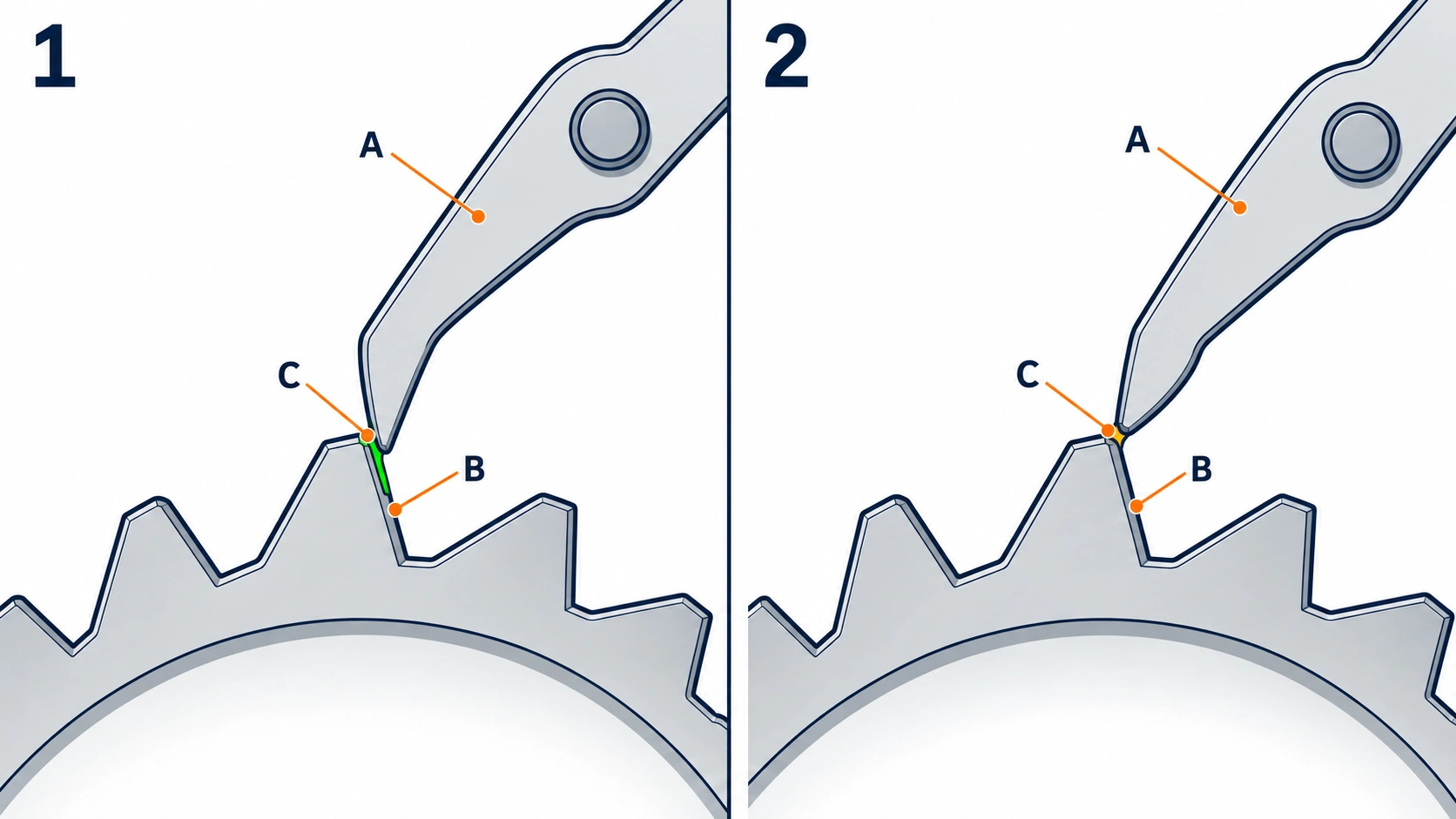
Tooth, Gear and Shaft Damage
A pawl may move correctly but still fail to lock if the contacting surfaces can no longer carry the load.
Under normal operation, force is transferred through the pawl contact area into the ratchet tooth or locking gear.
Repeated loading places pressure on these relatively small contact surfaces.
Overload, repeated shock loading, corrosion and accumulated wear can progressively change their geometry.
Rounded or Deformed Teeth
A properly shaped locking tooth provides a surface against which the pawl can resist reverse rotation.
If that surface becomes rounded, chipped or plastically deformed, the contact may become less secure.
A pawl may then ride over the damaged surface rather than remain engaged.
What to look for: Visible tooth rounding, broken tips, missing material, bent pawl edges or an unusual wear pattern concentrated on particular teeth.
These conditions are different from superficial discoloration.
A visibly damaged locking surface should not be treated as serviceable merely because the winch still turns.
Broken Drive Gear Teeth
The main drive gears deserve a separate inspection.
A missing tooth or damaged pinion may cause intermittent drive transmission, irregular handle resistance, skipping or loss of controlled drum movement.
In some designs, the ratchet wheel and main drive gear are different components. Damage to one does not prove that the other is defective.
This distinction matters when ordering replacement parts.
Replacing a pawl will not correct a failed gear-to-shaft connection or a drive gear with missing teeth.
Bent Shafts and Misaligned Gears
A bent drive shaft, displaced reel shaft or distorted mounting frame may prevent gears from meshing as designed.
The winch may still rotate when unloaded, but the gear alignment can deteriorate under operating force.
Warning signs include:
- A visibly displaced or wobbling shaft
- Irregular spacing between meshing gears
- Gear teeth contacting near their edges
- Persistent binding or scraping during approved unloaded checks
- Bent frame sections or elongated mounting openings
A structurally distorted frame is particularly significant because it controls the position of multiple interacting components.
Replacing an individual pawl cannot restore proper alignment if the supporting structure itself is damaged. [3]
Failure No. 3: The Handle Turns, but the Drum Does Not Respond Correctly
Not every loss of pulling force comes from the ratchet.
The drive path must also remain mechanically connected from the handle to the drum.
Depending on the winch construction, problems may involve the crank attachment, drive shaft, pinion, gear connection, reel shaft or drum assembly.
Loose or Damaged Crank Connection
If the crank handle does not remain correctly secured to its drive shaft, part of the operator's movement may be lost at the connection.
A loose retaining component, damaged shaft interface or incorrect handle installation can produce abnormal movement.
On multi-speed winches, the selected drive arrangement must also be properly engaged.
What to look for: Unusual handle movement, visible connection damage or a handle that turns without corresponding drum movement during an approved unloaded functional check.
Do not attempt to compensate by using additional force or substituting an improvised handle.
Failed Gear-to-Shaft Connection
Some gears are joined to their shafts through fixed mechanical connections.
If such a connection fails, the shaft may rotate without transferring the expected torque.
This can appear similar to damaged gear teeth, but the failure occurs at the interface between the gear and shaft rather than along the tooth profile.
Reel-Shaft or Drum Movement
The reel shaft and its supporting frame maintain the position of the drum relative to the drive gears.
Wear or deformation around these supports may allow unwanted movement that changes gear alignment.
If the frame openings become elongated or the drum shifts noticeably within the assembly, the problem is structural rather than a simple adjustment.
A winch that turns without producing consistent drum movement should be withdrawn from service until the drive connection and supporting components are assessed.
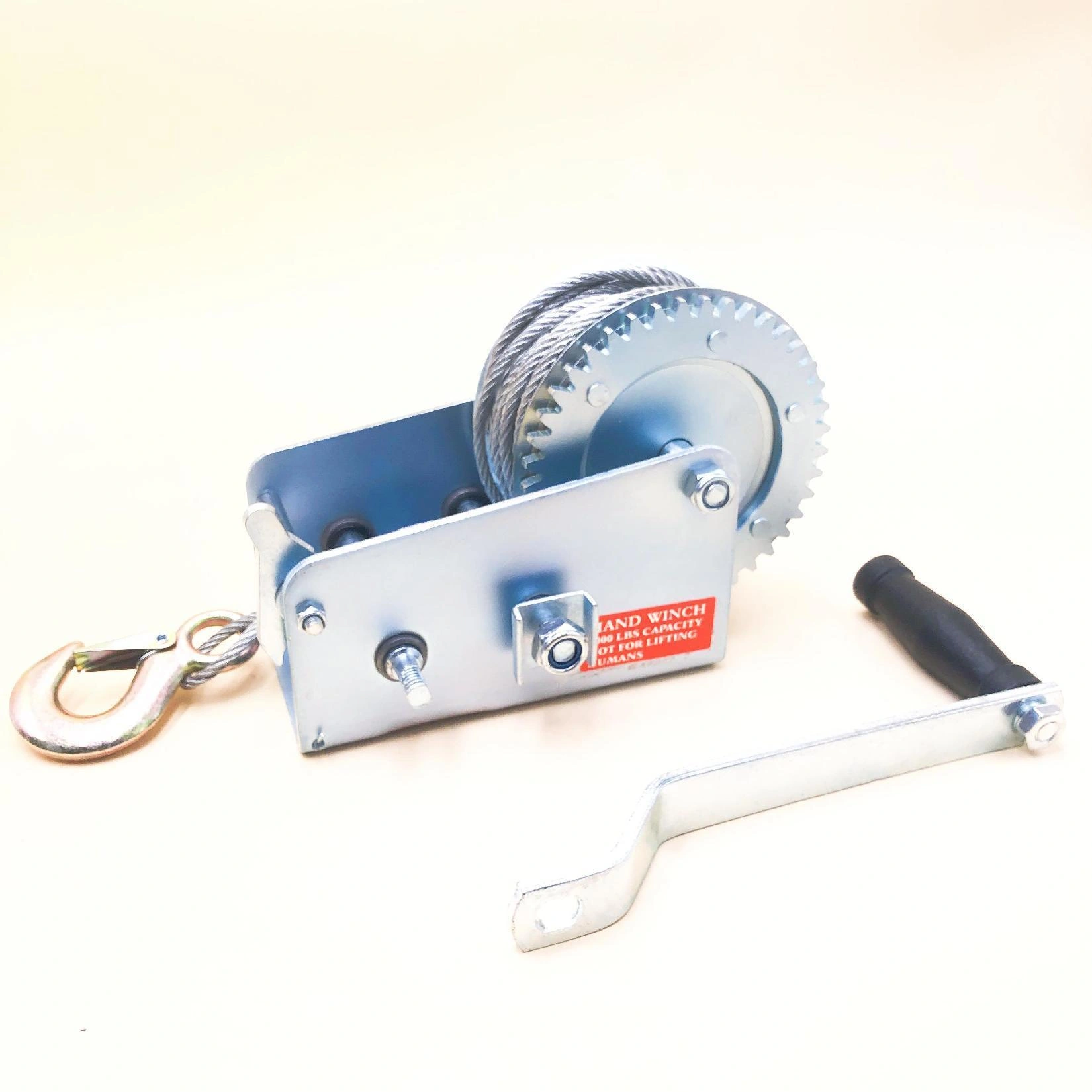
Line Slippage or Boat Position?
A stationary drum does not guarantee that the pulling line has retained its position or tension.
The cable or strap also needs a secure drum attachment and correct winding arrangement.
Insecure Drum Attachment
A cable or strap may be retained by a manufacturer-specific anchor, clamp, retaining bolt or other attachment system.
If that connection is incorrect or damaged, the line may slip relative to the drum.
The handle and gears could continue operating normally while the pulling medium fails to move as intended.
Loose Winding Layers
A poorly wound strap can develop loose loops or uneven stacking.
As tension increases, some layers may settle or shift, changing the apparent line tension without actual reverse rotation of the drum.
Steel cable presents different problems, including crossed wraps, kinks, crushing or a damaged drum connection.
What Separates This from Ratchet Failure?
The useful distinction is whether the drum itself reverses or the line changes position relative to a stationary drum.
A visible change in the line package, loose winding, or movement at the drum anchor points toward a pulling-medium issue.
Reverse drum movement with an intended locking position points toward the ratchet or drive system.
These conditions can also coexist. A damaged cable should not be ignored simply because the locking mechanism is functioning correctly.
For a detailed examination of replacement strap dimensions, drum attachment and winding buildup, see New Boat Trailer Winch Strap Bunches Up on the Drum: What to Check Before Using It Again.
Failure No. 5: The Boat Moves Even Though the Winch Is Not Slipping
This is a particularly important distinction for boat trailer installations.
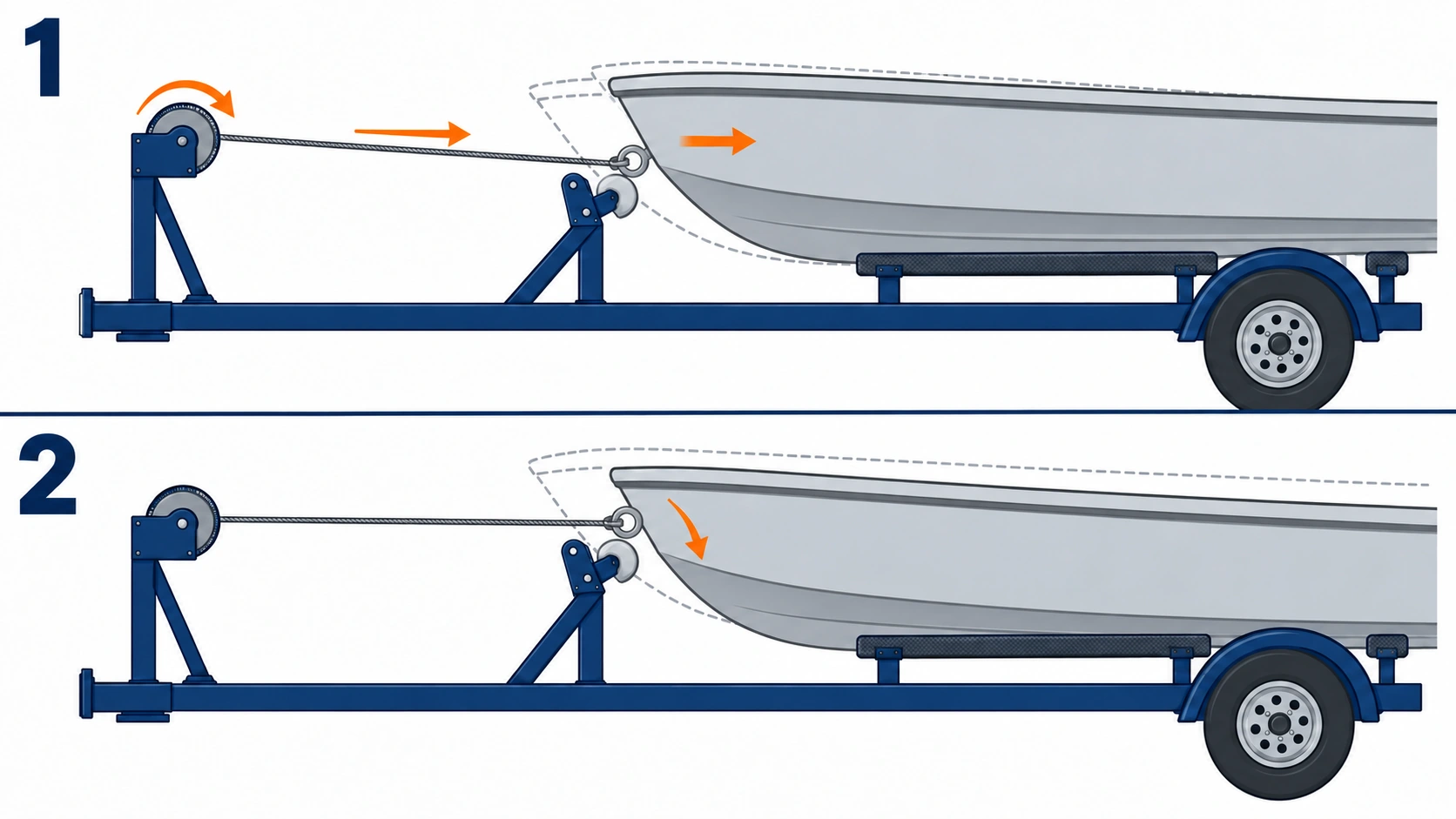
A boat can move relative to its bow stop without a corresponding mechanical failure inside the winch.
Changing Support as the Trailer Leaves the Water
While the trailer is partly submerged, buoyancy supports a portion of the boat.
As the trailer moves up the ramp, that support decreases and the hull settles more fully onto the bunks or rollers.
The final position can therefore differ from the position observed while floating.
If the boat, trailer and bow-stop geometry are not correctly matched, this transition can reveal a positioning problem.
An apparently tight winch line at the ramp does not by itself establish that the boat will settle against the bow stop in the intended position.
Incorrect Winch Pulling Angle
The winch line should approach the bow eye along the intended loading path.
If the winch is positioned too high, too low or at an unsuitable horizontal angle, part of the pulling force may act in an undesirable direction.
This can affect how the bow meets the stop and how the boat settles on the trailer.
Simply increasing winch tension may place additional stress on the bow eye, support structure and line without correcting the geometry.
Bow-Stop or Winch-Stand Movement
A worn bow roller, loose winch-stand mounting or distorted bracket can also create apparent movement.
In this situation, the drum may be stationary while the reference point against which the boat was positioned has shifted.
The appropriate correction concerns the trailer support or mounting structure, not necessarily the winch ratchet.
Transport Restraints Are a Separate Requirement
A conventional boat trailer pulling winch is used to retrieve and position the boat. It should not be treated as the only device securing the boat during road transport.
The boat also requires suitable independent bow and stern restraints according to the trailer and boat configuration.
Fulton and Dutton-Lainson both distinguish winch pulling operations from securing a load for transportation.
A fully engaged ratchet is therefore not a substitute for the required tie-down system. [1] [2]
Diagnosis Without Recreating the Failure
The following distinctions help narrow the cause without deliberately recreating a dangerous loaded failure.
| Observation | Likely area of concern | Diagnostic implication |
|---|---|---|
| Ratchet selector cannot remain fully engaged | Selector, pawl pivot, spring or retaining hardware | Locking mechanism may not be maintaining its intended position |
| Pawl or locking teeth are rounded, cracked or broken | Pawl and ratchet wheel | Reliable reverse locking cannot be assumed |
| Handle moves abnormally without consistent drum rotation | Crank connection, drive gear or shaft | Torque transmission may be interrupted |
| Gear teeth are missing or gear alignment is visibly distorted | Pinion, main gear, reel shaft or frame | Drive assembly may be mechanically damaged |
| Drum remains stationary but cable or strap position changes | Line anchor, winding layers, pulling medium | Apparent slippage may originate outside the ratchet |
| Boat moves back while drum and line position remain unchanged | Bow stop, bunks, winch stand, loading geometry | Trailer positioning should be investigated |
| Winch frame is bent or shaft-support openings are elongated | Structural components | Replacing only a pawl is unlikely to restore the assembly |
| Rust or deposits restrict pawl movement | Pivot and adjacent components | Cleaning may be sufficient only if no wear or material damage is present |
More than one fault can occur at the same time.
For example, a misaligned winch stand can create an unfavorable pulling angle, while an overloaded or worn winch has reduced mechanical reliability.
The presence of one problem does not exclude the other.
What to Check After Suspected Ratchet Slippage
If the winch has already failed to retain tension, avoid further loaded operation.
The objective is to preserve the evidence of failure and assess the equipment without relying on the damaged mechanism.
Step 1 — Secure the Boat Independently
Keep the boat from moving using a suitable independent support and restraint arrangement.
If the winch remains under tension or the boat cannot be secured without manipulating the faulty equipment, use qualified recovery or trailer-service assistance.
Do not disengage the pawl, change gears, remove the crank or dismantle the winch while it is carrying the load.
Step 2 — Record What Actually Moved
Useful observations include:
- Whether the drum visibly reversed
- Whether the cable or strap paid out
- Whether the handle moved unexpectedly
- Whether the winch stand or bow stop shifted
- Whether the boat changed position only after leaving the water
- Whether the problem followed a recent installation, line replacement or impact
Photographs taken from a safe position can help establish these differences.
Step 3 — Inspect Visible Components After the Load Is Removed
Check the accessible pawl, ratchet teeth, drive gears, shafts, selector, crank connection and mounting structure.
Also examine the cable or strap, hook, drum attachment and surrounding hardware.
Look for broken components, deformation, abnormal movement, corrosion or contact damage.
Keep the inspection within the manufacturer's permitted procedure. Internal component removal and loaded functional verification belong to qualified servicing where required.
Step 4 — Match the Findings to the Necessary Correction
If the line is damaged but the winch mechanism remains serviceable, replacing the approved pulling medium may resolve that part of the problem.
If a pawl or retaining component is defective, the locking mechanism requires proper repair or replacement.
If drive shafts, structural frame supports or major gear connections are damaged, assess whether restoring the assembly is technically reliable and economically reasonable.
A suspected locking failure should not be cleared for further pulling merely because the winch rotates smoothly without load. [1] [2]
Maintain, Repair or Replace?
Not every abnormal sound requires a complete winch replacement. However, loss of reliable locking is a serious fault.
Routine Maintenance May Be Enough When:
- No structural or locking-component damage exists.
- Surface contamination is restricting an otherwise sound accessible mechanism.
- Cleaning and lubrication are permitted for the affected components.
- The winch passes the manufacturer's required functional checks after maintenance.
Cleaning or lubrication cannot restore missing metal, broken springs or deformed locking teeth.
Component Replacement Is Appropriate When:
- A pawl spring, pawl or ratchet component is damaged.
- A replaceable gear or shaft is worn beyond its service limit.
- Approved repair parts and procedures are available for the exact model.
- The remaining winch structure is sound.
Replacement components should match the original mechanical design, including tooth geometry, material, shaft connection and retaining hardware.
A visually similar pawl or gear is not necessarily interchangeable.
Professional Inspection Is Needed When:
- Locking failure has occurred under load.
- Gear alignment, shaft retention or bearing support is uncertain.
- The winch stand, mounting bracket or trailer structure shows damage.
- More than one mechanical component may have been affected.
- Reliable operation cannot be established through the permitted checks.
Complete Winch Replacement Is the Better Decision When:
- The frame is bent, cracked or permanently distorted.
- Shaft supports or mounting openings have suffered structural deformation.
- Multiple critical drive components are damaged.
- Suitable approved replacement components are unavailable for a confirmed failure.
- Reliable locking cannot be restored and verified.
- The existing winch is unsuitable for the actual pulling load or application.
A complete replacement must still match the required mounting interface, pulling capacity, line configuration, operation and available crank clearance.
Installing a new winch without addressing a bent support stand or incorrect pulling geometry may reproduce the problem.
GOODIN: Specify the Complete Winch Chain
For trailer manufacturers, dealers and aftermarket distributors, a hand winch cannot be assessed solely by its rated pulling capacity or gear ratio.
A reliable configuration depends on the complete mechanical chain: crank, drive shaft, gears, pawl, drum, pulling medium and mounting structure.
GOODIN offers cable-operated manual winches in different capacity and gear configurations.
| Specification | GD-C1200 | GD-C2000 |
|---|---|---|
| Rated pulling capacity | 1,200 lb | 2,000 lb |
| Gear ratio | 4:1 | 4:1 / 8:1 |
| Speed configuration | Single-speed | Two-speed |
| Ratchet operation | Two-way | Two-way |
| Cable | 4.5 mm × 8 m | 4.8 mm × 10 m |
| Breaking force | 1,800 lb | 3,000 lb |
Both models use fixed-frame manual winch construction, with exposed gearing and ratchet-control components.
The published breaking-force figures should not be treated as permitted operating loads. Likewise, two-way ratchet operation should not be mistaken for an automatic load-holding brake.
For a replacement or OEM winch program, GOODIN recommends examining three areas together.
First: Locking and drive compatibility.
Identify the required ratchet operating direction, gear arrangement and actual pulling duty. A two-speed model changes the available mechanical advantage, but it does not eliminate the need for secure pawl engagement.
Second: Installation conditions.
Confirm the winch stand can withstand the expected line pull, the cable approaches the drum correctly and the crank can operate without interference.
Third: Inspection and service requirements.
Define the visible locking and drive components that require inspection, the approved replacement parts, and the conditions that require withdrawing the unit from service.
For dealers handling recurring complaints, retaining the original winch model, photographs of the tooth and pawl condition, evidence of drum or shaft movement and the operating circumstances can help distinguish isolated component wear from mounting or application problems.
A larger rated winch is not automatically the answer to a slipping ratchet.
If the root cause is incorrect engagement, damaged components or unsuitable trailer geometry, those conditions must be resolved independently of rated pulling capacity.
GD-C1200 — 1,200 lb manual cable winch · GD-C2000 — 2,000 lb two-speed cable winch · Explore the GOODIN trailer winch range. [4] [5]
Frequently Asked Questions
Why does my hand winch click but still slip?
Clicking indicates movement of the ratchet mechanism on many winches, but it does not guarantee reliable locking.
A worn pawl, damaged teeth, weak spring or incorrectly engaged selector can prevent secure retention. On brake-type winches, additional brake-related faults may produce similar symptoms.
Stop using the winch if it cannot reliably retain tension during its intended operation.
Can I repair a slipping hand winch pawl myself?
Routine cleaning and approved maintenance may be suitable for an unloaded, undamaged mechanism.
Repairing a failed locking assembly requires the correct model-specific components, procedure and functional verification. Never attempt to dismantle or adjust a defective pawl while the winch remains under load.
Why does the crank turn but the cable does not pull?
Possible causes include a loose crank connection, failed drive gear, damaged shaft interface or an insecure cable-to-drum attachment.
Observe whether the drum rotates during the approved unloaded inspection. A stationary drum with a turning handle points toward the drive transmission, while line movement relative to the drum indicates an attachment or winding issue.
Does a two-speed winch hold a load more securely than a single-speed winch?
Not inherently.
Two-speed gearing provides different combinations of manual effort and line retrieval speed. Reliable locking still depends on the correct ratchet mechanism, engagement and component condition.
A higher gear ratio cannot compensate for damaged locking teeth or an incorrectly positioned pawl.
If the boat slides backward on the trailer, should I replace the winch?
Not necessarily.
Determine whether the winch drum is reversing or whether the boat is moving relative to the bow stop because of its support position, line arrangement or trailer geometry.
If the winch is mechanically defective, it must be repaired or replaced. If the winch functions correctly but the boat settles away from the bow support, the trailer setup and restraints need attention.
Conclusion: A Working Crank Does Not Prove a Working Lock
When a hand winch slips under load, the first task is to identify where controlled movement is being lost.
Incomplete pawl engagement, damaged locking teeth, broken drive components and insecure line attachment can produce overlapping symptoms. Boat movement caused by changing support conditions or unsuitable trailer geometry can look similar without being a ratchet failure.
A sound inspection separates these possibilities through observable mechanical conditions rather than repeatedly applying more pulling force.
If the winch cannot reliably retain tension, remove it from service. Repair only the components and assemblies that can be restored and verified, and replace the complete winch when structural integrity or locking reliability cannot be assured.
A hand winch is suitable for use only when its crank, gears, ratchet, drum, pulling medium and mounting arrangement all function as intended.
Sources & Further Reading
Manufacturer instructions apply to the models named. The DLB troubleshooting reference concerns brake winches; its brake adjustments are not instructions for GOODIN ratchet winches. The owner scenario is illustrative, not an independently verified case.
- Dutton-Lainson — DLx pulling winches — owner’s manual (206870)
- Fulton — F2 trailer winch — installation and operation instructions
- Dutton-Lainson — DLB-series brake winches — troubleshooting guide
- GOODIN — GD-C1200 — 1,200 lb manual cable winch
- GOODIN — GD-C2000 — 2,000 lb two-speed cable winch
- Dutton-Lainson — Technical FAQs — pulling, brake and worm-gear winches
Why a Weather-Resistant Trailer Tool Box Still Leaks: How to Find the Real Entry Point
New Boat Trailer Winch Strap Bunches Up on the Drum: What to Check Before Using It Again
Related Article