Origin Is No Longer Enough: Why Forced-Labor Enforcement Is Turning Traceability Into a Sourcing Requirement
In this article
A trailer jack leaves a factory in Zhejiang. Its commercial invoice identifies China, its carton carries a Made in China marking, and nobody disputes where final manufacturing occurred. Yet several sourcing questions remain unanswered. Where did the steel tube originate? Which mill produced the mounting plate? Did the manufacturer buy directly from that mill or through a service center? Who performed the zinc plating, and can the supplier connect the material certificate to the jacks inside this particular shipment?
Those questions become commercially important when a U.S. importer must demonstrate that merchandise was not produced, even partly, through a prohibited supply chain. A country-of-origin label identifies one legal attribute of the product; it does not reconstruct the upstream production history. The distinction matters because forced-labor enforcement can reach beyond the factory named on the invoice.
Industrial purchasing has long organized suppliers by country, price, capacity and lead time. Those fields remain useful. But a finished component can contain material that passed through several companies, processing locations and countries before assembly. As steel and aluminum receive greater enforcement attention, that hidden network is becoming part of supplier qualification. For GOODIN and its customers, the challenge is practical: build a record that explains how a component came into existence, while recognizing that documentation supports compliance decisions rather than guaranteeing admission.
Policy snapshot: September 11, 2026. Tariff treatment, forced-labor admissibility and supply-chain provenance are separate questions; transaction-specific facts determine the applicable requirements.
Three Legal Questions, Not One Forced-Labor Rule
The immediate 2026 policy development came from the Office of the United States Trade Representative. On March 12, USTR opened Section 301 investigations into 60 economies, examining their failure to impose and effectively enforce prohibitions on imports produced with forced labor. Affirmative findings followed on June 2, and final action was announced on July 23. The additional duties took effect on July 24, 2026, at 12:01 a.m. Eastern Time; the subsequent Federal Register publication date should not be mistaken for the effective date.
The action generally uses a 10% or 12.5% additional-duty structure, but its economy-specific rules and product exemptions matter. Certain economies receive treatment calculated with reference to the applicable most-favored-nation duty. It is therefore not a universal instruction to add the same percentage to every purchase order. USTR says the investigated economies account for 99.4% of U.S. imports, making the policy broader than a discussion about China alone.
Section 307 and UFLPA concern admissibility
The underlying U.S. import prohibition is Section 307 of the Tariff Act of 1930, 19 U.S.C. §1307. It covers merchandise mined, produced or manufactured wholly or in part using prohibited forced, convict or indentured labor. “In part” is the operationally important phrase: an implicated input upstream can matter even when the final assembly factory is not itself the source of the concern.
CBP may issue a Withhold Release Order when information reasonably indicates that merchandise made with forced labor is being, or is likely to be, imported. Affected shipments may be detained, and importers must respond through the applicable admissibility or export procedures. A formal Finding can lead to seizure. These mechanisms are fundamentally different from a duty calculation: a tariff changes cost, while an admissibility problem can prevent the shipment from entering at all.
The Uyghur Forced Labor Prevention Act adds a rebuttable presumption for goods produced wholly or partly in Xinjiang, or by entities on the UFLPA Entity List. Final manufacturing outside Xinjiang does not by itself remove that exposure. An importer seeking to show that the presumption does not apply is making a different case from one requesting an exception to it. The evidence and legal standards must be assessed for the actual enforcement route, not reduced to a generic supplier declaration.
The 2026 Section 301 action concerns economy-level policy
USTR's new action asks whether trading partners maintain and enforce forced-labor import prohibitions. It does not replace the product-specific restrictions under Section 307 or UFLPA. Paying an additional duty cannot make prohibited goods admissible; exemption from that duty cannot establish that an upstream chain is acceptable.
Articles and parts subject to Section 232 are exempt from this particular forced-labor Section 301 action. That is a narrow tariff interaction, not immunity from other trade measures or forced-labor enforcement. As explained in our Section 232 component analysis, component classification and the applicable legal treatment must be established before a buyer constructs its landed-cost calculation.
Procurement should therefore keep three questions separate. Tariff exposure asks what duties apply. Admissibility asks whether the merchandise may enter. Traceability supplies evidence about the chain behind the merchandise. Combining those questions into one label such as “UFLPA tariffs” makes the problem harder to manage and can conceal the most serious risk: goods that remain inadmissible regardless of the duty paid.
Why Steel and Aluminum Bring This Into the Trailer Factory
Forced-labor compliance was initially associated in many industrial buyers' minds with cotton, apparel and polysilicon. A trailer manufacturer could assume that the issue mainly belonged to other sectors. That assumption is increasingly difficult to maintain. The 2023 UFLPA strategy update already discussed steel and downstream steel products as areas of concern; the 2025 update formally added steel to the high-priority enforcement sectors. Aluminum had been added in 2024.
High-priority designation is a signal for closer supply-chain scrutiny, not a finding that every steel or aluminum product contains forced labor. It does not establish wrongdoing by every Chinese supplier, and it does not mean that all metal components will automatically be detained. It does make upstream visibility more relevant to a trailer OEM whose purchasing program depends heavily on processed metals.
Steel is central to trailer jacks, mounting brackets, fasteners, winch mounts, spare-tire carriers, couplers, structural supports and fabricated assemblies. Aluminum is important to lightweight boxes and other fabricated accessories. Even when the purchased item is described as a mechanical device, its physical structure can incorporate plate, tube, sheet, bar, forged or cast components, fasteners and extrusions from different producers.
One purchased SKU can conceal many production relationships
Consider a hypothetical 2,000 lb tongue jack. In an OEM's purchasing system it may occupy one line: a part number, Supplier A, an agreed price and a delivery schedule. Inside the manufacturer's operation, that jack has outer and inner tubes, a mounting plate, gears, a screw, a handle, pins, washers, fasteners, grease, surface treatment and packaging. Some pieces may be made in-house; others may come from specialized suppliers.
The tube supplier may buy coil from a mill through a service center. The mounting plate may be cut from stock acquired through a distributor. A gear producer may obtain its steel through another route, and a separate factory may perform zinc plating. The real chain is therefore not simply “OEM buys jack from factory.” It is a network of material transactions and manufacturing relationships that needs to be understood at an appropriate level.
When the importer asks whether steel in a shipment is linked to a prohibited upstream entity, “our factory is in Ningbo” answers the wrong question. It establishes a manufacturing location, not the provenance of the material. Likewise, photographs of a clean assembly line can show something useful about final production without identifying the suppliers behind its incoming tubes and plates.
This is where quality management and trade compliance begin to converge. Engineering teams already need to know whether material meets the specified grade and whether production is consistent. Traceability adds the question of whether the supporting records follow the material into the product being supplied. The earlier Build Quality principle—proof, not promises—therefore has a direct application here. Load tests and weld inspection support one kind of claim; material identities and connected transaction records support another. Neither should be replaced by a general statement that the supplier takes quality or compliance seriously.
Origin Identifies the Product; Provenance Explains Its History
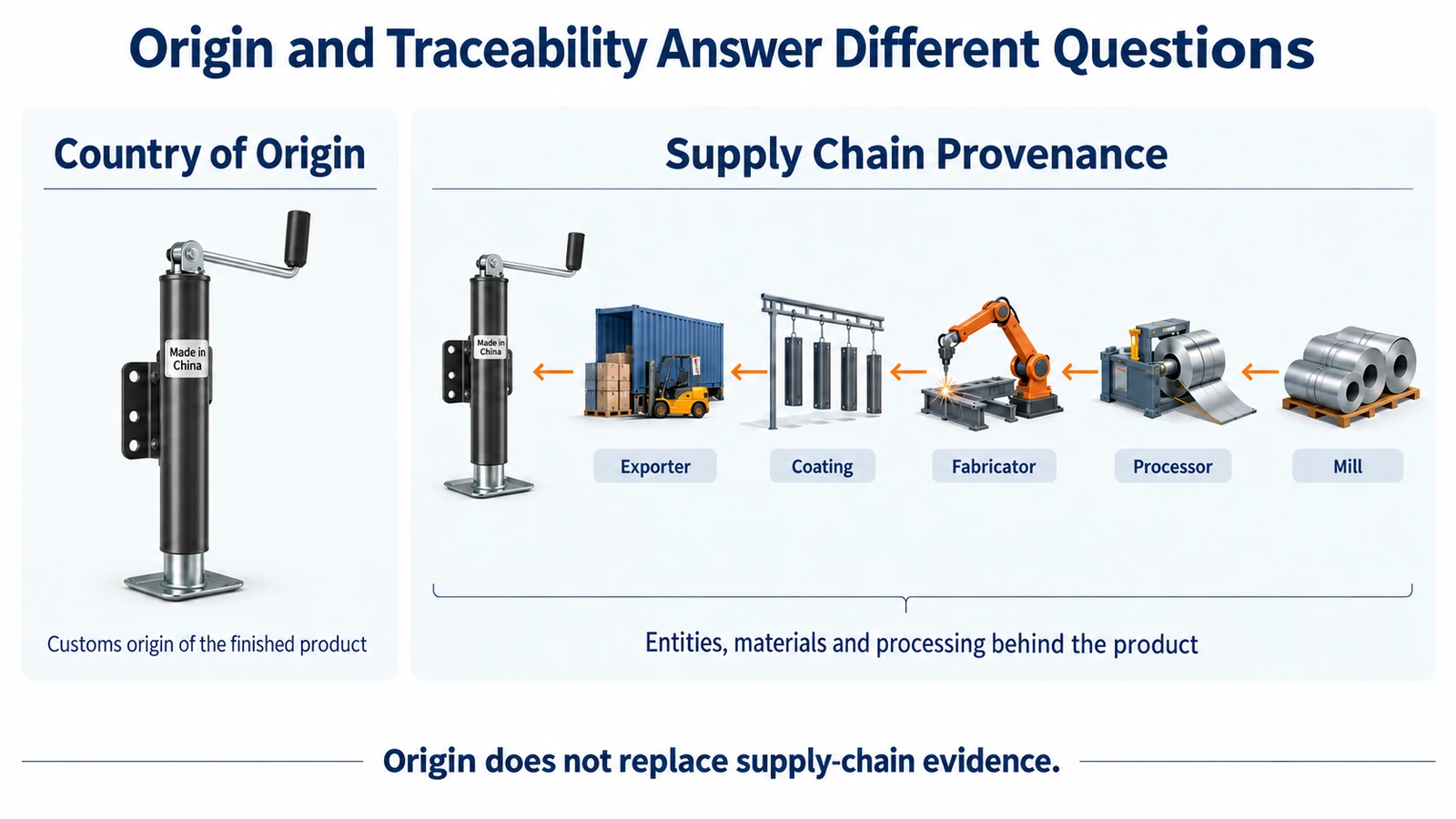
Customs origin remains essential. It influences marking, tariffs, preferential treatment and other regulatory decisions. But it is determined under the applicable origin rules, not by simply listing every country that supplied an input. Supply-chain provenance addresses a different question: which entities handled the material, what processing occurred, and how that history connects to the finished article. Neither concept replaces the other.
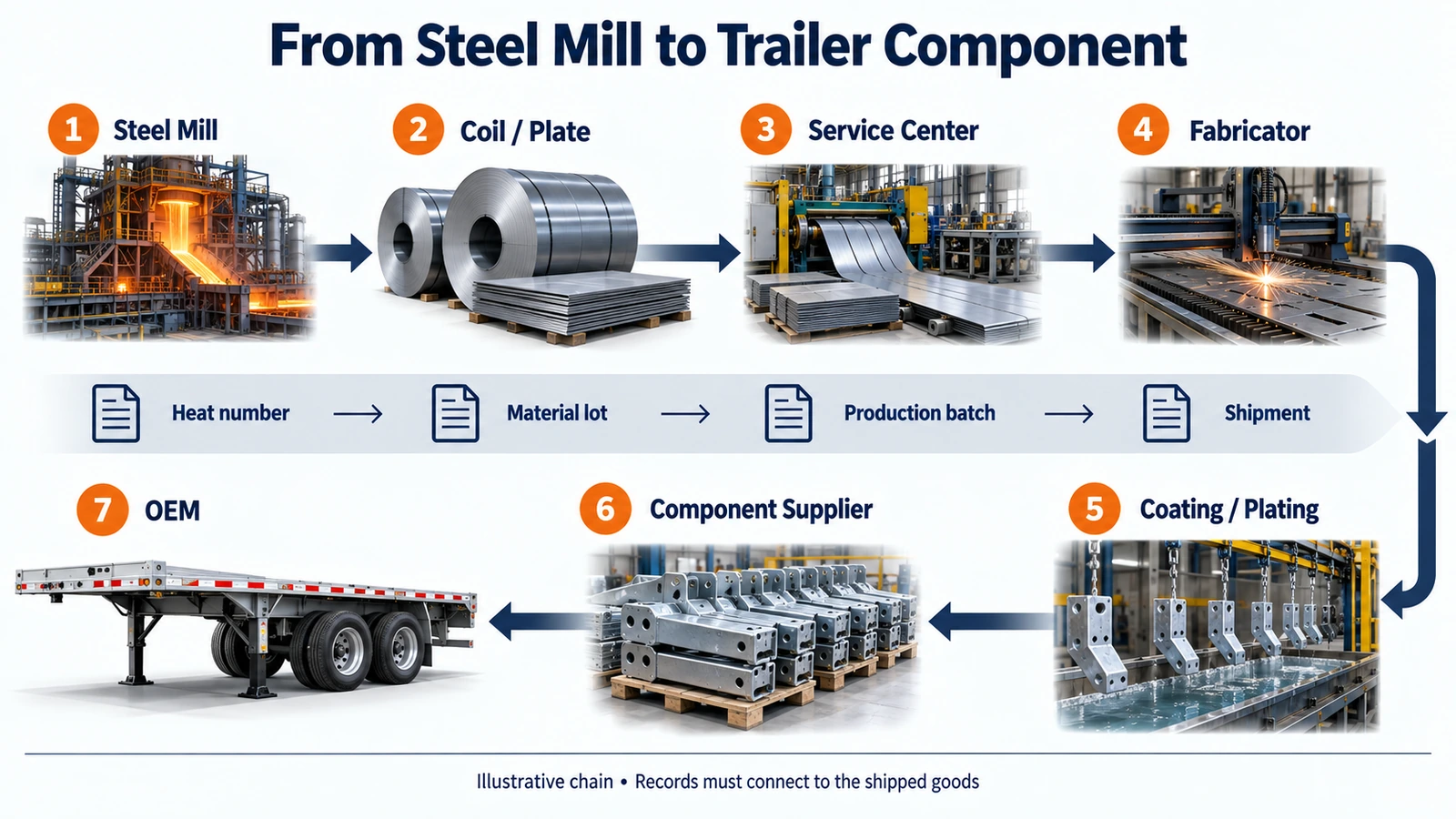
Imagine a fabricated bracket cut, formed, welded and coated in China. Assume, for this hypothetical example, that the relevant origin analysis supports Chinese origin. Its material history could still run from a steel mill to hot-rolled coil, a service center, a plate or strip processor, a fabricator, a plating subcontractor, an exporter and finally a U.S. OEM. The origin conclusion does not identify every business in that sequence.
The UFLPA strategy treats supply-chain tracing as a critical part of due diligence and calls for mapping through to raw-material suppliers. That is a more demanding information task than obtaining a Certificate of Origin. The certificate may be accurate and useful, while still leaving the importer unable to explain who produced the underlying metal or which subcontractor processed it.
GOODIN View: Origin identifies the product within the customs system. Traceability explains the supply chain behind it. A defensible sourcing decision may need both.
A practical evidence chain needs identifiers that survive each handoff. In a hypothetical example, Mill A issues a certificate for Heat 24863. A service center purchases the associated coil and records its identity on the transaction and processing records. The component factory receives material lot B-0712, issues it to a work order and records its use in jack production batch J-260824. Packing and shipment records then connect that batch to the exported part numbers and quantities.
The particular numbers are illustrative; the continuity is what matters. An importer should be able to start with a shipment and work backward through the production batch, material receipt, processing records and upstream supplier identity. Conversely, a factory investigating a material issue should be able to determine which production batches and shipments used the affected input. This two-way usefulness explains why traceability can support quality work as well as compliance.
It also explains why collecting documents after a detention is so difficult. A warehouse may have mixed lots, an intermediary may have changed material sources, and employees may remember a purchase without retaining the identifiers needed to prove it. Nothing improper necessarily occurred, but the history has become harder to establish. Traceability captured during production is evidence management; traceability attempted months later is evidence reconstruction. The most reliable improvement is to preserve those connections while material is moving, rather than relying on the sales team to rebuild them when a customer urgently asks.
Build a Chain of Evidence, Not a Folder of Certificates
A mature supplier does not need to promise that one universal packet will satisfy every CBP inquiry. Evidence requirements depend on the product, the factual concern and the applicable enforcement mechanism. What it can build is a connected record that gives the importer a clearer starting point. For metal trailer hardware, that means organizing product, site, material, transaction and production information around the same shipment identity.
Start with identity, then connect transactions to production
The first layer is an unambiguous product record: supplier and customer part numbers, technical description, drawing revision, dimensions, weight, primary materials, manufacturing location and production batch. Different descriptions may be needed for engineering and commercial purposes, but they must be reconcilable. An invoice that says only “metal accessories” is a weak anchor for a file containing several distinct products and material routes.
Manufacturing-site identity comes next. The company issuing the invoice may be an exporter, while one facility fabricates the component and another coats it. The file should distinguish those roles and use the relevant legal company names. A familiar sales name or abbreviation is not always sufficient to establish that two records concern the same entity.
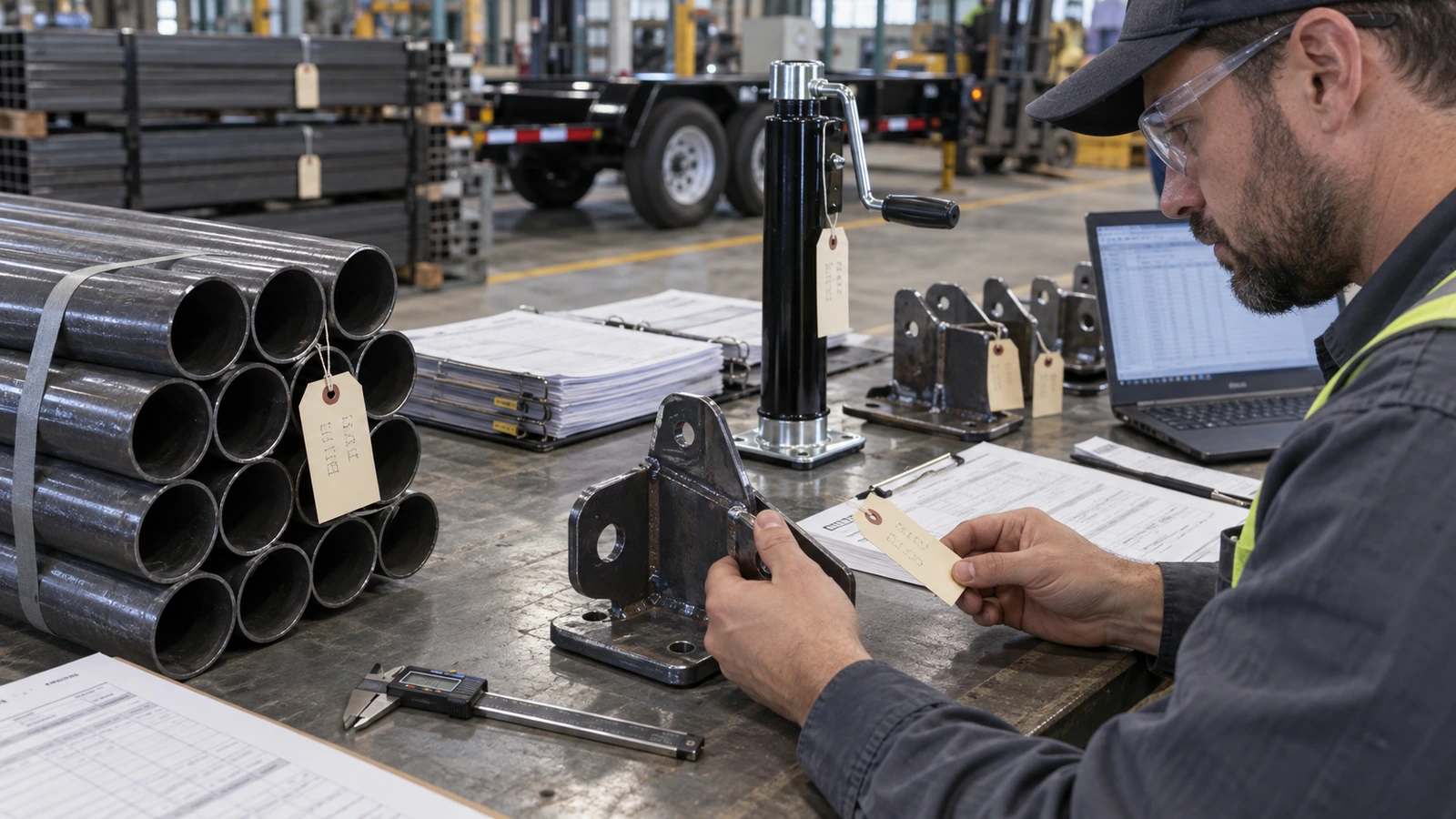
Material records should identify the immediate supplier and, where required by the risk and applicable review, continue upstream to the mill, smelter or other relevant producer. Purchase orders, supplier invoices, payment records, delivery notes, receiving records, transport documents and material contracts can show that the claimed chain reflects actual transactions rather than a theoretical supplier diagram.
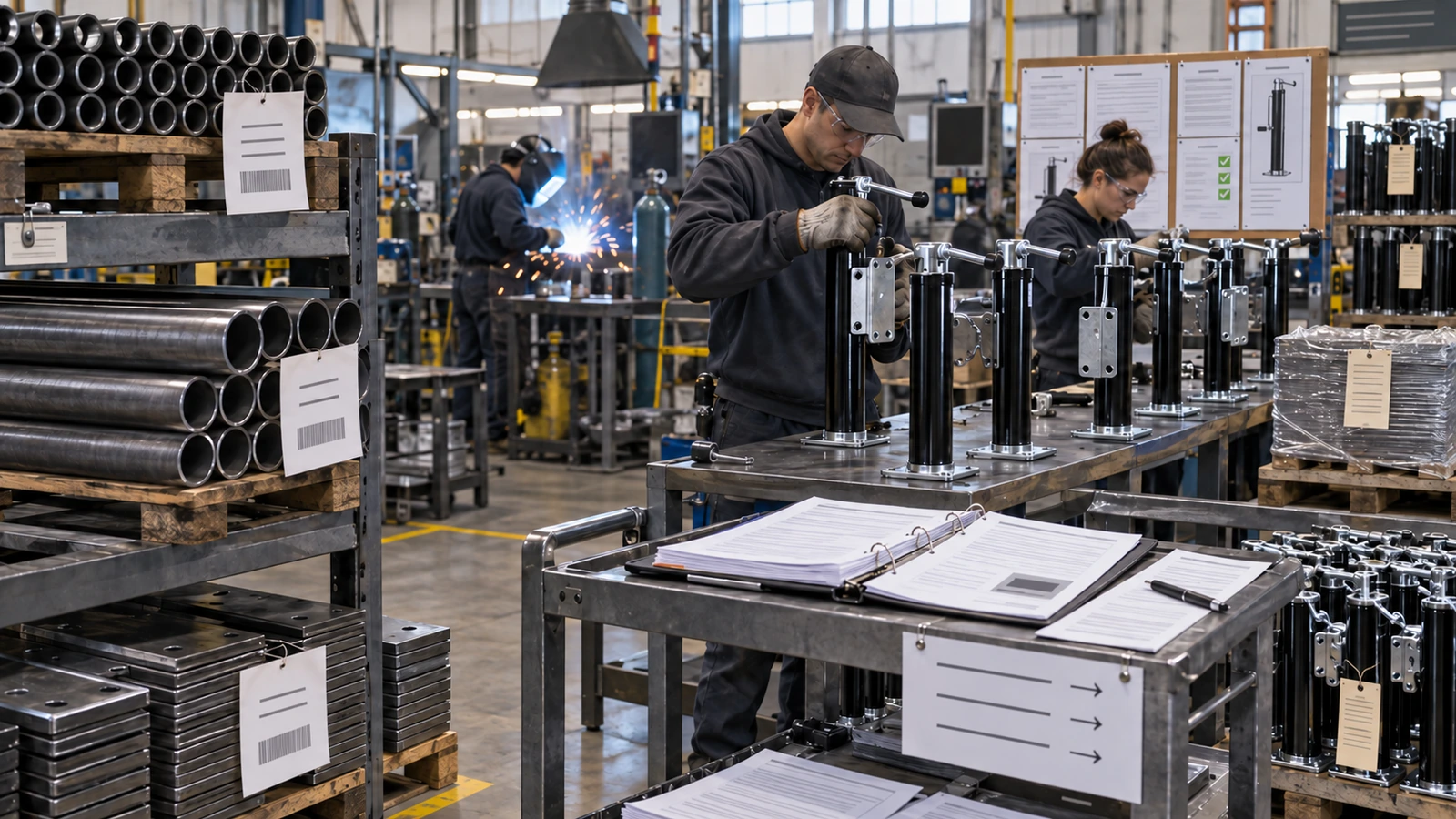
Production records provide the bridge to the finished component. Material-issue records, cutting orders, work orders, machining or welding records, batch sheets, inspections and finished-goods identification can connect a received lot to a production run. Their value is not that every factory uses the same forms. Their value is that quantities, dates, identifiers and entities can be reconciled into a coherent account of what happened.
Certificates support the chain; they do not replace it
A mill test certificate may identify the mill, grade, heat number, chemistry, mechanical properties, dimensions and production references. That makes it useful for material quality and upstream identity. But a certificate becomes persuasive for a particular shipment only when the represented material can be connected to the goods under review.
Suppose a factory buys steel from several mills and sends a customer a certificate chosen from its general records. The certificate may be genuine. It may even describe the correct grade. Neither fact establishes that the associated steel entered the customer's order. The missing issue is continuity, not necessarily authenticity. This distinction prevents a familiar procurement mistake: treating possession of an impressive document as proof of a relationship the document does not establish.
Supplier declarations can also support the file, particularly when they identify sourcing commitments and restrictions. They should complement transaction evidence, not substitute for it. The strongest declaration comes from a business that can explain and substantiate the records behind its statement. A declaration of origin and a statement about forced-labor sourcing also serve different purposes and should not be treated as interchangeable.
Subcontracting needs similar attention. Galvanizing, plating, powder coating, heat treatment, forging, casting, laser cutting and machining may all involve separate businesses. Mapping should reflect the physical production route rather than stopping at the main factory gate. An audit or social-compliance review can add information about labor conditions at a reviewed facility, but it may not establish the origin of that facility's steel.
The resulting chain should answer five practical questions: Who had the material? When? What happened to it? Which identifier carried forward? How does it connect to the finished shipment? A folder full of certificates, invoices and declarations is useful only to the extent that those questions can be answered. Chain of custody is the organizing principle; the PDFs are supporting records.
What Border Reviews and Industry Testimony Actually Show
CBP's forced-labor guidance says importers must exercise reasonable care and understand where and how goods are manufactured or produced, in whole or in part. Its evidence-submission processes support UFLPA applicability reviews, exception requests and WRO admissibility reviews. Those are not interchangeable procedures, but all illustrate why a customer may request information beyond the Tier 1 supplier.
The Commercial Customs Operations Advisory Committee's Forced Labor Working Group has described the substantial documentation burden associated with detention responses, sometimes involving hundreds or thousands of pages, and recommended clearer guidance on supply-chain evidence. The lesson is not that every routine shipment needs a thousand-page packet. It is that an importer benefits from an organized, retrievable underlying file before enforcement turns a missing record into an urgent operational problem.
A cotton WRO case shows the limits of document volume
CBP ruling H330077, issued on April 26, 2023, concerned apparel detained under the 2021 Xinjiang cotton WRO after entry in 2022. It was not a trailer case and should not be described as a UFLPA ruling. The submitted records sought to show Indian raw cotton moving through yarn and fabric production in China outside Xinjiang before garment manufacture in Cambodia.
The importer supplied origin certificates, contracts, invoices, payment evidence, supply and transaction certificates, maps and supply-chain diagrams. CBP nevertheless concluded that admissibility had not been established: information available to the agency indicated a Xinjiang connection involving a company in the chain, and the submitted material did not resolve the concern.
That decision does not establish that metals will be reviewed exactly like cotton. Its relevance is narrower and more useful: quantity of documentation is not the same as quality of traceability. An unresolved entity relationship can remain important even when many other records are available. A supplier map should therefore be tested against actual legal identities and transactions, not accepted solely because its diagram looks complete.
Trailer manufacturers are already part of the policy debate
At USTR's July 9, 2026 hearing, Robert DeFrancesco testified for the American Trailer Manufacturers Coalition, representing Stoughton Trailers, Great Dane and Wabash National. The coalition supported the proposed 10% and 12.5% structure and sought stacking of the forced-labor Section 301 duties with Section 232 treatment for van-type trailers.
That was an industry request, not the final rule and not proof that every imported trailer involved forced labor. USTR's final action retained the exemption for articles and parts subject to Section 232. A Consumer Technology Association witness at the same hearing emphasized product-level evidence, compliance programs and cooperation rather than tariffs alone. Together, these positions show the distinction between trade-policy remedies and the operational work of establishing a product's supply chain. For a component importer, that evidence remains relevant whichever tariff argument it supports.
Make Upstream Visibility Part of Supplier Qualification
Changing the final manufacturing country does not automatically change the material's history. Consider a hypothetical route from Chinese steel to a Chinese component factory and then the United States. Replacing the middle step with a Vietnamese factory may affect customs origin, depending on the product and processing. It does not erase an upstream input or resolve an applicable forced-labor prohibition by itself.
That is an important addition to our China-plus-one and sourcing-risk analysis. Country diversification can improve resilience, but a new country address is not a substitute for understanding the chain. The procurement question moves from “Which country and supplier?” to “Which country, supplier, factory and material network?” Origin and provenance must remain separate fields even when both influence the sourcing decision.
Traditional purchasing databases record part number, supplier, country, unit price, minimum order quantity and lead time. A stronger qualification record can add the actual factory, immediate material supplier, known upstream source, relevant processing sites, evidence availability and the date of the last review. That does not require pretending every entry is equally certain. Explicitly recording an unknown mill is more useful than labeling an opaque chain “fully traceable.”
Prioritize depth according to risk and operational importance
Deep tracing consumes time and resources, so the investigation should be proportionate. A useful OEM assessment considers regulatory sector exposure, upstream opacity, annual purchasing value or volume, production criticality and substitutability. A high-volume steel component from one opaque source deserves more attention than an easily replaceable item from a transparent chain. This prioritization does not create a legal exemption for low-value goods; it allocates due-diligence effort sensibly.
The RFQ can turn that assessment into specific questions. Can the supplier identify the upstream mill or material producer? Does it use full legal entity names? Can certificates be matched to production batches? Who performs subcontracted coating? Will the supplier notify the customer before changing an important material source? Can the records still be retrieved months after shipment?
Those questions belong alongside tolerances, coating, tooling, capacity and delivery performance, rather than appearing for the first time during a border hold. The buyer can also request a limited demonstration using a previous or sample production batch. Starting with one part and testing whether the records connect is often more informative than collecting another broad assurance about the entire factory.
The best supplier is not necessarily the one with the most certificates. It is the one whose evidence is consistent, attributable, dated, linked to legal entities and connected to physical production. A clear description of evidence gaps is also valuable: it allows the buyer to decide whether further investigation, contractual controls or an alternative source is appropriate. Auditability is a capability built into operations, not a sales claim added when an RFQ asks for it.
What GOODIN Should Build Into Everyday Operations
GOODIN does not need to become a customs law firm, and it should not promise that a documentation packet guarantees admissibility. Importers remain responsible for their own compliance decisions. The opportunity is to make those decisions easier to support by building a consistent evidence process. The following seven layers describe recommended capabilities, not an assertion that every GOODIN product already has them.
1. Establish stable product master data. Each export product should have an anchor record: GOODIN and customer part numbers, description, drawing number and revision, manufacturing facility, key materials and approximate material weights, country of manufacture, major processes and known subcontractors. Where aluminum toolboxes or an assembly combines different materials, the record should distinguish the relevant input families rather than treating the whole product as one undifferentiated metal purchase.
2. Maintain approved material-source identities. For important steel and aluminum inputs, record the immediate supplier's full legal name and role. Is it a mill, fabricator, distributor or service center? Where material is bought through an intermediary, determine whether upstream production can still be identified and what evidence is available. An approved-source list is useful only if actual purchasing can be checked against it and changes are visible.
3. Preserve lot and batch linkage. Material needs identifiers, production needs identifiers, and exported goods need a connection to both. The practical chain is heat, coil or lot to warehouse receipt, work order, production batch and shipment. A suitable batch-level system may be more proportionate than individual serial tracking for simple components. The essential requirement is a defined method that reflects actual production, including how mixed or substituted material is recorded.
4. Make disclosure and change control contractual. Purchase terms can require information about production locations, material sources, subcontractors and relevant forced-labor compliance matters. They can also require notice when upstream sourcing changes. The purpose is not merely to obtain a signature. It is to establish an obligation to communicate changes early enough for GOODIN and its customer to evaluate them before the affected production is shipped.
5. Build a retrievable document archive. Material certificates, purchasing records, production documents and shipment references should remain accessible for the applicable retention period and contractual requirements. Records scattered across employee messages, personal devices and unrelated spreadsheets are difficult to assemble when the responsible employee is absent. A centrally organized archive linked to part number, batch and shipment is a stronger basis for a timely response.
6. Review visibility without confusing it with certification. An internal maturity scale could distinguish highly connected records, documented immediate sources with partial upstream evidence, limited visibility beyond the distributor, and opaque sourcing. These are hypothetical management categories, not official CBP ratings or findings about forced labor. Their purpose is to show where evidence is strong, where uncertainty remains and which supplier relationships need improvement. Reviews should be updated when facts change.
7. Prepare a customer-ready traceability packet. For a strategic OEM program, a concise packet might contain product identity, manufacturing-site information, relevant material sources and certificates, an origin declaration, a supply-chain map, supplier statements, batch references and a designated contact for further questions. It should point to the supporting internal records without pretending that the summary itself replaces them. Sensitive commercial information can be handled through agreed disclosure arrangements and appropriate professional channels.
The work crosses functions. Sales can coordinate a customer request, but purchasing controls material sources; operations records material consumption and batches; supplier quality understands subcontractors; and the shipping team connects finished goods to export documents. Assigning an owner to each connection is more useful than asking one department to “handle compliance.”
That operating discipline also makes shortcomings easier to address. If material certificates are available but not tied to production, the next improvement is linkage. If lot records are good but the mill remains unknown, the next conversation belongs upstream. A traceability program becomes manageable when it identifies the particular missing relationship instead of treating compliance as one large, undefined documentation task.
Traceability Is Becoming Part of Supplier Performance
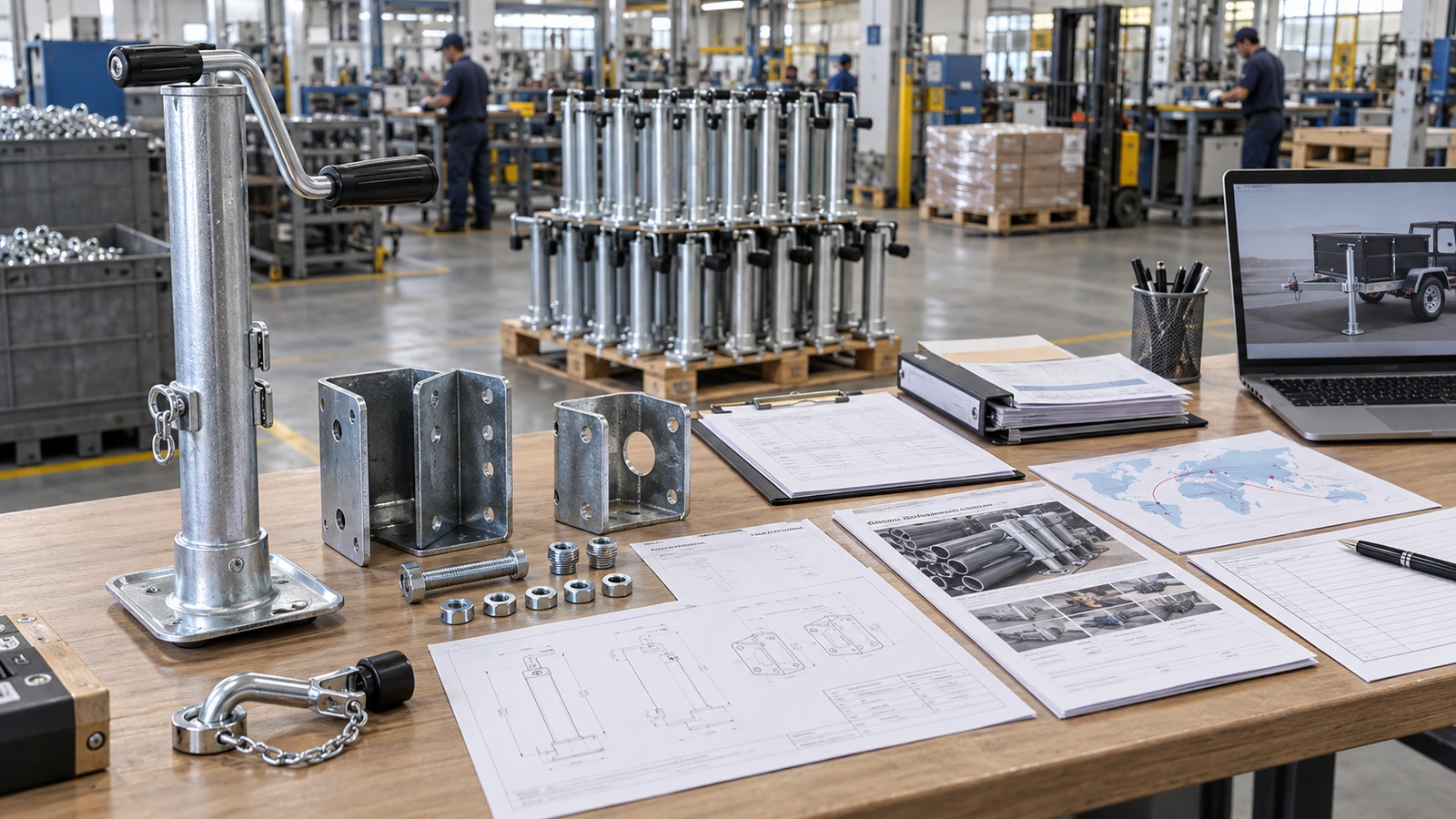
The commercial value becomes clearer in a hypothetical quotation comparison. Supplier A offers a fabricated mounting bracket for $11.80 and Supplier B offers an equivalent part for $12.15. Both meet the engineering requirements. A knows only that its steel comes from a local distributor; B can connect the service center, mill, heat or lot, material certificate, receiving record, production batch and shipment.
The 35-cent difference is visible immediately. The difference in administrative uncertainty is harder to price. A detention or unresolved review can consume broker and legal time, storage and demurrage, replacement-sourcing effort, production flexibility and management attention. Better records do not guarantee that a shipment will avoid scrutiny or prove that the more expensive supplier is always the better choice. They can make the buyer's assessment and response less dependent on emergency reconstruction.
Define traceability claims before using them commercially
As evidence becomes valuable, suppliers may be tempted to advertise “100% traceable.” Without a defined boundary, the phrase says little. Traceable to the immediate vendor, service center, mill, smelter, mine, production lot or exported shipment? A narrower statement supported by records is more useful than an absolute claim whose scope nobody can explain.
For example, a supplier might describe a specific product family's primary steel inputs as traceable to approved material suppliers and mill-level records, with batch continuity maintained through finished production—but only if that is demonstrably true. It should also disclose the boundary and relevant limitations. This is the same editorial principle that connects Build Quality, material documentation and our CBAM material-traceability analysis: evidence must support the particular claim, rather than merely making the supplier appear well documented.
The regulatory direction is not limited to the United States. The EU Forced Labour Regulation applies from December 14, 2027, prohibiting products made with forced labor from being placed or made available on the EU market or exported from it, irrespective of origin. The EU framework differs from U.S. law and does not itself impose a new universal audit or reporting obligation on every business. Its implementation preparations nevertheless reinforce the importance of understanding product supply chains.
A well-organized material record can therefore support several different tasks: quality investigations, customer due diligence, relevant CBAM data work, origin analysis and other trade documentation. It is not a universal compliance passport. Each regime asks different questions, and a labor audit cannot establish embedded emissions any more than a carbon report can establish that no prohibited labor was involved. The shared advantage is a reliable factual foundation.
GOODIN View: Country of origin tells a buyer where a product comes from for customs purposes. Traceability helps explain whether the supply chain behind that product can be defended. In industrial sourcing, the second question may matter just as much as the first.
Quality, price, delivery, engineering support and capacity remain fundamental. The emerging addition is the ability to explain the material and production history without an emergency investigation. Chinese manufacturing retains important strengths in metalworking, tooling, industrial clusters and scale, but price alone cannot answer a compliance question. The long-term opportunity is evidence-backed manufacturing: competitive components supported by records that make supplier qualification more dependable.
Planning an OEM component program with upstream documentation requirements? Contact GOODIN to discuss the product, the evidence your team needs and the scope that can be supported for the proposed supply chain.
Frequently Asked Questions
Does a Made in China label satisfy U.S. forced-labor compliance requirements?
No. Country of origin and forced-labor admissibility are different questions. Section 307 reaches merchandise produced wholly or in part using prohibited labor, while UFLPA establishes a presumption for relevant Xinjiang or listed-entity supply chains. The importer may need evidence beyond the final manufacturing country.
Are all steel trailer components prohibited or automatically detained under UFLPA?
No. Steel became a UFLPA high-priority sector in the 2025 strategy update. That designation signals heightened attention to relevant supply chains; it does not establish that every steel component or Chinese supplier involves forced labor.
Is aluminum also a high-priority sector?
Yes. Aluminum was added in the 2024 UFLPA strategy update and remained among the high-priority sectors in the 2025 update. Product-specific sourcing facts still matter.
Is a mill certificate enough to prove that a steel component is admissible?
Not by itself. A mill certificate can establish material characteristics and an upstream identity, but it should connect to the relevant material lot, production batch and shipment. Admissibility depends on the applicable enforcement mechanism and the overall evidence.
Does moving production from China to Vietnam remove UFLPA exposure?
Not automatically. Later manufacturing in another country does not erase the history of an implicated upstream input. Customs origin may change depending on the product and processing, but forced-labor analysis remains a separate question.
Are the 2026 forced-labor Section 301 duties the same as UFLPA?
No. The 2026 Section 301 action addresses the forced-labor import-ban policies of 60 economies through additional duties, subject to economy-specific rules and exemptions. Section 307 and UFLPA address the admissibility of particular merchandise. Paying a duty does not make prohibited goods admissible.
Do products subject to Section 232 also pay this forced-labor Section 301 duty?
Articles and parts subject to Section 232 are exempt from this particular Section 301 action under the July 2026 final measure. That exemption does not remove separate Section 307 or UFLPA requirements, and it should not be generalized to unrelated trade actions.
Who is responsible for establishing admissibility?
The U.S. importer has customs compliance and reasonable-care responsibilities. Suppliers can support its assessment with reliable material, manufacturing, legal-entity, transaction and batch records. No standard supplier packet guarantees admission in every case.
Sources & Further Reading
This article provides industry sourcing analysis, not transaction-specific legal or customs advice. Importers should review applicable enforcement measures and evidence requirements with qualified trade professionals. All manufacturing scenarios, identifiers, prices and supplier scorecards are hypothetical. Illustrations do not establish misconduct, certification or an existing GOODIN compliance capability.
- USTR — USTR Takes Action in Forced Labor Section 301 Investigations — July 23, 2026Accessed September 11, 2026
- USTR — Section 301 Forced-Labor Investigations: Final Action and HTSUS Annexes — July 23, 2026Accessed September 11, 2026
- USTR — Fact Sheet: Section 301 Action in Response to the Failure of 60 Economies to Ban Imports Produced with Forced Labor — July 2026Accessed September 11, 2026
- U.S. Customs and Border Protection — Forced Labor Frequently Asked QuestionsAccessed September 11, 2026
- U.S. Congress / Government Publishing Office — Uyghur Forced Labor Prevention Act, Public Law 117-78 — December 23, 2021Accessed September 11, 2026
- DHS / Forced Labor Enforcement Task Force — 2025 Updates to the UFLPA Strategy — High-Priority Sectors and EnforcementAccessed September 11, 2026
- DHS / Forced Labor Enforcement Task Force — Strategy to Prevent the Importation of Goods Mined, Produced, or Manufactured with Forced Labor in the People's Republic of China — June 17, 2022Accessed September 11, 2026
- DHS / Forced Labor Enforcement Task Force — 2023 Updates to the UFLPA Strategy — Supply-Chain Risk AreasAccessed September 11, 2026
- Commercial Customs Operations Advisory Committee — Intelligent Enforcement Subcommittee, Forced Labor Working Group: Draft Recommendations — June 2025Accessed September 11, 2026
- U.S. Customs and Border Protection — Headquarters Ruling H330077: Xinjiang Cotton Withhold Release Order — April 26, 2023Accessed September 11, 2026
- USTR / Section 301 Committee — Forced-Labor Section 301 Public Hearing, Day 3: American Trailer Manufacturers Coalition and Consumer Technology Association Testimony — July 9, 2026Accessed September 11, 2026
- European Commission — Forced Labour Regulation — Implementation Timeline and Business ResourcesAccessed September 11, 2026
- European Commission — What Is the Forced Labour Regulation and How Does It Work?Accessed September 11, 2026
Compliance Is Moving Downstream: Why Trailer Dealers Are Being Pulled Into Safety Documentation and Tire Recordkeeping
CBAM Is Now Real: What Europe’s Carbon Border Rules Mean for Steel and Aluminum Trailer Components
Related Article