Trailer Tongue Jack: Manual or Electric? A No-Nonsense Buyer’s Guide That Leaves No Question Unanswered
The Mechanical Arm and the Electric Brain: What Really Sets Them Apart
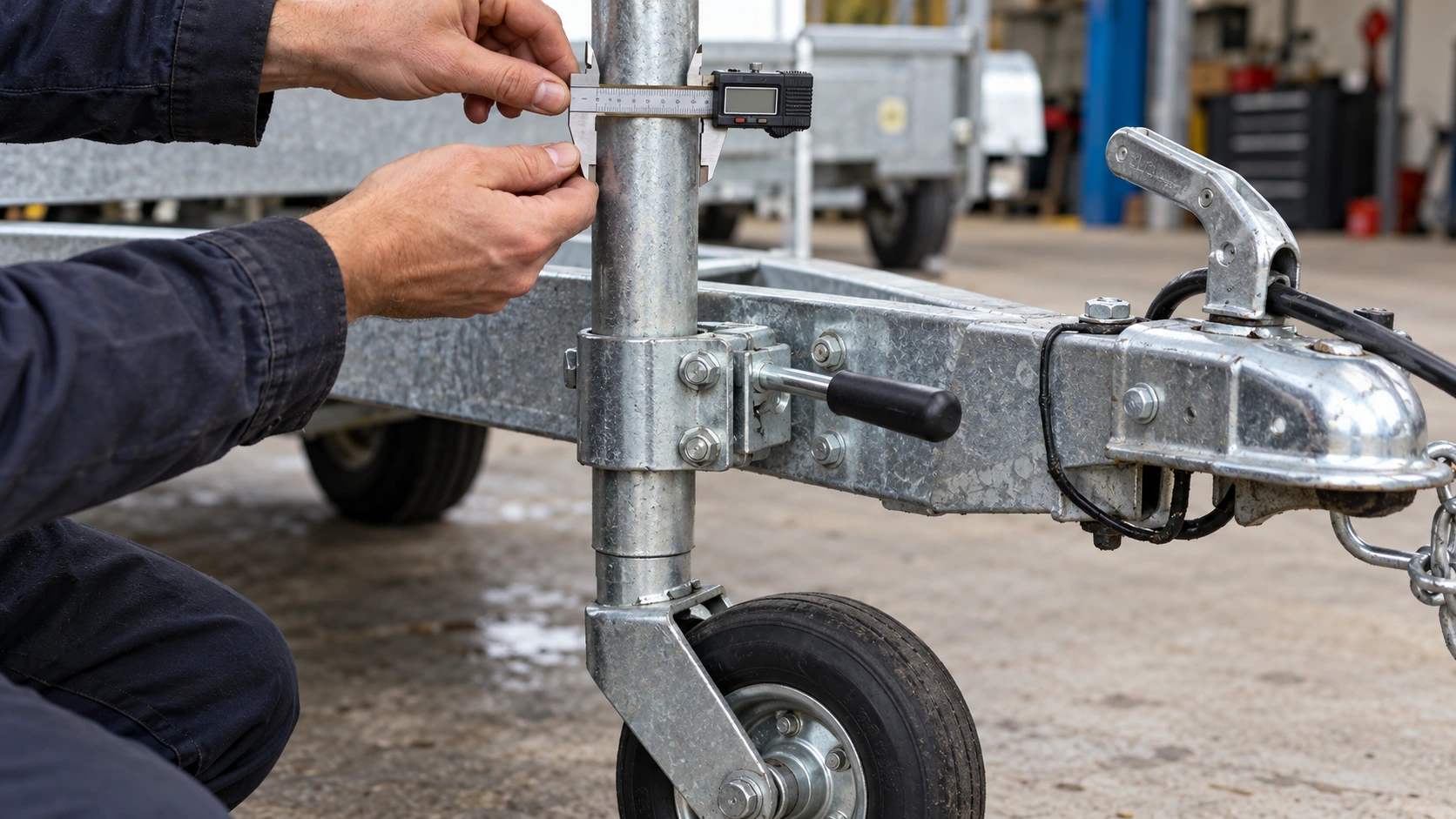
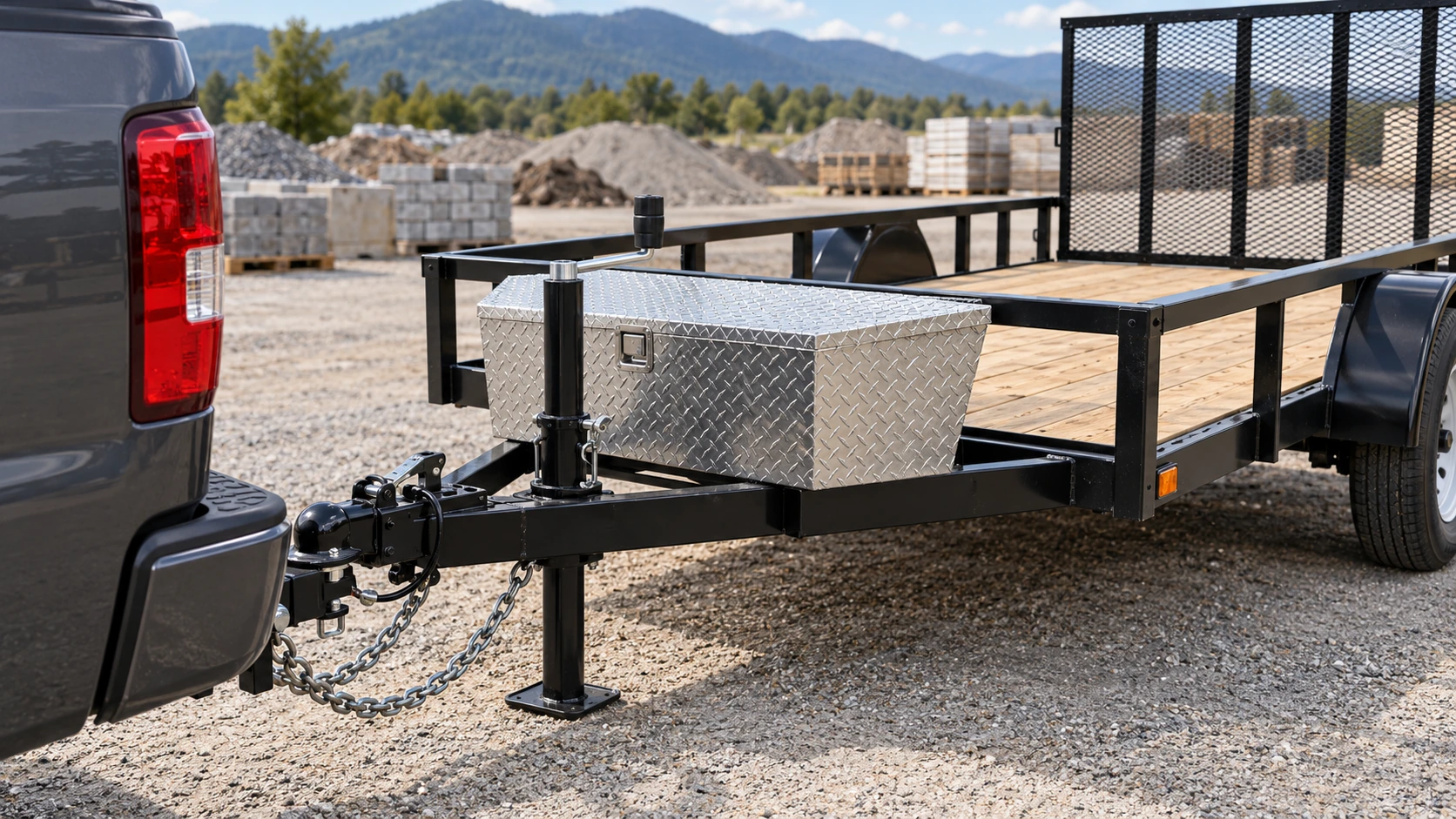
To make a choice, we first need to understand the logic behind these two systems. At its heart, a manual trailer jack is a precision mechanical drivetrain, consisting of a crank handle, a reduction gear set, an Acme-threaded screw, and an inner ram tube. When you turn the handle, your muscle power is multiplied through the gears into tremendous lifting force. The whole process delivers pure mechanical feedback — the resistance you feel on the handle gives you a clear, tactile sense of the load, creating a kind of direct dialogue between man and steel that many hardcore enthusiasts deeply trust. An electric jack, on the other hand, builds upon this mechanical foundation by integrating a 12V DC motor and a planetary gear reduction system, converting electrical energy into rotational power. You simply press a button or a remote control, and the current drives the motor to lower or raise the jack smoothly and quietly. It draws power from your vehicle’s battery and replaces the labor of your arm with an electronic switch, turning a task that used to require dozens of continuous cranks into an elegant, one-touch operation. This fundamental difference gives rise to all the distinct personalities that follow.

A World of Difference in Efficiency and Feel: Fifty Cranks or a Gentle Click
In real-world use, the gap in operating experience is far more dramatic than any spec sheet can convey. Imagine arriving at a campsite after hours of driving, the light already fading. The last thing you need is an unscheduled workout. Under a typical load, a manual jack going from fully grounded to fully raised for uncoupling often demands forty to sixty complete revolutions of the handle. Especially when the tongue weight approaches the jack’s rated capacity, every turn meets noticeable resistance, and your arm fatigues quickly. An electric jack accomplishes the same stroke in just a dozen or so seconds. You can stand beside the trailer, holding the tongue steady with one hand while using the remote in the other to make precise micro-adjustments in height, lining up the hitch ball and coupler perfectly. The entire process is dignified and effortless. For users who frequently move between sites and couple or uncouple multiple times a day — such as horse transporters or equipment haulers — the electric option doesn’t just save physical strength; it shrinks the time cost of every work cycle, fundamentally boosting turnover efficiency.
The Deeper Code of Strength and Stability: Load Capacity Is More Than a Number
Many people glance only at the rated load capacity in pounds, but there are more details to unpack regarding weight handling and stability. Whether manual or electric, mainstream models easily cover tongue weights from 2,000 lbs up to over 5,000 lbs, yet they behave slightly differently at their limits. A manual jack relies on pure mechanical locking; the self-locking nature of the Acme screw provides incredibly reliable static support. Even with some mechanical wear, it's very unlikely to experience sudden pressure loss. An electric jack is held in place by its gear train, and its support is equally stable. However, its motor has a thermal overload protection mechanism under sustained heavy loads, so if you need to cycle it up and down repeatedly for an extended period, the motor might need a brief rest. It’s worth noting that many high-quality electric jacks retain an emergency manual crank port. Should the motor overheat protect or you lose all power, inserting the crank handle turns it right back into a manual jack, adding a solid insurance policy for both stability and peace of mind.

Which One Has Your Back When the Power Dies
Reliability is the lifeline of any trailer jack, and on this point, the manual version holds an almost stubborn advantage. It requires not a single watt of electricity. Whether your rig is parked on a storm-lashed lakeshore, a sun-scorched desert, or you're facing the awkward reality of a completely dead battery, as long as your arm can turn that crank, it serves you faithfully, with zero chance of stranding you. This philosophy of minimalist engineering makes the manual jack the ultimate symbol of absolute dependability. An electric jack, by contrast, builds its reliability on a well-maintained vehicle battery and robust water and dust resistance. Its wiring harness, switch, and motor must withstand splashing mud and relentless weather, so you must pay close attention to its ingress protection when buying. Premium models feature a fully sealed motor, tinned waterproof connectors, and a built-in fuse to prevent overload damage. Moreover, developing the habit of regularly checking your trailer connector’s power supply and your battery’s health is a non-negotiable ritual for every electric jack owner. Do that, and it becomes an equally trustworthy companion, with the aforementioned manual override serving as your final, graceful fallback in an extreme pinch.
Gentle Maintenance and the Test of Time: Two Different Durability Profiles
In the long marathon of years, the two have distinctly different maintenance philosophies. A manual jack has an exceedingly simple structure and virtually nothing that can suffer electronic aging. All you need to do is pump some high-quality grease into the Zerk fittings and lubricate the screw every few months or after a long trip, while keeping the outer tube free of rust. It will then repay you with a decade or more of loyal, faithful service. An electric jack adds a layer of electronic tenderness. Its motor brushes will wear slowly, and the insulation on its wires might grow stiff over the years, though these are concerns only under very long-term, high-intensity use. In reality, many mid-to-high-end electric jacks already feature excellent maintenance-free designs, with gearboxes pre-packed with lifetime grease and motors that are brushless or sealed-brushed. You just need to keep the exterior clean and avoid aiming a pressure washer directly at the motor and switch housing. You could say the manual jack wins on the peace of mind that comes from “forgetting about it,” while the electric jack offers convenience at your fingertips. Maintenance is simply a different style, not an absolute measure of superiority.
Finding Your Reflection: The Perfect Match for a Manual Jack
Translating cold parameters into vivid user profiles makes things crystal clear. If a manual tongue jack is your calling, you might be the leisure user who tows a small boat to the lake just a few times a year. To you, the lower initial investment matters most, and absolute reliability trumps everything; no electronic gadget is worth adding an ounce of pre-trip anxiety. You could also be one of those hardcore overlanding trailer enthusiasts who traverse the backcountry, believing that the simplest mechanism is the most loyal. Turning that crank isn’t a chore for you, but a grounding ritual — the satisfying feel of a human-tool partnership. Furthermore, if your trailer is inherently lightweight, just a micro camper or a jet ski hauler demanding minimal lift, the manual jack will feel effortlessly light to crank. Then its lighter weight and freedom from wiring will align perfectly with your philosophy of minimalist gear.
Embracing the Convenience of Tomorrow: The Ideal Home for an Electric Jack
An electric jack, meanwhile, opens a completely different door to a hassle-free experience. For commercial haulers, equestrian athletes, or rally support crews who move trailers between venues with high frequency, time equals efficiency. Being able to uncouple and re-couple quickly several times a day makes the entire workflow seamless and fluid. Owners of large travel trailers and enclosed toy haulers will appreciate it even more deeply — when tongue weights easily reach 800 or 1,000 pounds, manual cranking can leave you breathless, whereas an electric jack only asks for a gentle touch of your fingertip. Its remote-controlled fine-tuning capability becomes truly addictive, especially when you need to align the hitch precisely for those last few millimeters. More importantly, it dramatically expands the possibility of independent operation. If you want your entire family to be able to handle the trailer with ease — whether it’s your elderly parents or your spouse, without being limited by physical strength — then an electric jack offers not just comfort, but a sense of inclusivity and the freedom of solo travel. Tech lovers also find delight in integrated features like LED work lights, built-in bubble levels, and remote-control security, adding a touch of intelligent pleasure to the trailer lifestyle.

Two Real-World Moments That Make the Decision Instantly
Let’s step into a couple of intensely relatable scenes. It’s a late autumn evening, and you’ve just driven your trailer to a mountain campground alone, only to be met by driving wind and rain that soaks right down your collar. With a remote-control electric jack, you could remain seated inside the dry cab, lower the jack to uncouple, and then later raise it remotely once the trailer is back on the hitch, never having to step outside. That sense of safety and composure is truly priceless. Now picture a different scene: you’re on the shore of a remote wilderness lake, and your vehicle battery suddenly dies, rendering all electronics useless. But you urgently need to jack up the trailer for a repair. In this moment, a trusty manual jack is a true lifesaver. An electric one might cause a moment of panic — however, if you heeded the right advice and chose a model equipped with the backup manual crank, you could still raise or lower it without any electricity, escaping the predicament with total calm. These two stories tell us there is no universally "best" option, only the one that fits your specific real-world environment.
Running the Numbers: The Long-Term Value Beyond the Price Tag
Getting fixated on the initial price tag alone is a common pitfall. The upfront cost of a manual jack is undeniably more approachable, but the hidden cost you pay is the physical effort and time spent on every single use. If you measure it by comfort and efficiency, suppose you use your trailer twenty times a year, and each manual operation takes ten more minutes and a meaningful dose of muscle power compared to an electric one. Over a year, you’ve lost over three hours of leisure time and accumulated a fair amount of unnecessary fatigue. An electric jack, while requiring a higher initial outlay, spares you very real physical strain and wear on your back, not to mention the safety risks that can arise from tiredness and sloppy operation. We might think of it this way: choosing a manual jack is a strategy of "trading initial savings for ongoing physical expenditure." Choosing an electric one is the wisdom of "using a reasonable upfront investment in exchange for effortless, graceful experiences on every future outing." Moreover, a high-quality electric jack is not fragile. When it serves you faithfully for several years, the average cost per use might drop to just a few cents. The math behind this experience upgrade is far more favorable than you might imagine.
Sidestepping the Myths and Hearing Your Inner Voice
Before making the final decision, a few common misconceptions need clearing up. Some assume a manual jack is inherently backbreaking, yet modern two-speed manual jacks, by shifting gear ratios, offer a quick-lift mode for unloaded travel and a low-effort, power mode for heavy loads, vastly optimizing the effort needed. Others worry that an electric jack isn’t tough enough. However, truly well-built electric jacks have undergone thousands of cycles of rigorous testing before leaving the factory — salt spray, water immersion, and continuous loading — with seals and overload protection engineered to handle the vast majority of harsh conditions. There is also a belief that electric models can’t handle as much weight as manuals. In truth, at the same rated capacity, both can perform the job safely; the key lies in choosing a model matched to your trailer’s actual fully loaded tongue weight, ideally with a comfortable safety margin. Now, quietly ask yourself a few honest questions: What is my trailer’s true gross tongue weight? How many times a year do I really use my trailer? Will I be the sole operator, or will family members with less physical strength also need to handle it? And what are the power availability and weather typically like at the campsites or boat ramps I frequent? Answer these questions truthfully, and the right jack for you will emerge with perfect clarity.

Our Advice, and the Choices We’ve Prepared for You
Synthesizing all the analysis, we can chart a clear decision path. If you are a low-frequency, leisure user who craves absolute simplicity, reliability, and a total lack of future headaches, a robustly built two-speed manual trailer tongue jack will be your forever-trustworthy companion. But if you value a dignified, efficient experience every time you tow, along with effortless operation for the whole family — especially if you frequently deal with heavy tongue weights and multiple hitching cycles — then making the leap to an electric jack with remote control, an emergency manual crank, and LED work lights will infuse every towing adventure with genuine pleasure. Among the jack series on our website, you’ll find several carefully selected, outstanding models. The manual jack with the reinforced steel base plate and alloy dual-gear mechanism, offering butter-smooth cranking and solid construction, has become the go-to choice for countless seasoned enthusiasts entering the manual world. And the electric jack with the fully sealed waterproof motor, wireless remote, and emergency crank handle, with its smart micro-adjustment and rugged protection, is fast becoming a trusted standard feature for many RV and horse trailer owners hitting the road. Whether you choose the timelessness of a mechanism or the elegance of an electric drive, both are backed by our comprehensive after-sales support and professional technical guidance. After all, the one that fits you is truly the best one. We hope this guide helps you make a confident decision, so that every departure and every return from now on is secure and effortless.
You might be interested in: The Foundational Logic of Trailer Jack Selection
Chronological History for Trailer Jack
Trailer Jack Encyclopedia
Electro-Galvanizing vs. Hot-Dip Galvanizing
Related Article